

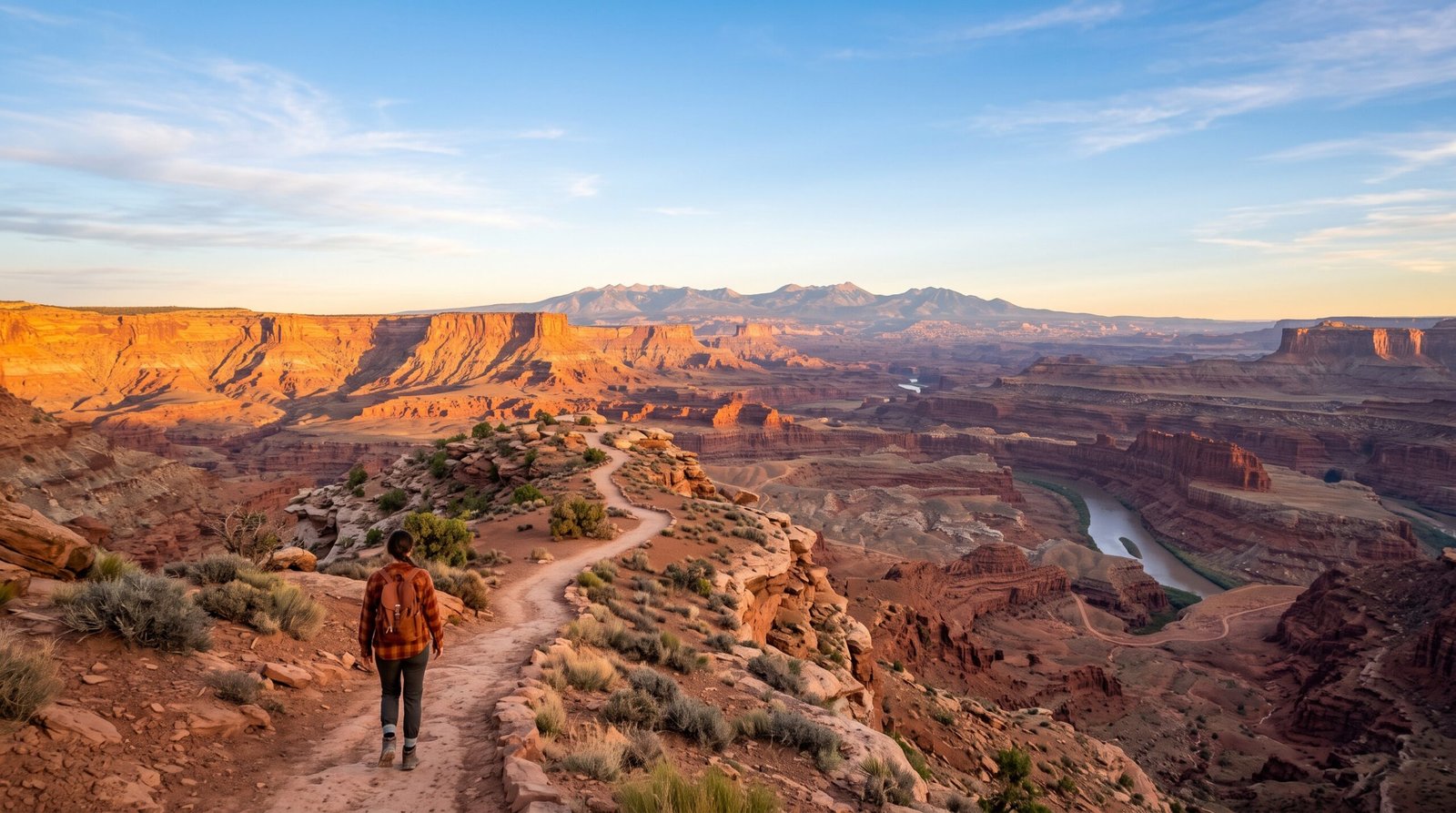
Everyone’s USA bucket list starts in the same place: the Grand Canyon, Yellowstone’s Old Faithful, maybe Niagara Falls if they’re from the East. Fine — those spots earn their fame. But if every stop on your trip comes from the same ten postcards, you’ll fight the same crowds everyone else fights and miss the places that actually stick with you months later.
This list of the most beautiful places in the USA mixes both. You’ll find a few of the icons everyone expects, alongside places most travelers have never heard of — a farmland region in Washington State that photographs like a painting, an island in Michigan where cars have been banned since the 1890s, dunes in Colorado taller than anything most people picture. Twenty places, spread across the country, each chosen for one clear reason to visit — not just because they’re pretty, but because they offer something no other spot on this list does.
Every entry comes with the honest details: what it actually costs in 2026, when to go, and what nobody tells you until you’re standing in a parking lot at 7 a.m. wondering where all the spaces went. Save this now — you’ll want it open when you start booking flights.
The Full List at a Glance
Plan by Region
Southwest: Antelope Canyon, Zion, White Sands — chain these into one desert road trip.
West Coast: Yosemite, Big Sur, Columbia River Gorge — an easy California-to-Oregon run.
Rockies: Glacier, Yellowstone, Maroon Bells, Great Sand Dunes — high-altitude summer loop.
Midwest & Plains: Badlands, The Palouse, Mackinac Island — spread out, worth separate trips.
South & East: Great Smoky Mountains, Outer Banks, Acadia, Niagara Falls — coastal-to-mountain variety.
Hawaii & Alaska: Napali Coast, Denali — the two places on this list that need a flight, not a drive.
1. Antelope Canyon, Arizona — Where Sunlight Turns to Liquid
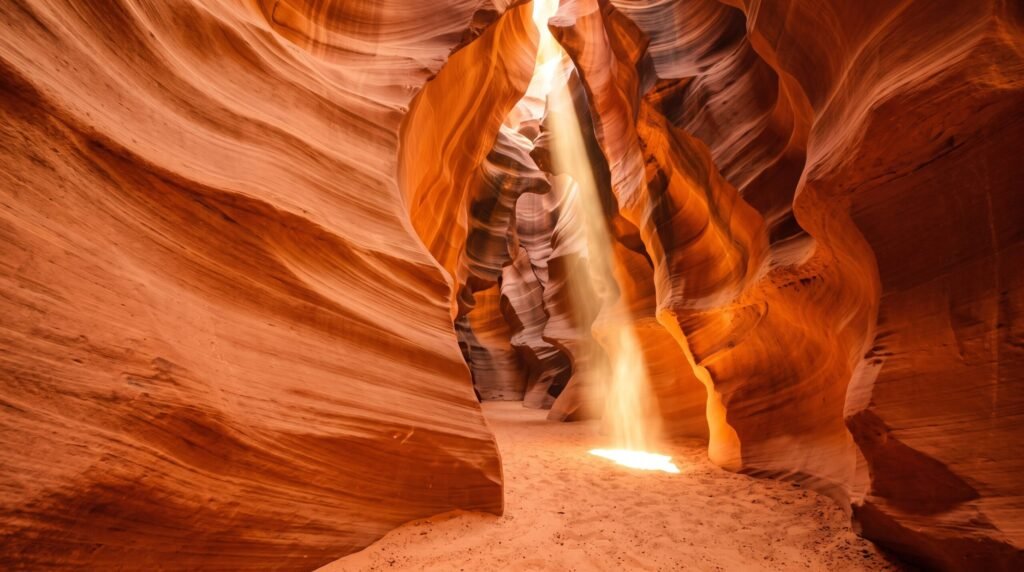
At 11 a.m. sharp, a beam of light drops through a crack in the sandstone and lands on the canyon floor like a spotlight — and every phone in the group goes up at once. That’s Upper Antelope Canyon between late March and early September, when the sun sits high enough to punch straight through the slot. You cannot walk in alone. A Navajo guide is required by law, and tours book out weeks ahead for the good time slots. Lower Antelope runs $80.50 per person all-in, permit included, and skips most of the light-beam crowds. Upper Antelope costs $120 to $189 depending on the slot. Bring water — there’s no shade, and Upper’s exit means climbing 150 stairs.
2. Yosemite Valley, California
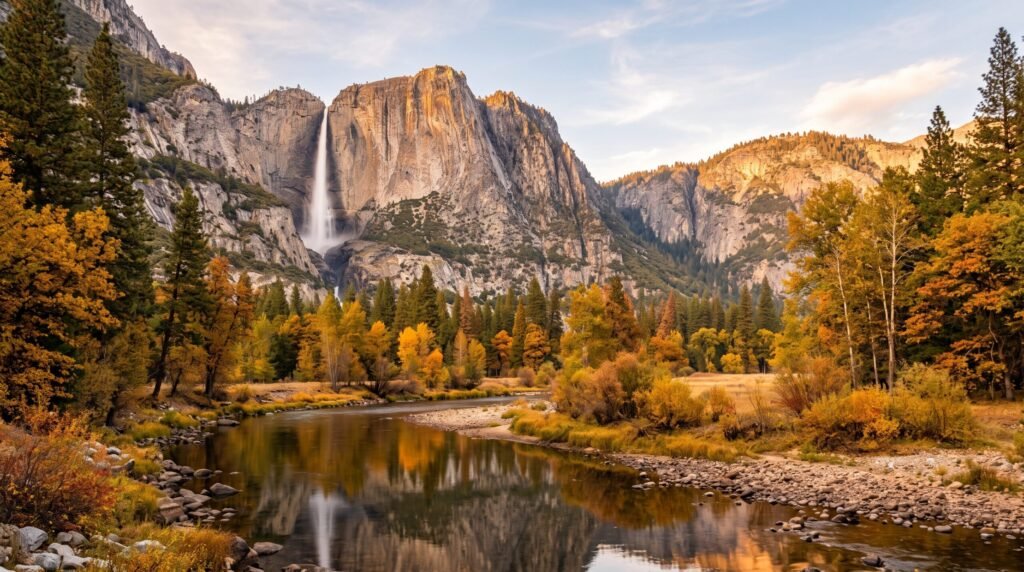
Half Dome, El Capitan, and three separate waterfalls all fit inside one seven-mile valley — nowhere else in the country packs that much granite drama into a single drive-through loop. For 2026, Yosemite dropped its vehicle reservation system, so you can drive straight in with the standard $35 per vehicle entrance pass, good for seven days. The catch: valley parking lots have been filling by 7:30 a.m. on weekends since spring, so come early or park outside and ride the free shuttle. Tunnel View, just past the tunnel on Wawona Road, is the classic postcard shot. Skip July weekends if you can — go midweek, or aim for October when the crowds thin and the maples turn gold.
3. Napali Coast, Kauai, Hawaii
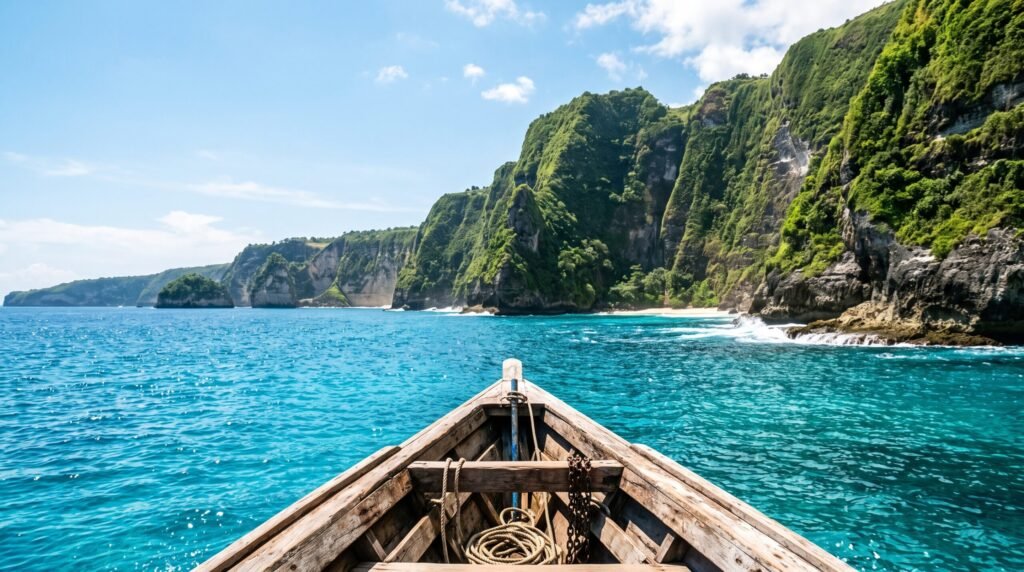
Seventeen miles of Kauai’s northwest coast has no road at all — cliffs, waterfalls, and hidden beaches you can only reach by trail, boat, or air. The full Kalalau Trail needs a camping permit ($35 per person, per night for non-residents), released exactly 90 days ahead, and only 60 spots go out per day — in peak summer they’re gone in under 30 seconds. Most visitors skip that fight and take a boat instead: catamarans and rafts leave from Port Allen Harbor, run 4.5 to 7 hours, and cost around $250 to $260 per adult. Even the easy two-mile hike to Hanakapiai Beach needs a separate Haena State Park reservation. Go in summer — winter swells shut the sea caves down completely.
4. Glacier National Park, Montana
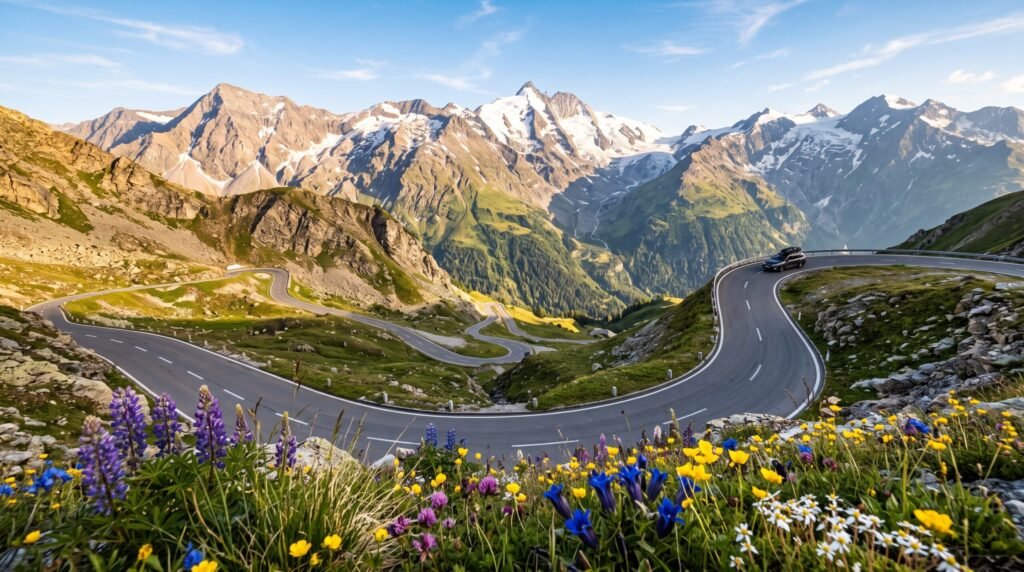
Fifty-two miles of Going-to-the-Sun Road climb from cedar forest to a wind-battered pass over 6,646 feet, and in 2026 you can drive the whole thing without a reservation for the first time in years — the park dropped its timed-entry system this season. You still need the standard $35 vehicle pass, good for seven days. The road usually opens fully by late June, depending on snowpack, and starting July 1, parking at Logan Pass is capped at three hours to keep cars moving. Hike the easy three-mile Hidden Lake Overlook trail from the visitor center for mountain goats and wildflowers without needing the whole day. Expect heavier traffic than usual — the reservation cap is gone, but the crowds aren’t.
Everyone’s USA bucket list starts in the same place: the Grand Canyon, Yellowstone’s Old Faithful, maybe Niagara Falls if they’re from the East. Fine — those spots earn their fame. But if every stop on your trip comes from the same ten postcards, you’ll fight the same crowds everyone else fights and miss the places that actually stick with you months later.
This list of the most beautiful places in the USA mixes both. You’ll find a few of the icons everyone expects, alongside places most travelers have never heard of — a farmland region in Washington State that photographs like a painting, an island in Michigan where cars have been banned since the 1890s, dunes in Colorado taller than anything most people picture. Twenty places, spread across the country, each chosen for one clear reason to visit — not just because they’re pretty, but because they offer something no other spot on this list does.
Every entry comes with the honest details: what it actually costs in 2026, when to go, and what nobody tells you until you’re standing in a parking lot at 7 a.m. wondering where all the spaces went. Save this now — you’ll want it open when you start booking flights.
5. Grand Prismatic Spring, Yellowstone, Wyoming
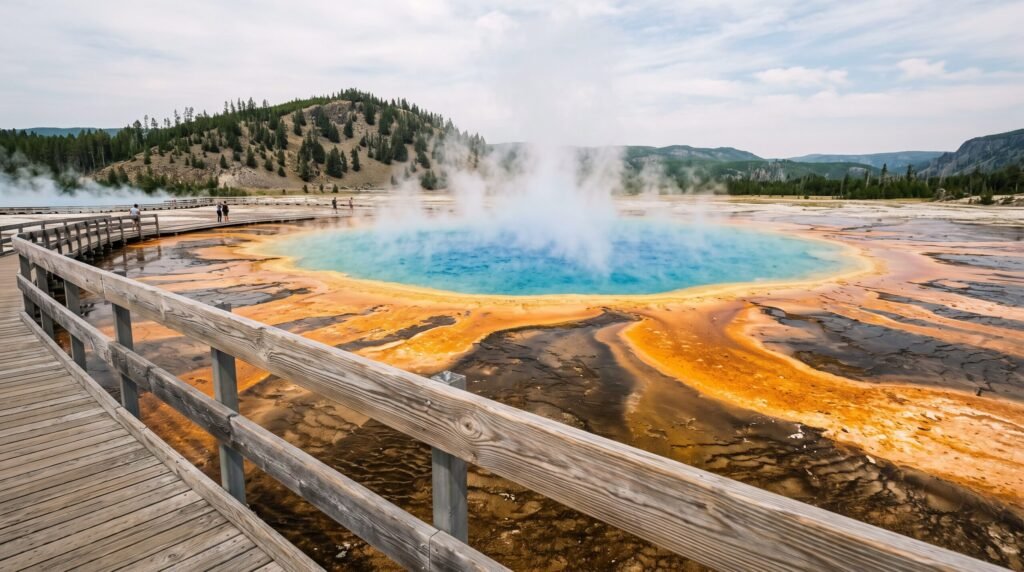
Nothing about the center of Grand Prismatic is actually blue — that’s just how light scatters over 121 feet of water. The reds, oranges, and yellows ringing the edges come from heat-loving bacteria, and together they make it the largest hot spring in the country at 370 feet across. Skip the crowded boardwalk if you want the full rainbow effect; the 1.6-mile Fairy Falls Trail climbs to an overlook that shows the whole shape at once. Entry is covered by Yellowstone’s standard $35 vehicle pass, good for seven days, no separate permit needed. The Fairy Falls parking lot fills by 9 a.m. most summer days. One counterintuitive tip: skip sunrise. Steam usually blankets the spring until noon, so the colors actually show best in early afternoon.
6. The Narrows, Zion National Park, Utah
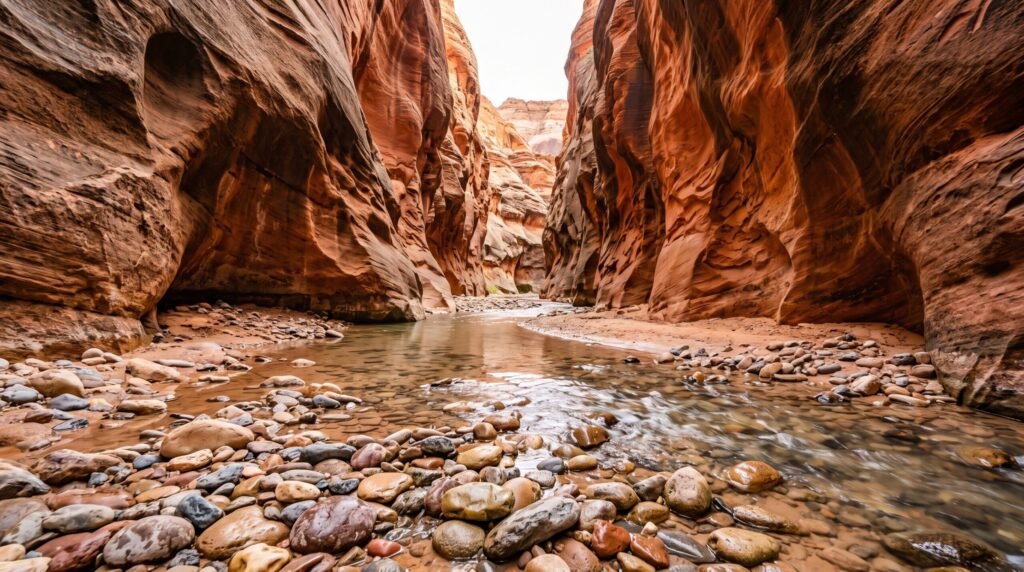
Most national park hikes keep your feet on dirt. This one puts you in the Virgin River for miles, wading between thousand-foot sandstone walls that squeeze so tight in places you can touch both sides. The bottom-up day hike starts at the Riverside Walk, shuttle Stop 9, and needs no permit — just rent river shoes and a walking pole for about $32 to $33 a day at any Springdale outfitter. Zion’s shuttle is free and mandatory for the Scenic Drive from March through November; the park itself charges $35 per vehicle to enter. Water is coldest in spring and fall, when a dry-suit rental runs closer to $60 to $85.
7. Crater Lake, Oregon
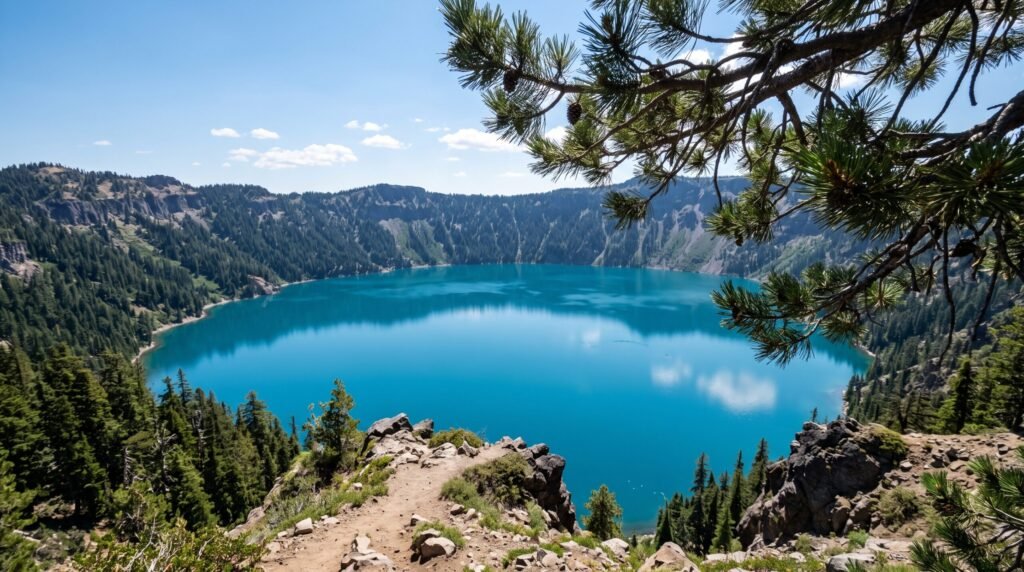
The only trail down to the water, Cleetwood Cove, is closed for rehabilitation through 2028 — so for now, every visitor sees Crater Lake exactly the same way: from the rim, looking down at 1,943 feet of the bluest water in the country. No boat tours run during the closure either. What you still get is the full 33-mile Rim Drive, usually open by July once snowmelt clears it, with more than 30 pullouts along the way. Watchman Overlook is the best sunset stop, a short 1.6-mile round trip. Entry costs $30 per vehicle in summer (May 22–October 31) and drops to $20 in winter. Parts of the east rim have construction detours in 2026, so check conditions before committing to the full loop.
8. Maroon Bells, Colorado
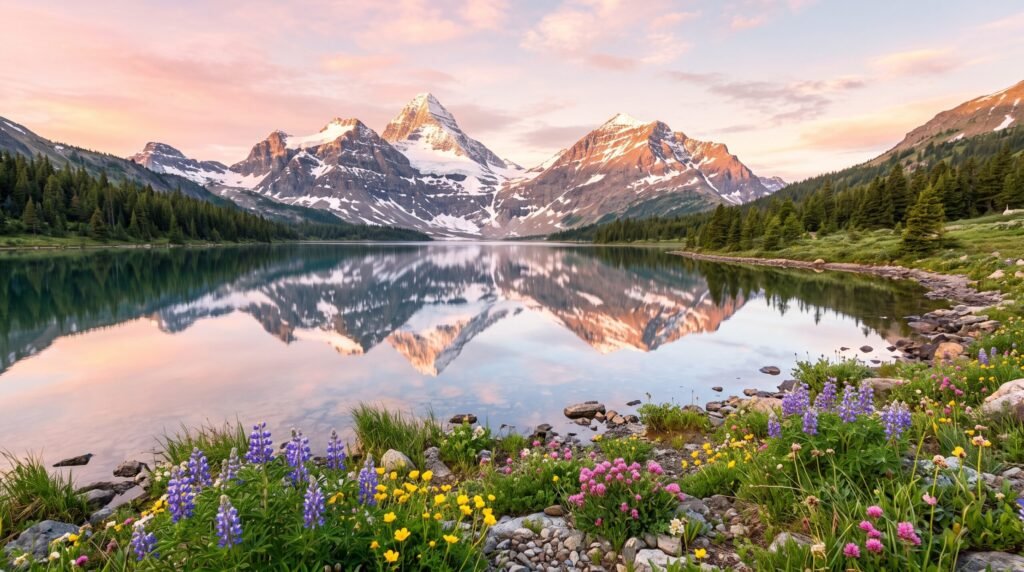
The reflection shot everyone wants — twin 14,000-foot peaks doubled in Maroon Lake’s still water — only holds for about an hour after sunrise, before wind breaks up the surface. To catch it, you need to be parked at Maroon Lake before 8 a.m., which means booking a $10 vehicle reservation ahead of time. After 8 a.m. the road closes to private cars until 5 p.m., and everyone switches to the RFTA shuttle ($16 one-way from Aspen Highlands). No reservation is needed if you’d rather bike the 9-mile climb instead — pedal power skips the whole system. Afternoon thunderstorms build fast at this elevation, so plan hikes for the morning.
9. Great Sand Dunes National Park, Colorado
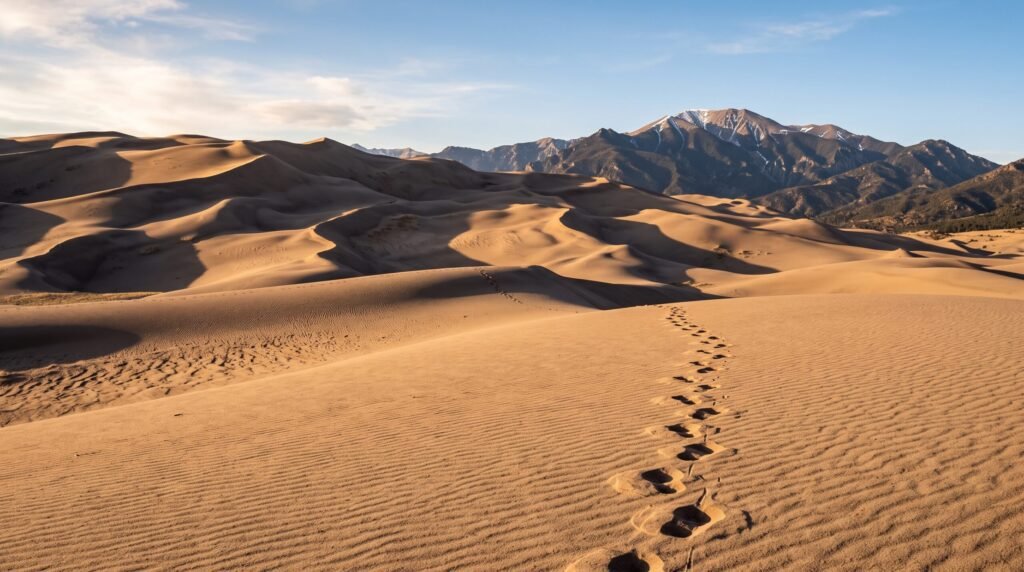
Sand gets hot enough to blister bare feet here — up to 150°F on a summer afternoon — which is the first thing every guide should mention and almost none do. These are the tallest dunes in North America, rising nearly 750 feet above the valley floor, and the payoff for the climb (barefoot in the cool morning, shoes by midday) is a 360-degree view backed by the Sangre de Cristo peaks. Time your trip for late May or June to catch Medano Creek at its seasonal peak flow, when kids float the shallow water at the base of the dunes. Entry runs $25 per vehicle for seven days. Bring a sled — regular plastic snow sleds work fine on sand, and rentals are available in nearby Alamosa.
10. White Sands National Park, New Mexico
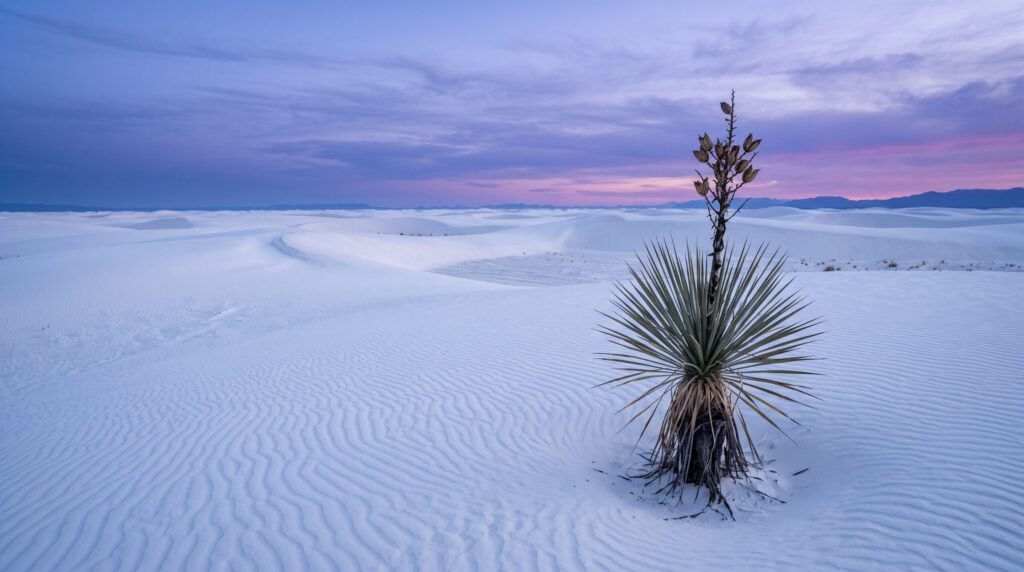
This is the only national park in the country that can close without warning mid-visit. White Sands sits next to an active missile testing range, and Dunes Drive shuts down whenever a test is scheduled — check the park’s alert page the morning you go. What you’re driving into once it’s open: 275 square miles of blinding-white gypsum dunes that stay cool underfoot even in summer, unlike ordinary sand. Entry costs $25 per vehicle for seven days. Buy a waxed plastic sled at the visitor center for about $20 and use the slopes near the picnic area — actual snow sleds work too. Go for sunset. There’s zero shade anywhere in the park, and the low light turns the dunes pink and gold.
11. Badlands National Park, South Dakota
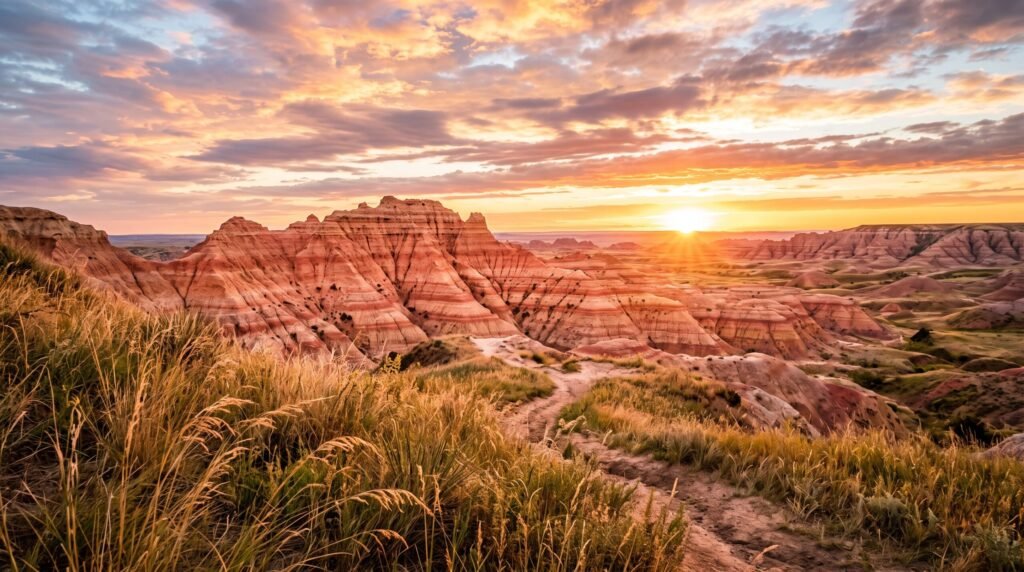
The striped rock glows pink and orange for about twenty minutes right after sunrise, then fades to flat tan for the rest of the day — most photographers plan their whole visit around that window. The Badlands Loop Road covers the highlights in a few hours, and the Fossil Exhibit Trail, a flat, wheelchair-friendly 0.4 miles, is worth the stop for kids. Entry is $30 per vehicle, cashless only — bring a card, the gate won’t take bills. Summer highs regularly clear 100°F with almost no shade, so save hikes for morning. Bison and bighorn sheep show up most reliably at dawn and dusk near Sage Creek Rim Road.
12. The Palouse, Washington
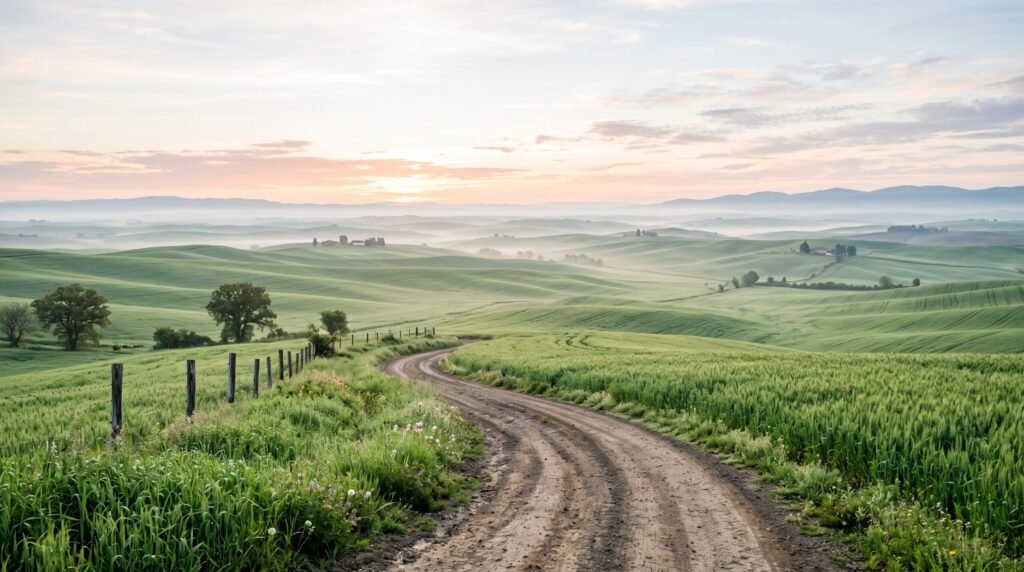
From the ground, the Palouse just looks like farmland. Climb to the summit of Steptoe Butte — 3,612 feet, reachable by a winding paved road — and it turns into an ocean of rolling waves, green in June and gold by late August when the wheat harvest starts. You’ll need a Washington Discover Pass to park at the summit lot, $11.50 for a single day or $35 for the year, sold from an automated station on-site. There’s no entrance fee for the region itself — this is working farmland, not a national park, so stay off the crops and respect private property. Go for sunrise. The low light carves shadows into every hill, and the wind hasn’t picked up yet.
13. Columbia River Gorge, Oregon — Multnomah Falls
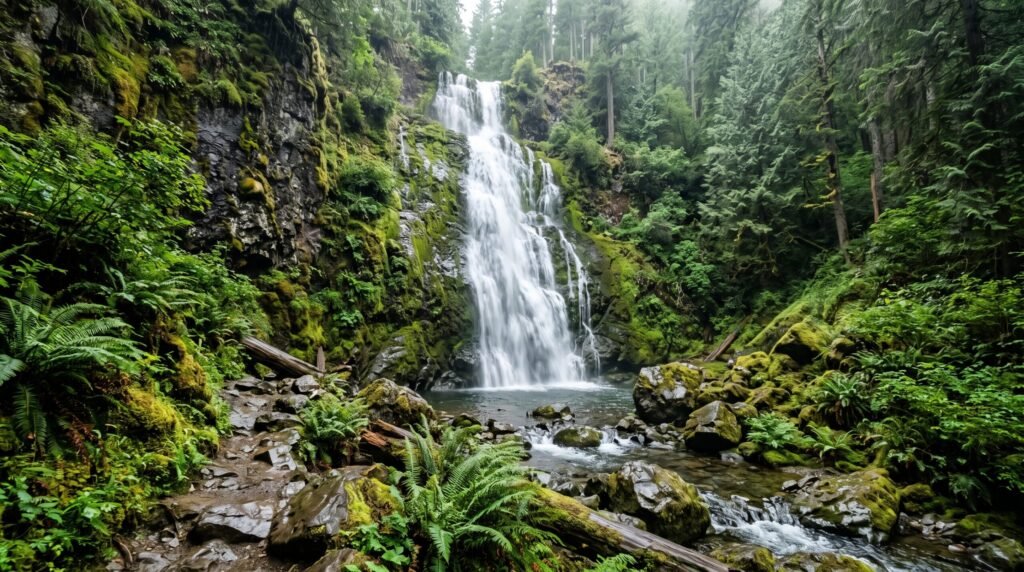
620 feet of water drops in two tiers here, and for one stretch of summer it comes with a permit most first-time visitors don’t know to look for. Between May 22 and September 7, 2026, you need a $2 Timed Use Permit to park in the main I-84 lot between 9 a.m. and 6 p.m. — book it up to 14 days ahead on Recreation.gov. Skip the whole system by arriving before 9 a.m.; the falls look better in morning light anyway, before the crowds and before the mist burns off. The paved path to Benson Bridge takes ten minutes; the full climb to the top runs about an hour. Six other waterfalls along the historic highway need no permit at all, though three now charge a separate $10 state parking fee as of 2026.
14. Mackinac Island, Michigan
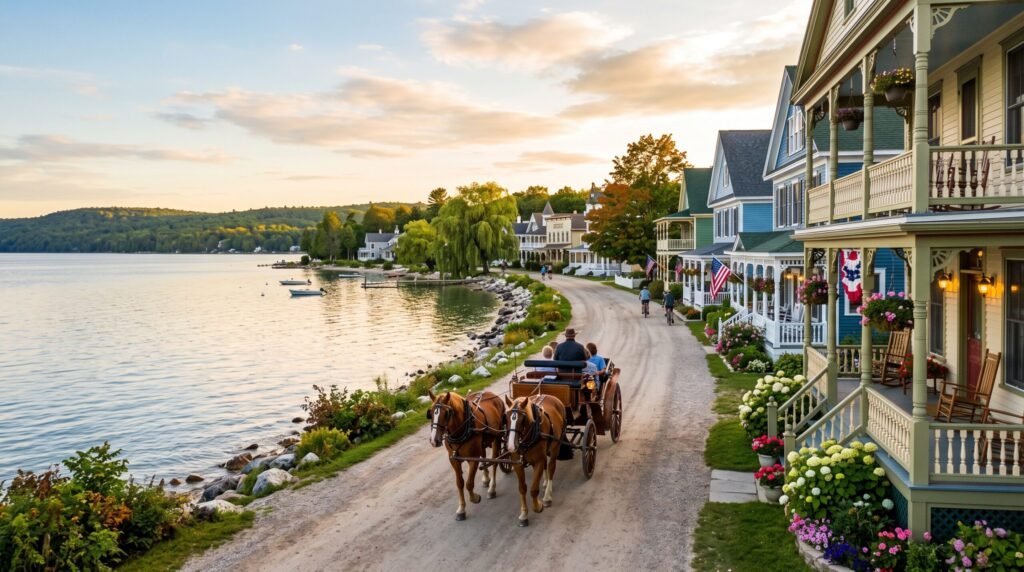
Cars have been banned here since 1898, and the rule has outlasted the entire automobile industry that grew up around it. Horses and bicycles are still the only way to get around, and the 8.2-mile loop road circling the island is one of the most pleasant flat rides in the country. You reach the island by ferry only — round trip runs $37 to $39 per adult, a 16 to 25 minute crossing from Mackinaw City or St. Ignace. Rent a bike near the dock rather than bringing your own; it’s cheaper, and you skip the ferry’s bike transport fee. Fudge shops line the main street for a reason — it’s practically the island’s second industry after tourism itself.
15. Great Smoky Mountains National Park, Tennessee/North Carolina
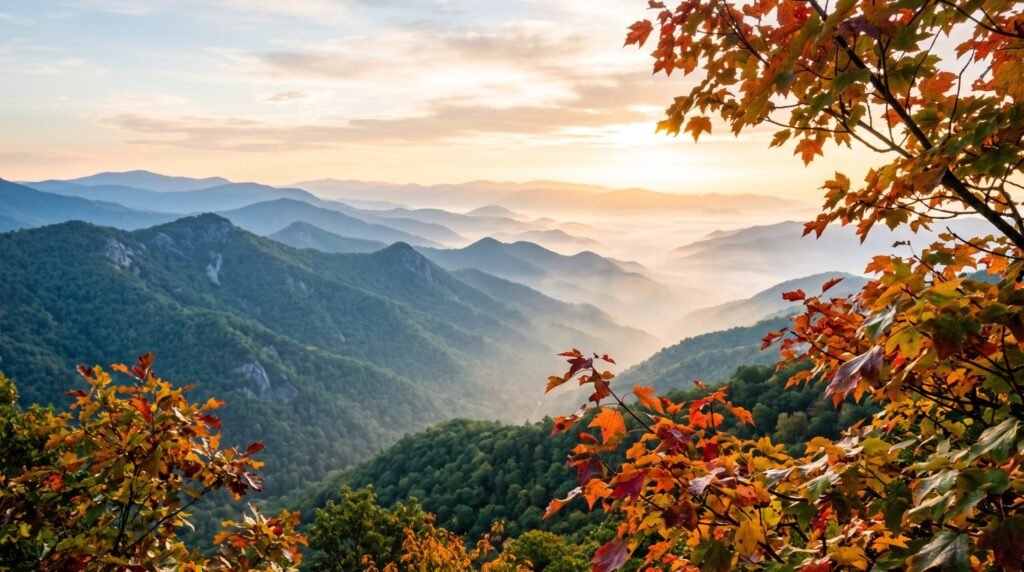
Mist clings to these ridgelines most mornings — it’s not fog, it’s the natural blue haze that gave the Smokies their name, released by the forest itself. This is also the only major national park in the country with no entrance fee, and the busiest by a wide margin, pulling more visitors than Yellowstone, Yosemite, and the Grand Canyon combined. The catch: park anywhere longer than 15 minutes and you need a parking tag — $5 for the day, $15 for the week — sold at kiosks and visitor centers. Driving Cades Cove Loop Road without stopping needs nothing at all. Fall color usually peaks mid-to-late October, and trailhead lots at Alum Cave and Rainbow Falls fill by mid-morning most weekends.
16. Outer Banks, North Carolina
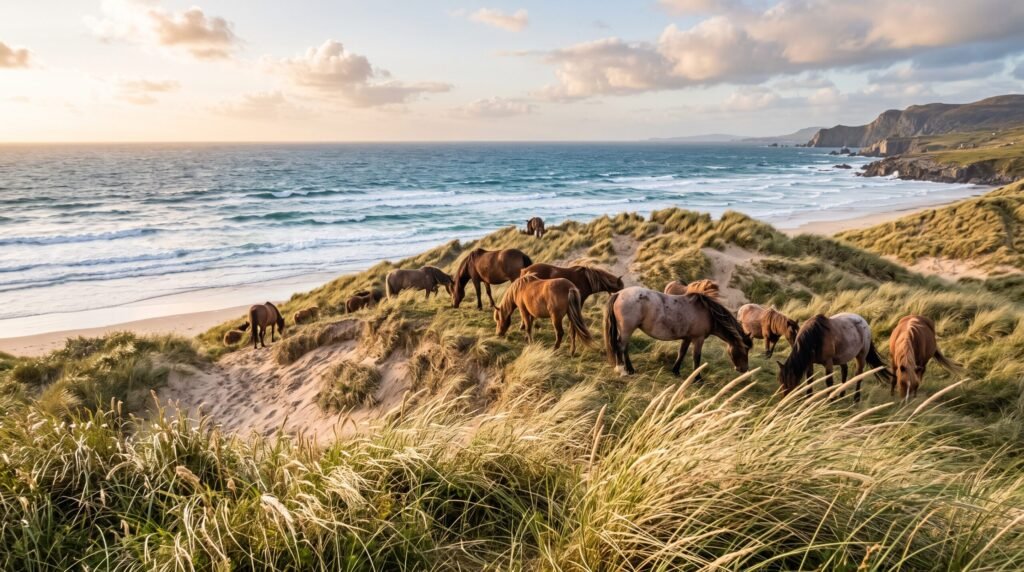
Spanish mustangs have roamed these dunes for roughly 500 years, likely descended from shipwrecked colonial-era horses — and you still can’t get within 50 feet of them. It’s the law, and rangers enforce it. The herd lives on a stretch of beach north of Corolla with no paved road in, so the only way to see them is a guided 4WD tour, which runs $65 to $75 per adult for about two hours and 25 to 30 miles of beach driving. Combine it with a stop at Cape Hatteras Lighthouse, the tallest brick lighthouse in the country, about an hour south. Storms can cancel horse tours with little notice, so build a buffer day into your trip if seeing them is the priority.
17. Acadia National Park, Maine
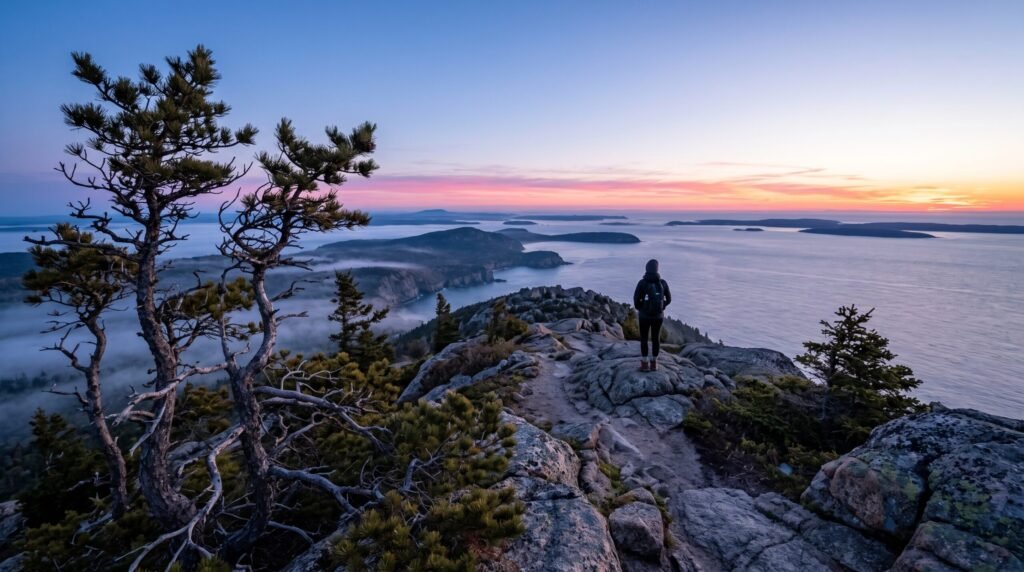
For part of the year, Cadillac Mountain is the first place in the continental United States to see the sunrise, and that alone pulls crowds before dawn. Driving up for it now requires a $6 vehicle reservation on top of the standard $35 park entrance fee, valid May 20 through October 25, 2026, with a 90-minute sunrise window. Miss the reservation window and you can still hike or bike to the summit for free, no booking required. Skip Cadillac altogether and the park barely notices — Sand Beach, Jordan Pond, and Thunder Hole need no reservation at all, and 120 miles of trail cover terrain just as dramatic.
18. Niagara Falls, New York
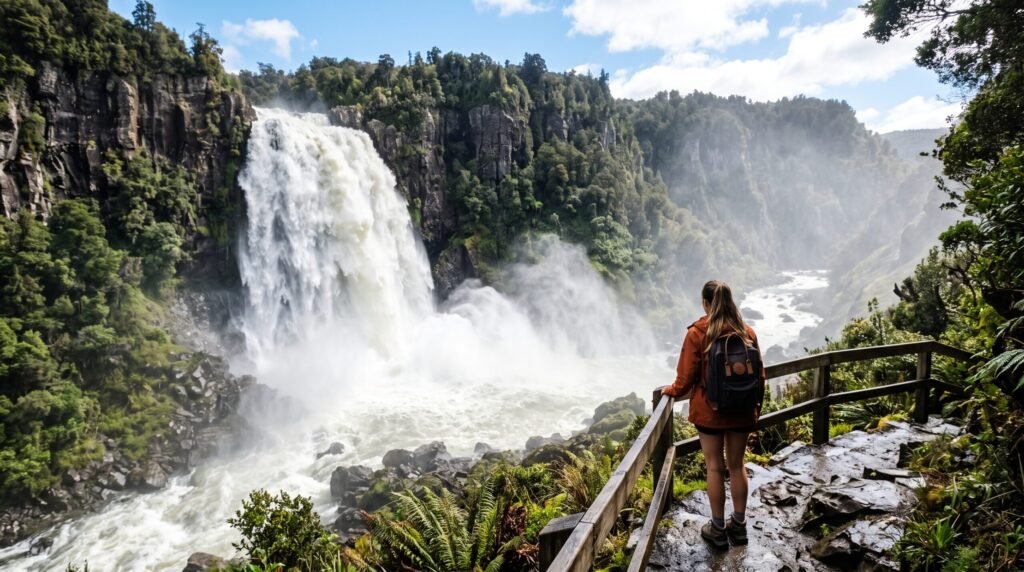
Niagara Falls State Park itself costs nothing to enter — you can walk up to Prospect Point, Goat Island, and Luna Island and see all three falls for free. What costs money is the Maid of the Mist boat ride into the spray at the base of Horseshoe Falls, running since 1846 and one of the oldest continuously operating tourist attractions in the country. Tickets run $30.25 for adults, no reservation needed, first-come-first-served, and include a poncho and the elevator ride down. Go on the American side if you want the boat ride and fewer crowds; the Canadian side gets the better skyline view but requires a passport to cross.
19. Denali National Park, Alaska
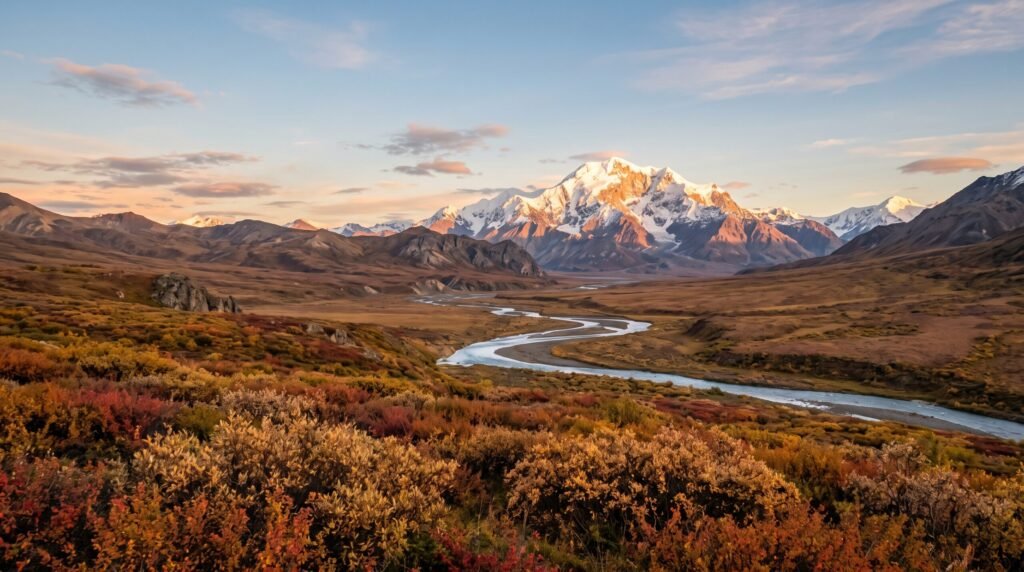
Most national parks let you drive wherever the map allows. Denali doesn’t. Private vehicles stop at Mile 15 of the park’s only road, Savage River; past that, it’s shuttle bus, tour bus, bike, or foot only. The once-a-year Road Lottery that let winners drive the whole 92-mile route is canceled indefinitely due to an ongoing landslide at Pretty Rocks, and the road itself is currently closed at Mile 43. Entrance costs $15 per person for seven days. Book a shuttle bus seat rather than a narrated tour if you want the flexibility to hop off and hike. Wildlife sightings — bears, caribou, Dall sheep — are common enough that most visitors spot something within the first two hours.
20. Big Sur, California
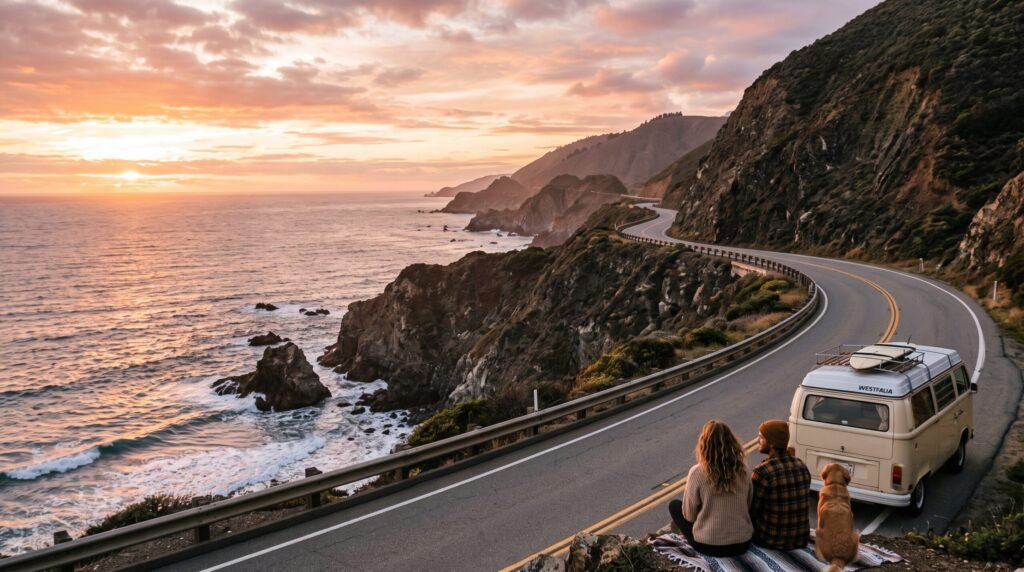
Highway 1 through Big Sur fully reopened in January 2026 after three straight years of landslide closures — the longest stretch the road has ever been split in half. That means Bixby Bridge, McWay Falls, and Pfeiffer Beach’s Keyhole Rock are all reachable again on one continuous drive between Carmel and Cambria, no inland detour required. Expect the reopening itself to draw crowds this year, so hit pullouts before 10 a.m. or after 4 p.m. McWay Falls is the shot everyone wants — a waterfall dropping straight onto a beach you’re not allowed to walk on, viewable only from an overlook. Gas is scarce and expensive along the route; fill up in Carmel or Cambria before you commit.
| Place | Best For | Best Month | Rough Cost |
|---|---|---|---|
| Antelope Canyon, AZ | Slot canyon light beams | June | $80–$190 |
| Yosemite Valley, CA | Granite cliffs, waterfalls | October | $35/vehicle |
| Napali Coast, HI | Sea cliffs by boat | July | ~$250 |
| Glacier NP, MT | Alpine road trip | August | $35/vehicle |
| Grand Prismatic, WY | Geothermal color | September | $35/vehicle |
| The Narrows, UT | River canyon hiking | September | $35 + ~$32/day gear |
| Crater Lake, OR | Bluest water in the US | August | $30/vehicle |
| Maroon Bells, CO | Mountain reflections | September | $10–$16 |
| Great Sand Dunes, CO | Tallest dunes in N. America | June | $25/vehicle |
| White Sands, NM | Gypsum dune sledding | October | $25/vehicle |
| Badlands, SD | Striped rock at sunrise | September | $30/vehicle |
| The Palouse, WA | Farmland photography | June | $11.50 |
| Columbia River Gorge, OR | Waterfall hopping | May | Free–$2 |
| Mackinac Island, MI | Car-free island charm | July | ~$39 ferry |
| Great Smoky Mtns, TN/NC | Fall foliage, hiking | October | Free + $5/day parking |
| Outer Banks, NC | Wild horses, beaches | September | $65–$75 |
| Acadia, ME | First US sunrise | September | $35 + $6 |
| Niagara Falls, NY | Raw waterfall power | June | Free + $30.25 |
| Denali, AK | Wilderness, wildlife | July | $15/person |
| Big Sur, CA | Coastal road trip | May | Free drive |
Frequently Asked Questions
🚗 Do I need a rental car for this list?
For 18 of the 20 places, yes — these are drive-up destinations, and a few (Glacier, Yellowstone, Big Sur) need one to link stops along a scenic road. Only Mackinac Island and the Napali Coast boat option don’t require a car once you arrive.
👨👩👧 Which of these work well with kids?
Niagara Falls, Mackinac Island, White Sands, and the Great Smoky Mountains are the easiest with young kids — short walks, clear payoffs, low risk. The Narrows, Kalalau Trail, and Denali’s backcountry sections are better suited to older kids and teens.
💵 Do these prices change often?
Yes, especially national park entrance fees and reservation systems, which several parks revised for 2026 alone. Treat every number here as a solid starting estimate and double-check the official park or vendor site within a month of your trip.
📅 Which spots need booking the furthest in advance?
Kalalau Trail permits (90 days out) and Cadillac Mountain sunrise reservations sell out fastest. Antelope Canyon light-beam tours and Maroon Bells sunrise parking are next — book those as soon as your dates are set.
🗺️ Can I realistically see all 20 in one trip?
Not in one trip unless you have months and a serious travel budget — Hawaii and Alaska alone are separate flights from the mainland cluster. Pick two or three places in the same region and build a focused week around them instead.
🍂 Is spring or fall better for this list overall?
Fall (September–October) hits the sweet spot for the most places — lower crowds, cooler hiking weather, and foliage color at several stops. Spring works better specifically for Great Sand Dunes, Columbia River Gorge waterfalls, and Big Sur, when water flow and wildflowers peak.
📌 Save This: 20 Places at a Glance
- Antelope Canyon, AZ — June — Glow
- Yosemite Valley, CA — Oct — Granite
- Napali Coast, HI — July — Cliffs
- Glacier NP, MT — Aug — Alpine
- Grand Prismatic, WY — Sept — Rainbow
- The Narrows, UT — Sept — Wade
- Crater Lake, OR — Aug — Blue
- Maroon Bells, CO — Sept — Reflection
- Great Sand Dunes, CO — June — Tallest
- White Sands, NM — Oct — Gypsum
- Badlands, SD — Sept — Striped
- The Palouse, WA — June — Waves
- Columbia River Gorge, OR — May — Waterfalls
- Mackinac Island, MI — July — Car-free
- Great Smoky Mountains, TN/NC — Oct — Misty
- Outer Banks, NC — Sept — Wild horses
- Acadia, ME — Sept — Sunrise
- Niagara Falls, NY — June — Power
- Denali, AK — July — Wilderness
- Big Sur, CA — May — Coastal
Twenty places is a lot to look at and not nearly enough to visit in one summer.
Pick two. Maybe three, if they sit close enough to chain into one trip. You’ll remember them a lot better than a rushed checklist of twenty stamped passports.
Fees change, roads close, and permits sell out — that’s just the nature of anywhere worth visiting right now, and 2026 has already reshuffled the rules at half the parks on this list. Check the details again a few weeks before you go.
Save this pin now, so it’s open on your phone at the trailhead — not just somewhere in the back of your mind.