

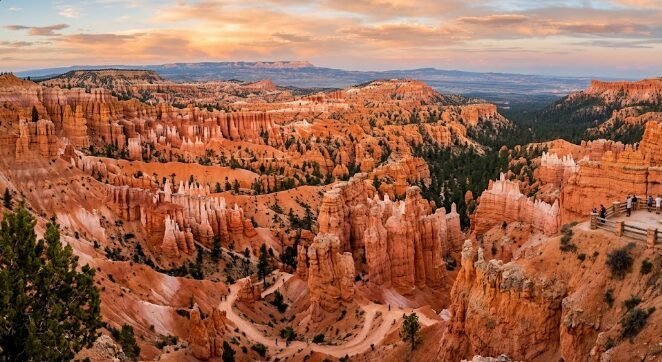
Utah holds a genuinely rare distinction: it’s home to five national parks, more than any state except California and Alaska, all concentrated in the southern and central part of the state within reasonable driving distance of each other. Locals and frequent visitors call them the “Mighty 5” — Zion, Bryce Canyon, Capitol Reef, Arches, and Canyonlands — and together they showcase some of the most striking desert landscape anywhere in the country, from soaring sandstone arches to canyon walls in every shade of red and orange.
This guide covers Utah’s must-see destinations, how to actually plan a multi-park road trip without feeling rushed, and the 2026-specific permit and reservation details that have become genuinely important to understand before you go. If Zion is your primary focus, our complete Zion National Park guide goes much deeper into that specific park’s shuttle system, permits, and trail planning.
Table of Contents
Understanding Utah’s Mighty 5 National Parks
Zion National Park
The most visited of Utah’s parks and, in recent years, the second most-visited national park in the entire country. Zion’s towering red and cream sandstone cliffs, the Virgin River running through the canyon floor, and signature hikes like The Narrows and Angels Landing make it the natural starting point for most Utah itineraries. Given its popularity and the permit requirements now in place for Angels Landing specifically, our dedicated Zion National Park guide is worth reading in full before finalizing your Utah trip dates.
Bryce Canyon National Park
Famous for its thousands of hoodoos — narrow spires of red, orange, and white rock rising from natural amphitheaters carved into the edge of a high plateau. Bryce Canyon’s sunrise views, particularly from Sunrise Point, Sunset Point, and Bryce Point, rank among the most consistently recommended experiences in any Utah travel guide, with the changing light dramatically shifting how the hoodoos appear as the sun moves.
Capitol Reef National Park
Less visited than Zion or Bryce Canyon, Capitol Reef centers on the Waterpocket Fold, a roughly 100-mile geologic wrinkle in the earth’s crust, alongside colorful cliffs, domes, and a genuinely unexpected feature: historic orchards planted by Mormon pioneer settlers, still maintained today and open for visitor picking during harvest season. The park’s relative quiet compared to its more famous neighbors makes it a strong pick for travelers wanting Utah’s signature scenery without the heaviest crowds.
Arches National Park
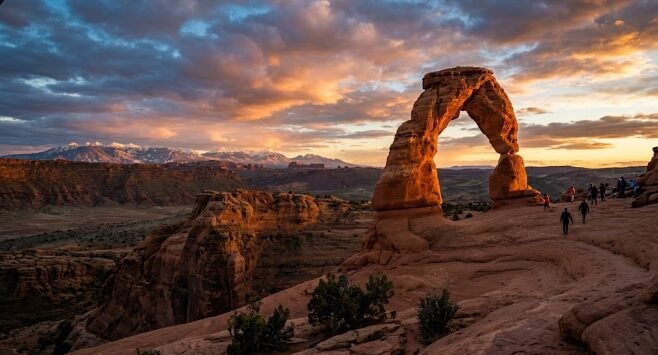
Home to over 2,000 documented natural stone arches, including Delicate Arch — likely the single most photographed natural feature in the entire state, especially at sunset. Important 2026 detail: Arches requires a timed entry permit for vehicle access from April 1 through July 6 and again from August 28 through October 31, with permits released six months in advance through Recreation.gov. This isn’t optional during those windows, and arriving without one means being turned away at the gate.
Canyonlands National Park
Utah’s largest national park, divided into four distinct districts — Island in the Sky, The Needles, The Maze, and the rivers themselves. Island in the Sky, the most accessible and most visited district, sits atop a massive mesa with panoramic views extending over 100 miles on clear days. The Needles district offers more colorful rock spires and genuinely challenging backcountry hikes, while The Maze remains one of the most remote, least-visited sections of the entire National Park System.
Planning a Mighty 5 Road Trip
Minimum realistic timeline: A week-long trip allows roughly one day each at Bryce Canyon, Capitol Reef, Arches, and Canyonlands, with two days at Zion given its larger scale and hiking options. Non-hikers can reasonably cover this ground in 5 days, while hikers genuinely benefit from extending to 7 or more days.
Recommended routing: Most travelers start from either Salt Lake City or Las Vegas, both offering frequent flight options, looping through the parks rather than backtracking. Switching lodging locations most nights minimizes driving time, with the notable exception of Arches and Canyonlands, which sit close enough together near Moab to share a single lodging base.
The Scenic Byway 12 connection: The drive between Bryce Canyon and Capitol Reef along Utah’s Highway 12 is consistently cited as a highlight in its own right — a genuinely scenic stretch that many first-time visitors don’t realize is worth budgeting extra time for, rather than treating as a simple point-to-point transit.
The America the Beautiful Annual Pass becomes worthwhile almost immediately on a Mighty 5 trip — at $80 for U.S. residents, it pays for itself after visiting just three of the five parks given standard individual entrance fees, with the added benefit of covering any other national parks you visit within the same twelve months.
Beyond the Mighty 5: Hidden Gems and State Parks
Monument Valley, straddling the Utah-Arizona border, delivers some of the most iconic Western landscape imagery in the country — the kind of sweeping sandstone buttes that have appeared in countless films, managed by the Navajo Nation rather than the National Park Service.
Grand Staircase-Escalante National Monument, between Bryce Canyon and Capitol Reef, offers genuinely remote, less-developed desert terrain for visitors willing to venture beyond the main park system, including access to Lower Calf Creek Falls, one of the tallest waterfalls in the state.
Kanab, in southern Utah, functions as a strong base camp for exploring nearby slot canyons, Coral Pink Sand Dunes State Park, and the area’s striking rock formations, while also sitting close enough to Zion’s back side to combine both destinations in a single trip segment.
Dead Horse Point State Park, near Moab, offers canyon views genuinely comparable to nearby Canyonlands at a fraction of the crowds, making it a strong addition for travelers with extra time in the Moab area.
Bear Lake, in northern Utah near the Idaho border, provides a completely different kind of Utah experience — a turquoise alpine lake nicknamed the “Caribbean of the Rockies,” popular for both summer water activities and winter recreation, and a strong option for travelers exploring Utah’s northern half rather than the southern desert parks.
Park City, home of the Sundance Film Festival and significant ski resort infrastructure, anchors Utah’s mountain recreation scene near Salt Lake City, offering a genuinely different pace and climate than the southern desert parks.
Best Time to Visit Utah’s National Parks
Spring (April-May) offers comfortable temperatures across most of Utah’s parks, though this window now overlaps with Arches’ timed entry permit requirement, so advance booking matters even more during this otherwise ideal season.
Summer (June-August) brings peak crowds and genuinely intense desert heat, particularly at lower-elevation parks like Arches and Canyonlands, where summer temperatures regularly exceed 100°F. Zion and Bryce Canyon’s higher elevations offer somewhat more manageable conditions, though all five parks see their highest visitor numbers during this window.
Fall (September-October) matches spring as a strong alternative, with crowds beginning to thin from summer peaks and temperatures becoming considerably more comfortable for hiking, particularly in the desert parks.
Winter (November-March) delivers the quietest visitor numbers by far, along with genuinely striking photography opportunities — snow-dusted red rock formations create a dramatic contrast unavailable any other time of year. Always check current road and trail conditions before a winter visit, since snow and ice can close specific routes or trails with little advance notice.
Common Mistakes to Avoid in Utah
Trying to see all five Mighty 5 parks in fewer than five days. Doing so is technically possible but produces a rushed, unsatisfying experience that misses much of what makes each park distinct — most experienced Utah travelers strongly advise against this pace.
Not booking Arches’ timed entry permit in advance during the required window. Given the months-ahead release schedule through Recreation.gov, arriving without a permit during April-July or late August-October means being turned away entirely, not just facing a longer wait.
Underestimating summer desert heat at lower-elevation parks. Arches and Canyonlands specifically see dangerous summer temperatures, and hikers without adequate water and heat planning face real risk during peak summer months.
Skipping Capitol Reef and Canyonlands in favor of just Zion and Arches. While Zion and Arches understandably draw the most attention, Capitol Reef and Canyonlands offer genuinely comparable scenery with meaningfully thinner crowds, and travelers who skip them often regret it once they see photos from other visitors who didn’t.
Photography Tips for Utah’s National Parks
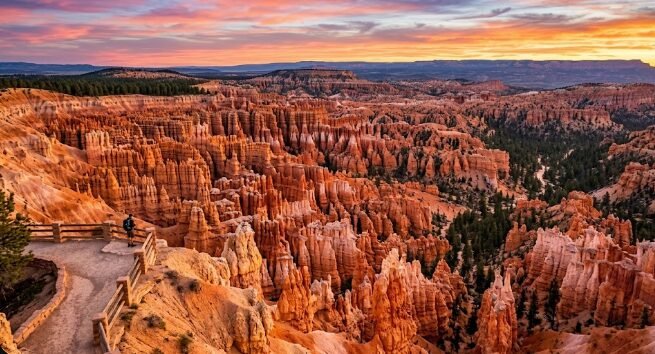
Sunrise at Bryce Canyon delivers some of the most dramatic light of any Utah destination, with the hoodoos’ colors shifting noticeably as the sun rises, making an early start genuinely worth the lost sleep for photographers specifically.
Delicate Arch photographs best at sunset, when the arch and surrounding rock catch warm, low-angle light — this is also when the location gets most crowded, so arriving with enough time to secure a good vantage point matters.
Canyonlands’ Mesa Arch is one of the most photographed single spots in Utah, specifically at sunrise when light passes directly through the arch opening, creating a glowing effect that’s become genuinely iconic among landscape photographers.
A polarizing filter helps significantly across all five parks, cutting glare and intensifying the red rock color saturation that defines Utah’s signature landscape, particularly useful during midday shooting when light is otherwise less favorable.
Food and Where to Eat in Utah
Utah’s national park gateway towns offer a genuinely wider range of dining than visitors sometimes expect from such remote desert locations. Moab, serving both Arches and Canyonlands, has developed a strong independent restaurant and brewery scene given its position as the area’s primary tourist hub. Springdale, just outside Zion, similarly punches above its small size with solid dining options walkable from most lodging.
For a genuinely Utah-specific food experience, look for Navajo tacos (fry bread topped with traditional taco ingredients) at restaurants near Monument Valley and other areas closer to Navajo Nation land, and don’t skip Capitol Reef’s historic pioneer orchards, where visitors can pick fruit in season — a uniquely Utah park experience unavailable anywhere else in the Mighty 5.
What to Pack for a Utah National Parks Trip
More water than feels necessary, particularly for any hiking at Arches or Canyonlands during summer months, when desert heat and low humidity dehydrate visitors faster than they typically expect.
Sturdy hiking footwear with good grip, since slickrock terrain — common throughout Utah’s parks — is exactly as slippery as the name suggests, especially when wet or sandy.
Layers for genuine desert temperature swings, since Utah’s high-desert elevation means even summer nights can drop into the 50s°F, a significant shift from daytime highs that can exceed 100°F at the same parks.
A printed map or offline navigation, given limited cell service across significant stretches between parks, particularly through more remote sections like Capitol Reef and Canyonlands’ outer districts.
Budgeting for a Utah National Parks Trip
Entrance fees run roughly $30-35 per vehicle per park for a standard week-long pass, making the $80 America the Beautiful Annual Pass the clear value choice once you’re visiting three or more parks within the Mighty 5.
Lodging varies by gateway town, with Moab and Springdale commanding premium rates during peak season (often $200-350 per night) while smaller, less central towns like Kanab or Torrey (near Capitol Reef) typically offer more budget-friendly options.
A realistic budget for a 7-day Mighty 5 road trip for two people, mixing mid-range lodging across multiple gateway towns and moderate dining, typically lands in the $2,200-3,200 range, not including flights into Salt Lake City or Las Vegas. For current event listings, road conditions, and additional regional guides, the official Visit Utah tourism site is worth bookmarking throughout your trip planning.
Frequently Asked Questions
How many days do you need to see Utah’s national parks? A full week allows reasonable time at all five Mighty 5 parks, though non-hikers can compress this to five days. Ten days or more allows for a more relaxed pace plus additional stops like Monument Valley or Grand Staircase-Escalante.
Which Utah national park should I visit first? Zion is the natural starting point for most first-time visitors given its accessibility, range of trail difficulty options, and position as the most-visited of the five — see our complete Zion guide for detailed planning.
Do I need a permit to visit Arches National Park in 2026? Yes, during two specific windows: April 1 through July 6, and August 28 through October 31. Outside these dates, no permit is required. Permits release six months in advance through Recreation.gov and should be booked as early as possible given limited daily availability.
What’s the best base city for a Utah national parks road trip? Salt Lake City and Las Vegas both work well as starting and ending points, given frequent flight options and reasonable driving distances to the southern Utah parks, though Las Vegas sits somewhat closer to Zion specifically.
Is Utah good for a family trip? Yes, particularly Arches, where many trails like Balanced Rock and Sand Dune Arch are short and genuinely engaging for kids, alongside Junior Ranger programs available at every park covered in this guide.
Final Thoughts
Utah’s concentration of five distinct national parks within a single, drivable region remains genuinely unmatched anywhere else in the country, and the 2026-specific permit details — particularly Arches’ timed entry windows — are worth building your itinerary around from the start rather than discovering after arrival. Whether you’re tackling all five parks in a single ambitious road trip or focusing deeply on just Zion and one or two neighbors, Utah’s red rock landscape delivers some of the most distinctive scenery in the American Southwest, rewarding exactly the kind of unhurried exploration its sheer scale demands.