

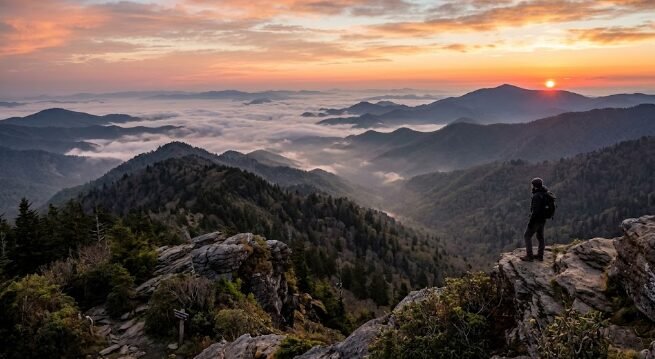
More people visit Great Smoky Mountains National Park every year than any other national park in America — over 12 million annually, more than double Yellowstone or Grand Canyon’s visitor numbers. Part of that comes down to a simple, powerful fact: it’s the only major national park in the entire system that charges no entrance fee at all. The other part comes down to what’s actually here — mist-covered ridgelines that gave the park its name, more than 800 miles of trails, waterfalls tucked into old-growth forest, and one of the most biodiverse temperate ecosystems anywhere on the planet.
This guide covers everything you need for a 2026 visit — current road and visitor center schedules, where to actually stay, the hikes worth your time, and the practical planning details that separate a smooth trip from a frustrating one at America’s most-visited park. If you’re building a broader Appalachian itinerary, our Blue Ridge Parkway guide covers the scenic route connecting directly into the Smokies from the north.
Table of Contents
| Detail | Information |
|---|---|
| Entrance Fee | $0 — free admission, the only major U.S. national park with no entrance fee |
| Annual Visitors | Over 12 million (most-visited national park in the U.S.) |
| States | Tennessee and North Carolina |
| Highest Point | Clingmans Dome, 6,643 feet |
| Total Trail Miles | 800+ miles, including a section of the Appalachian Trail |
| Nearest Major Airports | Knoxville (closest), Nashville (more flight options) |
Why Great Smoky Mountains Has No Entrance Fee
This surprises a lot of first-time visitors, so it’s worth explaining upfront. When the road that would become Newfound Gap Road (US 441) was built through the mountains in the 1930s, the state of Tennessee transferred the land with a legal condition attached: the road must remain free to the public, permanently. Because charging a standard park entrance fee would effectively require tolling that road, the park has remained fee-free ever since — a rare, genuinely valuable detail for budget-conscious travelers and families.
2026 Visitor Center Hours and Road Schedule for Great Smoky Mountains
Planning around current operating hours and seasonal closures matters more at this park than many others, given its size and elevation range. Here’s the current 2026 schedule:
| Location | Winter (Dec-Feb) | Spring/Fall (Mar-May, Sep-Nov) | Summer (Jun-Aug) |
|---|---|---|---|
| Sugarlands Visitor Center | 8 AM – 5 PM | 8 AM – 6 PM | 8 AM – 7 PM |
| Oconaluftee Visitor Center | 8 AM – 5 PM | 8 AM – 6 PM | 8 AM – 7 PM |
| Cades Cove Visitor Center | 9 AM – 4:30 PM | 9 AM – 5:30 PM | 9 AM – 7 PM |
Seasonal road closures for 2026:
- Clingmans Dome Road: closed December 1, 2025 through March 31, 2026, regardless of conditions
- Roaring Fork Motor Nature Trail: closed December through March
- Little River Road beyond Elkmont: closed for winter
- Newfound Gap Road (US 441): stays open year-round except during active snow events requiring plowing — this is the main park road and your most reliable route through the Smokies even in winter
Where to Stay: Gateway Towns Compared
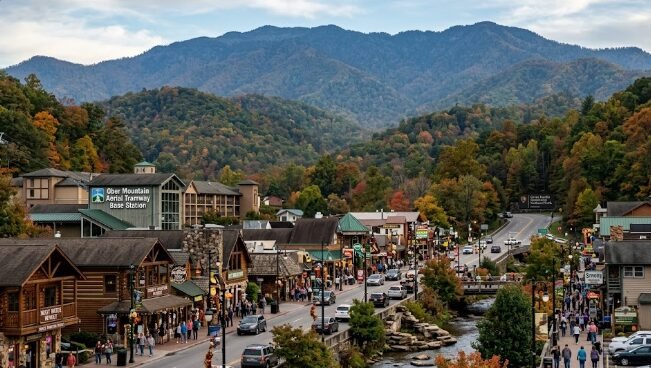
Choosing the right base town shapes your entire trip more than almost any other decision. Here’s an honest comparison:
| Town | Vibe | Best For | Distance to Park |
|---|---|---|---|
| Gatlinburg, TN | Busy, tourist-heavy, lots of attractions | First-timers wanting dining/shopping nearby | Directly adjacent |
| Pigeon Forge, TN | Family entertainment, Dollywood, shows | Families wanting theme park + park combo | 10-15 min |
| Townsend, TN | Quiet, relaxed, fewer crowds | Travelers wanting peaceful mountain access | 15-20 min |
| Bryson City, NC | Calm, scenic train rides, less commercial | Quieter NC-side base, Great Smoky Mountains Railroad | Direct (NC entrance) |
🏨 Compare Cabins & Hotels Near the Smokies →
A Few Specific Lodging Picks Worth Knowing
LeConte Lodge — the only lodging actually inside the park, accessible exclusively by hiking (no road access). Genuinely unique experience, books out fast; reservations for the upcoming season typically open October 1 of the prior year.
Tremont Lodge & Resort (Townsend) — consistently recommended for travelers wanting the quieter side of the Smokies with comfortable, modern amenities and easy park access.
Cades Cove Campground — for travelers wanting to camp directly in one of the park’s most scenic areas, bookable through Recreation.gov up to six months in advance.
Top Things to Do and See in Great Smoky Mountains National Park
Cades Cove
An 11-mile one-way loop road through a historic, still-pastoral valley dotted with preserved log cabins, churches, and a working gristmill — consistently the park’s single most popular destination. On Wednesdays from May through September, the loop closes to vehicle traffic in the morning specifically for cyclists, a genuinely excellent way to experience the area without traffic congestion. Bicycle reservations for these mornings are bookable in advance for 2026.
Clingmans Dome
At 6,643 feet, the highest point in the park and the third-highest peak east of the Mississippi. A steep but short paved trail leads to an observation tower offering views that, on clear days, extend over 100 miles. Remember: this road closes completely December through March, so winter visitors should plan accordingly.
Waterfalls Worth the Hike
| Waterfall | Trail Distance | Difficulty | Highlight |
|---|---|---|---|
| Laurel Falls | 2.6 mi round trip | Easy, paved | Most accessible major waterfall, stroller-friendly sections |
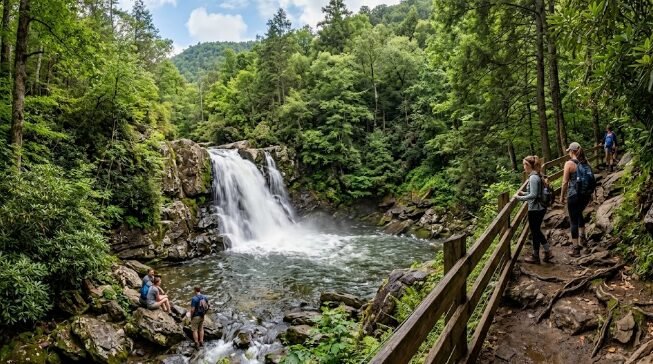
| Abrams Falls | 5 mi round trip | Moderate | Strong volume, popular swimming hole nearby (no swimming recommended due to currents) |
| Rainbow Falls | 5.4 mi round trip | Strenuous | Tallest single-drop waterfall in the park at 80 feet |
| Grotto Falls | 3 mi round trip | Moderate | Only Smokies waterfall you can walk behind |
The Appalachian Trail Through the Smokies
Roughly 70 miles of the Appalachian Trail run directly through Great Smoky Mountains National Park, following the Tennessee-North Carolina border along the main ridgeline. Day hikers can sample short sections without committing to a multi-day trek — Charlies Bunion, a dramatic rock outcropping accessible via a roughly 8-mile round trip from Newfound Gap, ranks among the most rewarding day-hike sections.
Roaring Fork Motor Nature Trail
A narrow, winding one-way loop through dense forest near Gatlinburg, passing historic structures and several waterfall access points. Closed in winter (see schedule above), but a strong, relatively quick scenic drive option the rest of the year.
Wildlife in the Smokies
The park supports over 65 mammal species and 200+ bird species, including one of the densest black bear populations in the eastern United States — an estimated 1,500+ bears live within park boundaries. Elk, reintroduced to the Cataloochee Valley area in the early 2000s, are now reliably spotted there, particularly during the September-October rut when bull elk bugling echoes through the valley. Always maintain safe wildlife distances and never approach or feed any animal, particularly bears.
Sample Itineraries
The 1-Day Highlights Drive
Enter via Sugarlands, drive Newfound Gap Road to Clingmans Dome (if seasonally open) for the overlook hike, continue to Cades Cove loop for wildlife viewing and historic structures, finishing with a short waterfall hike like Laurel Falls on the way back.
The 3-Day Deep Dive
Day one for Cades Cove and a moderate waterfall hike, day two for Clingmans Dome and a section of the Appalachian Trail near Newfound Gap, day three for Roaring Fork Motor Nature Trail and exploring a gateway town like Gatlinburg or Pigeon Forge.
Combining With the Blue Ridge Parkway
Given the Smokies sit at the southern terminus of the Blue Ridge Parkway, this park naturally extends a longer Appalachian road trip — see our complete Blue Ridge Parkway guide for planning the full route north from here.
Best Time to Visit Great Smoky Mountains National Park
Spring (April-May): Wildflowers bloom in waves moving up in elevation as the season progresses, and crowds remain lighter than summer or fall peaks — widely considered one of the two best windows of the year.
Summer (June-August): The busiest season, with July historically the single most crowded month. Full road access and long daylight hours, but expect heavy traffic at popular stops like Cades Cove and significant humidity at lower elevations.
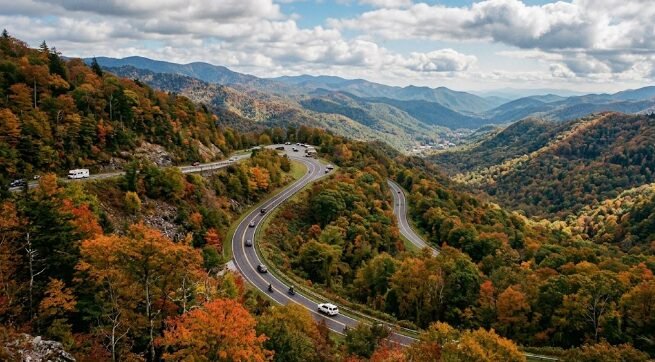
Fall (September-October): October draws the heaviest crowds of the year for fall foliage, with hotels filling and trails genuinely packed on weekends. Color typically peaks in mid-to-late October, though elevation affects timing significantly — higher elevations turn earlier than valley areas.
Winter (November-March): The quietest season by far, with visitor numbers dropping to just 20-30% of peak levels in January and February. Higher elevations see snow and road closures, but lower-elevation areas remain mild and genuinely peaceful for hiking.
2026 Reservation and Permit Details
Backcountry camping permits require reservations through Recreation.gov, bookable up to 30 days in advance starting February 1, 2026.
Campground reservations (Cades Cove, Elkmont, and others) open six months in advance through Recreation.gov.
LeConte Lodge reservations for the upcoming season opened October 1, 2025 — if you’re planning ahead for a future season, mark this date.
Cades Cove Loop bicycle mornings run Wednesday and Saturday mornings, May through September, with advance reservations available.
What to Pack
Layers, always. The 5,800-foot elevation range means Clingmans Dome can run 15-25°F cooler than Gatlinburg on the same day — a comfortable 70°F afternoon in town becomes a genuinely chilly 50°F at the summit.
Rain gear regardless of forecast. The Smokies are technically a temperate rainforest, and the misty conditions that give the park its name mean rain is a realistic possibility on most visits, any season.
Sturdy footwear for waterfall trails, many of which involve uneven, sometimes slick terrain near the falls themselves.
🎟️ Book a Guided Hiking or Wildlife Tour →
Photography Tips for Great Smoky Mountains National Park
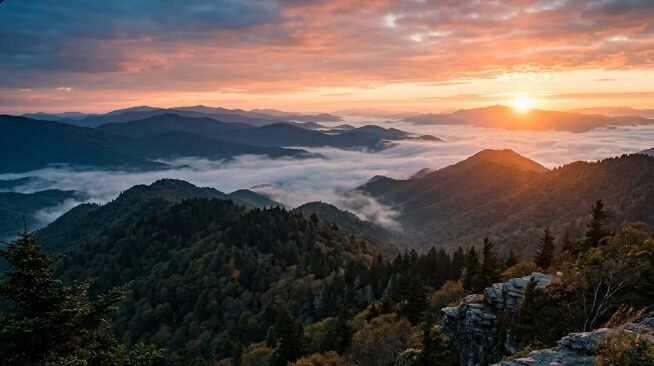
Sunrise delivers the park’s signature misty effect most dramatically. The “smoke” the mountains are named for is actually moisture rising off dense vegetation, and this effect peaks in the hour after sunrise, particularly visible from elevated overlooks like Newfound Gap or Clingmans Dome.
Cades Cove rewards patient, slow photography over rushed drive-throughs. The loop’s wildlife and historic structures photograph best with time to wait for good light and animal activity, rather than treating it as a quick scenic drive.
Fall foliage photography benefits from tracking elevation, not just dates. Because color changes progress from high elevation to low elevation as the season advances, photographers can effectively chase peak color for several weeks by adjusting which part of the park they visit, rather than hitting one fixed date and hoping for the best.
Waterfall photography benefits from overcast days, somewhat counterintuitively — bright, direct sun creates harsh contrast between bright water and dark surrounding forest that overcast lighting avoids entirely.
Great Smoky Mountains National Park Trip Budget
| Expense Category | Typical Cost Range |
|---|---|
| Entrance Fee | $0 (free park) |
| Mid-range hotel/cabin (per night) | $120-280 |
| Backcountry camping permit | Low cost via Recreation.gov |
| Developed campground (per night) | $20-30 |
| Guided hiking/wildlife tour | $60-150 per person |
| Great Smoky Mountains Railroad excursion | $50-100 per person |
A realistic budget for a 4-day Great Smoky Mountains trip for two people, with mid-range gateway-town lodging and moderate dining, typically lands in the $1,000-1,800 range — genuinely one of the more affordable major national park trips available, largely thanks to the zero entrance fee.
Common Mistakes to Avoid at Great Smoky Mountains National Park
Underestimating October crowds. Fall foliage season brings the heaviest traffic of the entire year, with hotels filling and trails genuinely packed — booking lodging by June-July for an October trip, as covered in the reservation section above, is genuinely necessary rather than excessive caution.
Not checking the seasonal road closure schedule. Clingmans Dome Road specifically closes for a full four months each winter regardless of actual weather conditions on a given day — assuming it’s open without checking is a common, avoidable disappointment.
Choosing Gatlinburg without realizing how busy it gets. While genuinely convenient, Gatlinburg’s tourist density isn’t for everyone — travelers wanting a quieter base should seriously consider Townsend or Bryson City instead, both covered in the comparison table above.
Skipping layers because Great Smoky Mountains “shouldn’t” require winter gear. Given the dramatic elevation-driven temperature swings covered in the packing section, even summer visitors hiking to higher elevations regret leaving warm layers behind.
Frequently Asked Questions
Is Great Smoky Mountains National Park really free to enter? Yes — it’s the only major U.S. national park with no standard entrance fee, a legal condition tied to the original construction of Newfound Gap Road in the 1930s.
What’s the best base town — Gatlinburg or Pigeon Forge? Gatlinburg sits directly adjacent to the park with the most direct access and dining variety, while Pigeon Forge suits families wanting to combine a park visit with Dollywood and other entertainment. Townsend and Bryson City both offer quieter, less commercial alternatives.
How many days do you need at Great Smoky Mountains? A single, well-planned day covers the highlights (Cades Cove, Clingmans Dome if open, one waterfall hike), while three days allows genuine depth without rushing.
Can you see black bears in the park? Yes, the Smokies hold one of the densest black bear populations in the eastern U.S. Sightings are common but never guaranteed — early morning and evening in areas like Cades Cove offer the best odds, always from a safe, respectful distance.
Is the park open in winter? Yes, year-round, though Clingmans Dome Road and several other routes close seasonally (see the schedule table above). Newfound Gap Road remains the most reliable winter route through the park.
Final Thoughts
Great Smoky Mountains National Park earns its status as America’s most-visited park honestly — genuine accessibility (no fee, no permit hoops to jump through for standard visits), genuinely diverse scenery from misty ridgelines to waterfall-laced forest, and enough trail mileage to reward both a rushed day trip and a much deeper multi-day exploration. Time your visit around the seasonal road schedule above, pick a gateway town that matches your trip’s pace, and the Smokies deliver exactly the kind of accessible, rewarding national park experience that’s made it the country’s favorite for years running.