

For the first time in five years, Yosemite National Park dropped its timed-entry reservation system for the 2026 season — and the early results have been messy. Memorial Day weekend brought what visitors and park advocates described as genuine chaos: packed entrance lines, gridlocked Valley traffic, and parking lots filling before mid-morning. If you’re planning a 2026 trip, this single change affects your planning more than almost anything else in this guide, so it’s worth understanding clearly before getting into the rest of what Yosemite National Park has to offer.
Despite the crowding challenges, Yosemite National Park remains one of the most genuinely spectacular landscapes in the entire National Park System — towering granite cliffs, waterfalls that rank among the tallest in North America, and groves of giant sequoias that have stood for thousands of years. This guide covers exactly what’s changed for 2026, how to navigate a reservation-free but crowded season, and how to build a trip that actually works given current conditions. If you’re combining this with other Western parks, our Zion National Park guide and Grand Canyon National Park guide cover other major Southwest destinations worth pairing with a California trip.
Table of Contents
What Changed for Yosemite National Park in 2026
This is the single most important update for anyone planning a 2026 visit. After several years of requiring timed-entry vehicle reservations during peak season — a system that shaped how millions of visitors planned their trips — Yosemite National Park’s superintendent announced the reservation requirement would be paused for the entire 2026 season. The stated reasoning was data-driven: park officials concluded that a season-wide reservation requirement wasn’t the most effective congestion management tool compared to other strategies like real-time traffic monitoring and active parking management.
In practice, the early results have been rough. Memorial Day weekend 2026 brought genuinely severe congestion to Yosemite Valley, with long entrance station waits, full parking lots well before typical peak hours, and traffic backups that frustrated both visitors and park staff. Without the reservation system smoothing out visitor numbers throughout the day, Yosemite National Park is leaning on alternative strategies: active traffic management at key intersections, additional staffing during peak periods, and a strong public push encouraging visitors to arrive early, visit midweek, or explore less-crowded areas beyond Yosemite Valley itself.
What this means practically: if you’re visiting Yosemite National Park in 2026, you no longer need to book an entrance reservation in advance — but you should plan around significantly heavier crowds and congestion than the reservation-era seasons, particularly on weekends and holidays. The park is explicitly asking visitors to arrive before 8 a.m., consider weekday visits over weekends, and have a backup plan ready in case Yosemite Valley parking is full when you arrive.
Yosemite National Park Entrance Fees and Passes for 2026
A standard Yosemite National Park vehicle pass costs $35 and covers seven consecutive days. Visitors entering on foot, bicycle, or motorcycle pay reduced per-person rates. Digital passes can now be purchased in advance through Recreation.gov, which is genuinely worth doing given current entrance line congestion — it won’t get you past traffic, but it removes one variable from an already complicated entry process.
As with several other major Western parks, Yosemite National Park introduced a $100 per-person nonresident surcharge effective January 1, 2026, applying to non-U.S. residents aged 16 and older, charged in addition to the standard entrance fee. This same fee structure now applies at nearby Sequoia and Kings Canyon National Parks. For a family of four visiting from outside the U.S., this adds up to $400 in per-person surcharges alone, on top of the standard $35 vehicle fee — a significant jump from previous years. International visitors planning multiple park visits should weigh the $250 Non-Resident Annual Pass, which covers the pass holder plus three additional passengers for twelve months across participating parks.
U.S. citizens and lawful permanent residents pay only the standard $35 vehicle fee, with a valid driver’s license or U.S. passport sufficient for verification at the gate. For U.S. residents visiting multiple parks in 2026, the standard $80 America the Beautiful Annual Pass remains the better value if you’re hitting more than two fee-charging parks this year.
Important cost clarification: your entrance fee covers park access, visitor centers, ranger programs, and scenic drives like Glacier Point Road and Tioga Road (both seasonal, closing in winter). It does not cover overnight lodging, campground reservations, wilderness backcountry permits, or parking reservations at specific high-demand trailheads during peak season.
When to Visit Yosemite National Park in 2026
Spring (April-May) brings Yosemite National Park’s waterfalls to peak flow, fed by snowmelt, making this widely considered the best window for waterfall photography specifically. Crowds are building but haven’t hit full summer peak, though late May 2026’s Memorial Day weekend congestion shows even shoulder-season holidays can now bring serious crowds given the reservation-free format.
Summer (June-August) is peak season, now intensified by the absence of the reservation system that previously spread visitor arrivals more evenly throughout the day. Expect the heaviest crowds, fullest parking lots, and longest entrance waits of the year, particularly on weekends. Waterfalls, meanwhile, have typically reduced to a trickle by late summer as snowmelt tapers off, an important trade-off against the crowds.
Fall (September-October) offers a genuine reprieve from summer’s congestion, with crowds thinning meaningfully and comfortable temperatures for hiking. Fall colors in the Valley, particularly among black oaks and dogwoods, add a seasonal bonus, though by October waterfall flow is typically at its lowest point of the year.
Winter (November-March) delivers the quietest visitor numbers by a wide margin, plus the genuinely striking combination of snow-dusted granite cliffs and the chance (weather-dependent) to see Half Dome and El Capitan under fresh snow. Some roads, including Tioga Road and Glacier Point Road, close for the season, restricting access to the high country, but Yosemite Valley itself remains open and accessible year-round.
Navigating Yosemite National Park Without a Reservation System
Given 2026’s reservation-free format, a few strategies make a genuine difference in avoiding the worst of the congestion.
Arrive before 8 a.m. This is the single most repeated piece of advice from both park officials and the Yosemite Conservancy for 2026 specifically. Early arrival means a real chance at Valley parking and shorter entrance station waits, both of which become significantly harder to manage after mid-morning on busy days.
Visit midweek if your schedule allows. Traffic and parking are meaningfully better Monday through Thursday compared to Friday through Sunday, a gap that’s become more pronounced in 2026 without the reservation system smoothing out demand.
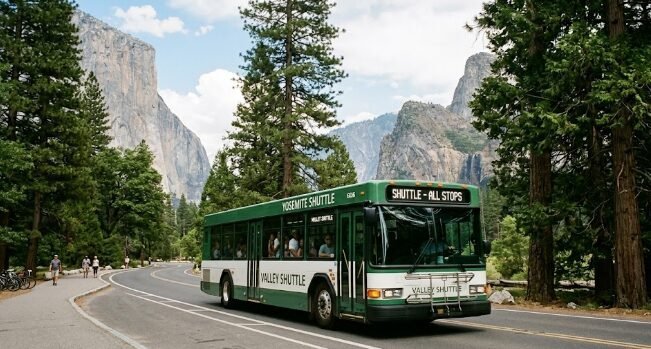
Use the YARTS bus system or in-park shuttle rather than driving everywhere yourself. The Yosemite Area Regional Transportation System connects gateway communities to the park, and once inside, the free Yosemite Valley Shuttle handles most Valley-floor transportation without requiring you to find parking at every individual stop.
Check real-time conditions before and during your visit. Text “ynptraffic” to 333111 for current traffic updates, and check the park’s official conditions page the morning of your visit. Conditions can shift meaningfully within a single day given the lack of reservation-based smoothing.
Have a genuine backup plan for full parking. On the busiest days, Yosemite Valley parking is realistically full by mid-morning. Knowing in advance which less-crowded areas — Tuolumne Meadows, Wawona, Mariposa Grove, or Hetch Hetchy — you’d pivot to if the Valley is inaccessible saves a frustrating, wasted morning.
Top Things to See and Do in Yosemite National Park
Yosemite Valley
The park’s most iconic and most visited area, home to the views most people picture when they think of Yosemite National Park: El Capitan’s sheer granite face, Half Dome’s distinctive profile, and Yosemite Falls, one of the tallest waterfalls in North America when running at full spring flow. Given 2026’s congestion challenges, Valley exploration specifically benefits from the early-arrival and shuttle-use strategies covered above more than any other part of the park.
Mariposa Grove
Home to several hundred mature giant sequoias, including the Grizzly Giant, estimated at well over 1,800 years old. Located near the park’s South Entrance, Mariposa Grove sees notably less crowding pressure than Yosemite Valley, making it a strong alternative on days when Valley access looks difficult.
Glacier Point
A seasonal scenic drive (closed in winter) leading to one of the most sweeping overlook views in the entire park, with Half Dome, Yosemite Valley, and the high country all visible from a single viewpoint. The drive itself adds meaningful time to a day’s itinerary, so factor this in alongside any Valley plans for the same day.
Tuolumne Meadows and Tioga Road
The high-country alternative to Yosemite Valley, accessible only when Tioga Road is open (typically late May or June through October, weather dependent). This area offers a genuinely different experience — subalpine meadows, granite domes, and significantly thinner crowds than the Valley floor, making it a strong pick for visitors specifically trying to avoid 2026’s congestion concerns.
Hiking Trails
Mist Trail to Vernal and Nevada Falls ranks among the most popular hikes in the park, a strenuous but rewarding climb past two major waterfalls, with the option to turn around at Vernal Fall’s footbridge for a shorter, more moderate version of the hike.
Half Dome, for hikers wanting the park’s most demanding and famous summit, requires a separate permit obtained through a lottery system given the trail’s extreme popularity and the cable-assisted final pitch — not a spontaneous add-on to a Yosemite National Park visit, but a hike requiring its own advance planning.
Lower Yosemite Fall Trail offers an easy, mostly flat walk suitable for nearly any fitness level, delivering a close-up view of the base of Yosemite Falls without significant elevation gain.
Sample Itineraries for Yosemite National Park
The 1-Day Valley Visit
Given 2026’s congestion concerns, a single-day Yosemite National Park visit benefits enormously from an early start — arrive before 8 a.m., park early, and use the Valley shuttle for the day rather than driving between stops. Cover the Lower Yosemite Fall Trail, drive (or take a tour) to Tunnel View for the classic Valley overlook photo, and finish with a partial Mist Trail hike to Vernal Fall’s footbridge if time and crowds allow.
The 3-Day Deep Dive
Day one for Yosemite Valley’s highlights as above, day two for Mariposa Grove and the giant sequoias (less crowded, worth the South Entrance drive), and day three for Glacier Point or, if Tioga Road is open for your travel dates, an excursion into Tuolumne Meadows for a genuinely different, quieter slice of the park.
Combining With Other California Destinations
Yosemite National Park sits within reasonable driving range of several other strong California stops, including a connection south toward Sequoia and Kings Canyon National Parks (now sharing the same nonresident fee structure), or west toward the Bay Area for travelers extending into a broader California itinerary.
Where to Stay Near Yosemite National Park
Inside the park, lodging options range from the historic Ahwahnee Hotel to more moderate options like Yosemite Valley Lodge and Curry Village, all booking out significantly in advance for peak season given limited capacity — six months ahead isn’t unreasonable for summer dates.
Gateway communities including Mariposa, Oakhurst, and El Portal offer considerably more lodging volume than in-park options, generally at lower rates, with YARTS bus connections into the park reducing the need to drive and find parking yourself.
Camping within Yosemite National Park spans multiple campgrounds at different elevations and seasons, bookable through Recreation.gov, with peak-season sites filling extremely quickly given the park’s overall popularity — securing a reservation the moment your travel dates are confirmed is genuinely advisable rather than excessive caution.
What to Pack for Yosemite National Park
Layers regardless of season, given the park’s significant elevation range between Valley floor and high country, plus genuine temperature swings between morning and afternoon even in summer.
Sturdy hiking footwear for any trail beyond the flattest, most accessible paths — granite surfaces and the spray zone near major waterfalls can be genuinely slippery.
A printed or offline map, given limited cell service through significant portions of the park, particularly once you’re away from Yosemite Valley itself.
Patience and flexibility, perhaps the most practically important “item” for a 2026 visit specifically — building slack into your schedule for potential parking delays or the need to pivot to a less-crowded area if your primary plan doesn’t work out.
Photography Tips for Yosemite National Park
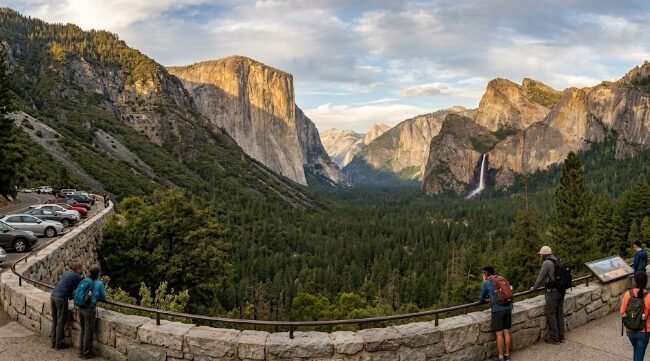
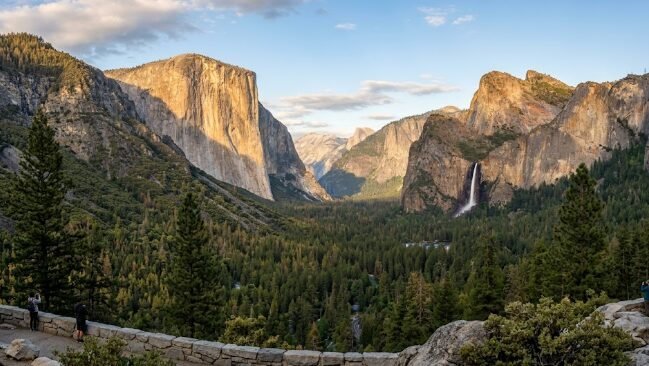
Tunnel View delivers the single most iconic shot in Yosemite National Park — El Capitan, Half Dome, and Bridalveil Fall all visible in one sweeping frame from a roadside overlook requiring no hiking at all. Sunrise and sunset both work well here, with morning light generally favored for less crowding at the pullout.
Spring waterfall photography benefits from midday light more than golden hour at several of the park’s major falls, since the canyon walls’ shadows can obscure waterfalls during the lowest-angle light, a counterintuitive exception to typical landscape photography timing.
Valley meadows offer some of the most reflective, calm-water shots in the park during early morning before wind picks up, particularly at Sentinel Meadow and the base of El Capitan, both reachable via short, flat walks from Valley parking areas.
Horsetail Fall’s “Firefall” effect, where setting sun light makes the seasonal waterfall appear to glow orange like flowing lava, occurs for a brief window typically in mid-to-late February, drawing significant photography crowds specifically for this narrow seasonal window — worth knowing about if your trip timing happens to align with it, though it requires very specific weather and water flow conditions to actually occur.
A circular polarizing filter helps significantly with both waterfall photography (cutting glare on wet rock and water) and granite cliff shots, intensifying color saturation on Yosemite National Park’s signature rock formations.
A Bit of Geology and History
Yosemite National Park’s dramatic granite landscape was shaped primarily by glacial activity over the past several million years, with massive ice sheets carving the steep-walled valley and polishing the granite domes and cliffs that define the park’s signature look today. El Capitan and Half Dome, both remnants of this glacial carving process, rank among the most recognizable rock formations in the world, drawing rock climbers from across the globe specifically to attempt routes up El Capitan’s sheer face.
The area holds deep significance to the Ahwahneechee people and other Indigenous groups who inhabited the Yosemite Valley for thousands of years before European-American settlement. The park’s modern conservation history traces back to 1864, when President Abraham Lincoln signed the Yosemite Grant, protecting Yosemite Valley and the Mariposa Grove — one of the earliest instances of land being set aside by the federal government specifically for preservation and public use, predating the establishment of Yellowstone as the first official national park by eight years. Yosemite National Park itself was formally established in 1890, and the conservationist John Muir’s advocacy during this era played a significant role in shaping both the park’s protection and the broader American conservation movement that followed.
What a Yosemite National Park Trip Costs
Entrance fees run $35 per vehicle for a standard week-long pass, a minor cost regardless of trip length.
Lodging varies enormously based on in-park versus gateway-community choices. In-park options like the historic Ahwahnee command premium rates, often $500+ per night during peak season, while Yosemite Valley Lodge and Curry Village offer more moderate in-park pricing, generally in the $250-350 range. Gateway towns like Mariposa and Oakhurst typically offer meaningfully lower rates, often $120-200 for a standard hotel room.
Camping offers the most budget-friendly lodging option within the park itself, with standard campground fees considerably lower than any in-park lodge, though availability during peak season requires booking well in advance through Recreation.gov.
A realistic budget for a 3-day Yosemite National Park trip for two people, mixing gateway-town lodging with moderate dining and no major guided tours, typically lands in the $800-1,400 range, not including flights to a regional airport.
Getting to Yosemite National Park
By Car: Multiple entrances serve different parts of Yosemite National Park — the South Entrance near Wawona and Mariposa Grove, the Arch Rock Entrance from the west (the most direct route from the Bay Area), and the Tioga Pass Entrance from the east (seasonal, closed in winter), which connects from the Eastern Sierra region near Mono Lake and Lee Vining.
By Air: Fresno Yosemite International Airport offers the closest commercial air access, roughly 1.5-2 hours from the South Entrance, while San Francisco and Sacramento airports, though considerably farther, offer more flight options and frequently lower fares for travelers willing to add extra driving time.
By Bus: The YARTS (Yosemite Area Regional Transportation System) connects several gateway communities directly to the park, a genuinely practical option for visitors wanting to avoid both the drive and the parking challenges covered throughout this guide, particularly relevant given 2026’s reservation-free congestion concerns.
Frequently Asked Questions
Do I need a reservation to enter Yosemite National Park in 2026? No — the timed-entry reservation system has been paused for the entire 2026 season. You still need to pay the standard entrance fee or use a valid pass, but no advance reservation is required simply to drive into the park.
Is Yosemite National Park more crowded in 2026 without the reservation system? Based on early-season data, yes, particularly on weekends and holidays. Memorial Day weekend 2026 saw notably worse congestion than recent reservation-era seasons, prompting strong recommendations from park officials to arrive early, visit midweek, and have backup plans for full parking.
How many days do you need at Yosemite National Park? A single, well-planned day covers Yosemite Valley’s core highlights, though most visitors find two to three days allows for both the Valley and at least one less-crowded area like Mariposa Grove or Glacier Point without feeling rushed.
Is Yosemite National Park good for families? Many trails and viewpoints, including the Lower Yosemite Fall Trail and Tunnel View, work well for families with young kids. Given 2026’s crowding concerns, families specifically benefit from early arrival and the patience to pivot plans if primary parking areas are full.
What’s the best month to avoid both crowds and the waterfall dry season? Late September often comes up as a strong compromise — crowds have thinned meaningfully from summer peaks, and while waterfall flow has reduced from spring’s peak, it hasn’t yet reached the near-dry conditions of late summer and early fall in most years.
Common Mistakes to Avoid at Yosemite National Park
Assuming 2026’s reservation-free format means easier access. This is the most important mistake to avoid this specific year — without the reservation system, congestion has actually intensified during peak periods rather than improved, and treating this as a “no planning needed” season is a real risk given Memorial Day’s documented chaos.
Underestimating Yosemite Valley parking demand. Even on moderately busy days, Valley parking can fill by mid-morning. Arriving at 10 or 11 a.m. expecting easy parking, a reasonable assumption in past reservation-managed seasons, is a significantly riskier bet in 2026.
Skipping less-crowded areas in favor of Valley-only itineraries. Mariposa Grove, Tuolumne Meadows, and Glacier Point all offer genuinely rewarding experiences with meaningfully less congestion than Yosemite Valley, and 2026’s crowding situation makes these alternatives more valuable than in typical years.
Not booking lodging or campgrounds far enough in advance. This holds true regardless of the reservation system changes — Yosemite National Park’s overall popularity means accommodation booking timelines haven’t relaxed even though entrance reservations have.
Ignoring real-time traffic and conditions updates. Given the more dynamic, less predictable congestion patterns without timed entry, checking conditions the morning of your visit (via the ynptraffic text alert system or official park channels) matters more in 2026 than in recent reservation-managed years.
Final Thoughts
Yosemite National Park’s 2026 season represents a genuine shift from recent years, and the early reports of Memorial Day congestion are worth taking seriously when planning your own visit. The park’s underlying appeal — granite cliffs, towering waterfalls, ancient sequoia groves — hasn’t changed at all, but the logistics of actually getting in and parking without a reservation system require more active planning than the past several seasons demanded.
Arrive early, build genuine flexibility into your plans, and don’t treat Yosemite Valley as the only worthwhile part of the park if conditions push you toward Mariposa Grove or the high country instead. Do that, and Yosemite National Park still delivers on every bit of its reputation as one of the most spectacular landscapes in the American park system, reservation system or not.