
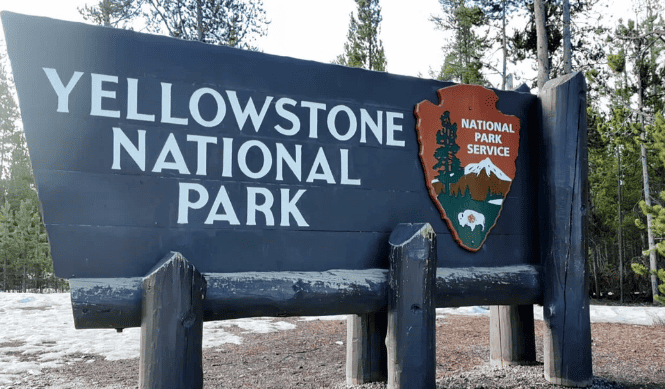
There’s a moment that happens to almost everyone on their first trip to Yellowstone, usually somewhere around the Upper Geyser Basin, when the ground hisses and a column of boiling water shoots forty feet into the air, and you just stop walking. Doesn’t matter if you’ve seen a thousand photos beforehand. Standing next to Old Faithful as it actually erupts is one of those rare travel moments that lives up to the hype, and then some.
Yellowstone isn’t just America’s first national park — established back in 1872, decades before the National Park Service even existed to manage it — it’s also one of the strangest landscapes on the planet. You’re walking on top of a volcanic hot spot that last had a major eruption 640,000 years ago and is, geologically speaking, overdue for another one. That’s not a reason to cancel your trip, by the way. It’s just part of what makes the place feel different from every other park in the country.
This guide is built around one goal: helping you plan a trip that actually works, instead of the kind where you spend half your vacation stuck at an entrance gate or driving the wrong loop at the wrong time. We’ll go through entrance fees, when to visit, where to stay, what to actually prioritize seeing, and the kind of practical details that only become obvious once you’ve already made the mistake yourself.
Table of Contents
Yellowstone sits primarily in northwest Wyoming, with small portions stretching into Montana and Idaho. It’s roughly the size of Connecticut and Rhode Island combined, which is part of why first-time visitors consistently underestimate how much driving is involved just to get between major sights. The Grand Loop Road, which connects most of the park’s major attractions in a figure-eight pattern, is about 142 miles on its own — and that’s before you factor in entrance roads or detours to specific trailheads.
Entrance Fees and Passes for 2026
Let’s get the money question out of the way first, because fee structures have shifted in recent years and a lot of older blog posts online are quoting outdated numbers.
For 2026, U.S. residents pay $35 per vehicle for a 7-day pass that covers entry through any Yellowstone gate. If you’re arriving on foot, bicycle, or motorcycle, the per-person or per-motorcycle rate is lower — check the current rate at the gate or on the National Park Service site before you go, since these can shift slightly year to year.
If you’re planning to visit more than one national park this year, the America the Beautiful Annual Pass is worth serious consideration at $80. It covers entrance to every fee-charging federal recreation site in the country for twelve months from the date of purchase, and it pays for itself after about two and a half visits to fee-based parks. Given that Yellowstone often gets paired with nearby Grand Teton National Park (which has its own separate $35 entrance fee unless you’re using the annual pass), this is genuinely the smarter buy for most road-trippers doing a Wyoming-Montana loop.
One important change for 2026 that catches a lot of international travelers off guard: Yellowstone is now one of eleven national parks charging a $100 nonresident surcharge for non-U.S. residents aged 16 and older, on top of the standard entrance fee. This applies specifically to international visitors — U.S. citizens and lawful permanent residents are exempt and pay the standard resident rate, provided they show valid ID like a driver’s license or Permanent Resident Card at the gate. If you’re traveling with an international friend or family member, budget for this extra cost and have ID ready, since lines at high-traffic entrances like the West and South gates can already run long during peak summer weeks.
Annual pass holders, by the way, get to skip a chunk of that hassle — passes purchased through Recreation.gov are tied to your ID at purchase, which speeds up verification at the gate.
A few groups qualify for free or discounted passes regardless of residency: active-duty military and dependents, fourth-grade students through the “Every Kid Outdoors” program, and visitors with permanent disabilities through the Access Pass. Seniors 62 and older can get a lifetime pass for $80, which — if you’re planning years of national park visits ahead — is one of the better travel deals left in America.
When to Visit: A Month-by-Month Reality Check
This is the question that determines everything else about your trip, and most people get the framing wrong. They ask “when’s the best time to visit Yellowstone” as if there’s a single correct answer. There isn’t. There’s a best time for your priorities, and those priorities — wildlife, fewer crowds, full road access, warm weather — pull in different directions.
Late April to Mid-May: Wildlife Season, Limited Access This is when Yellowstone’s wildlife is at its most active. Bison calves — orange-coated newborns locals call “red dogs” — start hitting the ground in late April, bear activity peaks as grizzlies and black bears emerge hungry from hibernation, and elk are calving in the valleys. It’s also genuinely beautiful, with waterfalls running high on snowmelt.
The catch is road access. The 2026 season follows the National Park Service’s standard phased opening: the North Entrance to Northeast Entrance corridor typically opens mid-April, the West Entrance to Madison and Mammoth to Norris sections open in early May, and the full Grand Loop — including the high-elevation Dunraven Pass — doesn’t open until mid-to-late May, weather permitting. A late snowstorm can delay any of these phases without much warning, so if you’re visiting in this window, build flexibility into your itinerary rather than locking in a rigid day-by-day plan.
Worth noting: May has stopped being a true secret. Recent years have seen record-breaking May visitation, so don’t assume you’ll have the park to yourself — you’ll just have it to yourself compared to July.
June Through Early August: Peak Season, Peak Everything This is when roughly 80% of Yellowstone’s annual visitors show up, and it shows. Every campground fills, every lodge books out months in advance, and parking lots at major attractions like Old Faithful and the Grand Prismatic Spring overlook can fill before 9 a.m. on a summer Saturday.
The upside is real, though: full road access, every visitor center and ranger program running, warm daytime temperatures, and the longest daylight hours of the year for cramming in activities. If your travel dates are locked to summer because of school schedules — which, let’s be honest, applies to most families — don’t let anyone talk you out of visiting. Just plan around the crowds rather than pretending they won’t be there. Arrive at major attractions before 8 a.m. or after 5 p.m., and treat midday as your driving-between-sights window rather than your sightseeing window.
September: The Sweet Spot If your schedule has any flexibility at all, September is consistently rated the best all-around month to visit Yellowstone, and the data backs it up. Crowds drop by roughly 40-45% compared to July, daytime highs still sit in a comfortable 60s-Fahrenheit range, and you get a genuine bonus: the elk rut. Bull elk bugling echoes across Mammoth Hot Springs and the surrounding valleys throughout September, and it’s one of the most distinctive wildlife sounds in North America.
There’s a wrinkle, though — the first ten days of September, especially around Labor Day weekend, still carry close to peak-summer crowd levels. The real payoff kicks in after the 10th, when you get most of July’s full access and warm weather with roughly half the company. If you can swing late September specifically, you’ll also likely catch the early stages of fall color in the aspen groves, and if your trip allows a detour into neighboring Grand Teton National Park, late September stacks the elk rut on top of peak golden aspen color there too — arguably the best two-destination pairing in the Rockies.
October Through March: Off-Season and Winter By mid-October, most park facilities and interior roads start closing for the season, and Yellowstone shifts into a completely different mode. Winter access is limited to the North Entrance near Gardiner, Montana, which stays open year-round to regular vehicles, connecting to Mammoth Hot Springs and Cooke City. Reaching the interior — Old Faithful, the major geyser basins — requires a guided snowcoach or snowmobile tour, generally running $300-400 per person.
It sounds restrictive, and it is, but winter Yellowstone has a fan base for good reason. Steam rising off geysers into sub-zero air, bison pushing through snow-covered valleys, and genuinely world-class wolf-watching in the Lamar Valley, where January and February conditions are considered unmatched anywhere in North America for spotting wild wolf packs. If solitude and wildlife photography matter more to you than convenience, it’s worth serious consideration.
2026-Specific Things to Know Before You Go
A few details specific to this year’s operating conditions that older guides won’t mention:
Gardner River High Bridge Construction: Ongoing bridge construction near the North Entrance corridor is creating single-lane bottlenecks at one of the park’s most heavily used routes. If your itinerary routes through Gardiner, Montana, build extra time into that leg of your drive, particularly during peak summer hours.
Phased Spring Road Openings: As mentioned above, 2026’s road opening schedule follows the standard sequence, but late-season snow events have already caused short delays to some openings this year. Check the park’s official alerts page in the days before you arrive if you’re visiting in April or May — don’t rely on dates from older blog posts, including this one, since they shift annually based on snowpack.
Interior Lodging Books Out Far in Advance: This isn’t new for 2026, but it bears repeating because it surprises so many first-time visitors. Lodges inside the park — Old Faithful Inn, Canyon Lodge, Lake Yellowstone Hotel — routinely sell out 8 to 12 months ahead for peak summer dates. If you’re planning a summer trip and haven’t booked interior lodging yet, your realistic options are gateway towns outside the park (more on that below) or accepting a longer drive each day.
Getting There: Entrances and Gateway Towns
Yellowstone has five entrances, and which one makes sense for you depends heavily on where you’re flying into or driving from.
West Entrance (West Yellowstone, Montana) is the most popular, putting you closest to the Old Faithful area and the Madison River corridor. The town of West Yellowstone itself has a solid range of hotels, restaurants, and outfitters, making it a logical base camp if you don’t get interior lodging.
North Entrance (Gardiner, Montana) is the only entrance open to regular vehicles year-round, and it’s your gateway if you’re combining Yellowstone with a Montana road trip or flying into Bozeman, which is roughly 90 minutes away and has grown into one of the more convenient regional airports for park access.
South Entrance connects directly to Grand Teton National Park, making it the natural choice if you’re doing the classic two-park combination trip, which honestly might be the single best national park pairing in the American West.
East Entrance (near Cody, Wyoming) and Northeast Entrance (Silver Gate/Cooke City, Montana) see noticeably less traffic than the other three, and the Northeast Entrance in particular routes through the Lamar Valley — often called “America’s Serengeti” for its wildlife density, especially in early morning and evening light.
Gateway towns worth knowing for groceries and overflow lodging: West Yellowstone, Gardiner, and Cody all run well-stocked grocery stores, so you don’t need to pack a week’s worth of food before arriving — though stocking up on snacks and water for full driving days inside the park is still smart, since options inside Yellowstone itself are limited and pricier.
The Must-See Highlights (And What’s Actually Worth Your Time)
With 2.2 million acres to cover, prioritization matters more than almost anything else in trip planning. Here’s an honest breakdown.
Old Faithful and the Upper Geyser Basin
Yes, it’s the most famous attraction in the park, and yes, it’s worth the crowds. Old Faithful erupts roughly every 60-110 minutes, and the visitor center posts predicted eruption windows, so you’re not just standing around guessing. But don’t treat Old Faithful as a one-and-done photo stop — the boardwalk trail through the surrounding Upper Geyser Basin passes dozens of other geysers and hot springs, including Castle Geyser and the stunning blue pools of the Morning Glory area, and most visitors who rush off after the main eruption miss the better half of the basin.
Grand Prismatic Spring
The largest hot spring in the United States, and the third-largest in the world, Grand Prismatic’s rainbow coloring — caused by heat-loving bacteria living in concentric temperature zones — is genuinely one of the most photographed natural features in America for a reason. The catch: the boardwalk view from ground level doesn’t capture the full effect nearly as well as photos suggest. For the famous overhead shot, hike the short but steep Fairy Falls Trail to the Grand Prismatic Overlook, about a 1.6-mile round trip that gains roughly 105 feet — manageable for most fitness levels, and absolutely worth the extra half hour.
Grand Canyon of the Yellowstone
Not to be confused with the Grand Canyon, this 20-mile canyon carved by the Yellowstone River features two dramatic waterfalls — the Upper and Lower Falls — and canyon walls streaked with yellow, orange, and pink mineral deposits that, fittingly, gave the park its name. Artist Point offers the classic, postcard-worthy view of the Lower Falls, and it’s an easy, mostly flat walk from the parking area, making it one of the more accessible highlights for visitors with mobility considerations.
Lamar Valley
If wildlife watching is a priority — and for a lot of visitors, it’s the entire reason they’re making this trip — Lamar Valley in the park’s northeast corner is where you want to spend your early mornings and evenings. Bison herds, elk, pronghorn, and with patience and good binoculars, wolves and grizzlies, are regularly spotted here. It’s quieter than the more central attractions simply because it requires a longer drive from most lodging, which works in your favor if solitude matters to you.
Mammoth Hot Springs
Near the North Entrance, Mammoth offers a completely different geothermal landscape from the geyser basins further south — terraced limestone formations built up over centuries by mineral-rich hot springs, creating travertine steps that look almost architectural. It’s also where elk frequently wander directly through the historic district during the September-October rut, sometimes blocking roads entirely while rangers manage the resulting traffic.
Hayden Valley
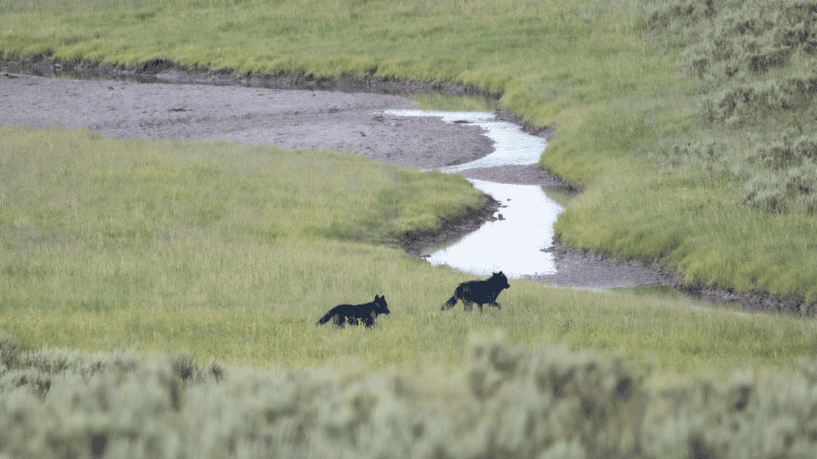
Often compared to Lamar Valley for wildlife density, Hayden sits more centrally in the park near the Grand Canyon area, making it easier to fold into a single day’s itinerary alongside other central attractions. Bison congregate here in massive numbers, especially in late spring and early summer.
Sample Itineraries
The 3-Day Highlights Trip
This works if you’re tight on time but still want to hit the essentials.
Day 1: Enter via the West Entrance, head straight to the Upper Geyser Basin and Old Faithful, spend the afternoon working through the geyser basin boardwalks, then drive to Grand Prismatic Spring for late-afternoon light (it photographs better with the sun higher rather than at golden hour, somewhat counterintuitively).
Day 2: Early start toward the Grand Canyon of the Yellowstone and Artist Point, then continue to Hayden Valley for midday wildlife viewing, finishing at Mammoth Hot Springs before sunset.
Day 3: Dedicate the morning to Lamar Valley for wildlife — arrive before 8 a.m. for the best activity — then make your way out through whichever entrance matches your onward route.
The 5-Day Deep Dive
Add two days to the above and you can slow down meaningfully: a full day dedicated to hiking (Fairy Falls, Mount Washburn, or the Lamar Valley backcountry trails depending on fitness level), a day exploring the West Thumb Geyser Basin along Yellowstone Lake, and buffer time for weather delays or simply lingering somewhere that grabbed you more than expected. Five days is genuinely the sweet spot for seeing Yellowstone without feeling rushed, and it’s the itinerary length most park rangers will recommend if you ask them directly.
The Yellowstone-Grand Teton Combo (7 Days)
Enter through the South Entrance straight from Grand Teton, splitting your week roughly 4 days Yellowstone, 3 days Grand Teton. This pairing lets you cover two of the most iconic landscapes in the American West in a single trip, and the drive between the two parks — through the John D. Rockefeller Jr. Memorial Parkway — is scenic enough to be a highlight in its own right.
Where to Stay
Inside the Park: Old Faithful Inn, Canyon Lodge, Lake Yellowstone Hotel, and Mammoth Hot Springs Hotel all offer the convenience of waking up inside Yellowstone itself, cutting your daily drive time significantly. The trade-off is booking far in advance (8-12 months for peak summer) and higher rates than gateway towns.
Gateway Towns: West Yellowstone offers the most lodging density and is closest to the park’s most-visited attractions. Gardiner suits a North Entrance approach and pairs well with a Montana road trip. Cody, Wyoming, leans more Western-frontier in character and works for an East Entrance approach, particularly if you’re also interested in the Buffalo Bill Center of the West museum nearby.
Camping: Yellowstone operates twelve campgrounds with a mix of reservable and first-come, first-served sites. Reservable sites at popular campgrounds like Madison and Bridge Bay fill up months ahead for summer dates through Recreation.gov. If you’re hoping for a first-come site, arrive at the campground by mid-morning at the latest during peak season — afternoon arrivals routinely find every site taken.
Practical Tips That Actually Matter
Pack for genuine temperature swings. Yellowstone sits at high elevation, and weather can shift from sunny and 75°F to a snow squall within the same afternoon, even in summer. Layers aren’t optional here — they’re the difference between an enjoyable hike and a miserable one. Cotton clothing is a bad call for this park specifically; it holds moisture and won’t keep you warm if conditions turn, so stick to moisture-wicking or wool layers if you’re doing any real hiking.
Wildlife jams are real and they’re not optional. When a bison herd, bear, or wolf pack appears near the road, traffic stops — sometimes for twenty minutes or more. This isn’t a flaw in your itinerary planning; it’s simply how Yellowstone works, and honestly, it’s part of the experience. Build buffer time into every driving estimate rather than assuming Google Maps’ drive time will hold up.
Stay back from wildlife — genuinely back. Park regulations require staying at least 100 yards from bears and wolves, and 25 yards from all other wildlife including bison and elk. This isn’t bureaucratic caution; bison alone injure more visitors than any other animal in the park, almost always because someone approached for a closer photo.
Cell service is sparse to nonexistent through most of the park’s interior. Download offline maps before you arrive, and don’t count on real-time navigation or restaurant reviews once you’re past the entrance gate.
Fill up on gas at gateway towns, not inside the park. In-park gas stations exist but charge a noticeable premium and aren’t evenly distributed across the Grand Loop.
Book interior lodging or campsites the moment your travel dates are set, especially for June through August. This is the single most common regret shared by first-time visitors after the fact — waiting even six weeks before a summer trip to book accommodations often means settling for gateway-town options you didn’t originally want.
Photography Tips for Yellowstone
If you’re bringing a camera beyond your phone, a few park-specific tips will save you a lot of frustration.
Light timing matters more here than almost anywhere. Grand Prismatic Spring, somewhat counterintuitively, photographs better in midday light than at golden hour — the overhead sun brings out the full rainbow gradient, while low-angle light flattens the colors. Most of the rest of the park follows normal rules, though: Lamar and Hayden Valleys for wildlife are best in the first two hours after sunrise and the last two before sunset, both for lighting and because that’s when animals are most active.
A telephoto lens changes your wildlife photography entirely. Given the 100-yard bear and wolf distance requirement and 25-yard rule for everything else, a phone camera simply can’t capture wildlife at a respectful distance. Even a modest 200-300mm zoom makes a dramatic difference. If you don’t own one, several outfitters in West Yellowstone and Gardiner rent lenses and even spotting scopes by the day.
Geyser eruptions are unpredictable beyond Old Faithful. Most of Yellowstone’s roughly 500 geysers don’t run on a predictable schedule the way Old Faithful does. If you’re hoping to photograph an eruption of Grand Geyser or Castle Geyser, check the visitor center’s current prediction board — rangers update estimated windows daily based on recent activity, and waiting nearby for a 20-30 minute window is often worth it for photographers.
Tripods are allowed on boardwalks but be mindful of foot traffic, especially at popular spots like the Grand Prismatic Overlook trail, which gets narrow and crowded during peak summer hours.
Sunrise at Mammoth Hot Springs is consistently underrated. Most photographers cluster around the geyser basins, leaving the terraces at Mammoth comparatively quiet in early morning light, with steam rising off the travertine formations in a way that rarely shows up in typical midday shots.
What to Pack
Beyond the standard road-trip checklist, a few Yellowstone-specific items consistently make the difference between visitors who have a smooth trip and those who don’t.
Layers, always. A moisture-wicking base layer, a fleece or light insulating mid-layer, and a waterproof shell will cover you for nearly any condition the park throws at you, even in July. Temperature swings of 30-40 degrees between morning and afternoon aren’t unusual at this elevation.
Sturdy, broken-in footwear. Boardwalks are flat and easy, but most of the worthwhile hikes — Fairy Falls, Mount Washburn, the Lamar Valley backcountry trails — involve uneven terrain, loose gravel, or muddy patches depending on recent weather. Don’t break in new boots on this trip.
Bear spray, if you’re hiking any backcountry trail. It’s available for purchase or rental at outfitters in every gateway town, and while the odds of needing it are genuinely low, rangers strongly recommend carrying it on any trail beyond the main boardwalks. Note that bear spray cannot be carried on commercial flights, so plan to buy or rent locally rather than packing it from home.
A reusable water bottle and extra snacks. In-park dining options are limited, often crowded, and significantly pricier than what you’ll find in gateway towns. Stocking up before entering saves both money and time.
Offline maps downloaded in advance. Given the near-total lack of cell service through most of the park’s interior, having Yellowstone’s road map and your specific itinerary saved offline (Google Maps allows offline downloads, as do dedicated apps like Gaia GPS) removes a significant source of stress.
Binoculars. Even modest 8x or 10x binoculars dramatically improve wildlife viewing in Lamar and Hayden Valleys, where animals are often visible across long distances rather than right at the roadside.
Common Mistakes First-Time Visitors Make
After helping plan more Yellowstone trips than I can count at this point, the same handful of mistakes come up again and again.
Underestimating drive times between attractions. Google Maps doesn’t account for wildlife jams, construction delays like the current Gardner River bottleneck, or the simple fact that mountain roads are slower than highway driving. Add a 20-30% buffer to any estimated drive time inside the park.
Trying to see the entire Grand Loop in a single day. It’s technically possible — the full loop is about 142 miles — but doing so leaves no real time at any single attraction beyond a rushed photo stop. Pick a half of the loop per day if you’re working with limited time, rather than racing the whole thing.
Booking lodging too late. This bears repeating because it’s the single most common regret shared after the fact. If you know your travel dates for a summer trip, start looking at interior lodging or campground reservations as soon as those dates are set, not a few weeks before departure.
Approaching wildlife for photos. Every year brings news stories of visitors injured by bison or elk after getting too close for a photo. The animals here aren’t accustomed to humans the way wildlife in more developed areas might seem to be, and they’re unpredictable. Stick to the distance requirements — your photos will still turn out great with a decent zoom lens.
Skipping the visitor centers. Each major area of the park has a visitor center staffed by rangers who know current trail conditions, wildlife activity, and geyser predictions better than any blog post (including this one) possibly can. A five-minute stop can meaningfully improve the rest of your day.
Ignoring the shoulder seasons entirely. Most first-time visitors default to a July or August trip simply because that’s when school schedules allow it, without realizing how dramatically September changes the experience for those with flexibility. If there’s any wiggle room in your dates, it’s worth seriously weighing.
Frequently Asked Questions
How many days do you actually need at Yellowstone? Three days covers the highlights reasonably well if you’re efficient with your time. Five days lets you slow down, add a couple of hikes, and absorb the park without feeling rushed. Anything beyond a week starts to require genuinely going deeper into backcountry areas most visitors never see, which is a different kind of trip entirely.
Is Yellowstone good for kids? Generally, yes — the boardwalk trails through the major geyser basins are flat, stroller-friendly in many sections, and endlessly fascinating for kids who’ve never seen a geyser erupt in person. The main consideration is pacing: build in more downtime than you would for an adults-only trip, and don’t try to cram too many attractions into a single day.
Do I need a 4WD vehicle? No, for the vast majority of visitors sticking to main park roads, a standard vehicle is completely fine. The Grand Loop Road and entrance roads are paved and well-maintained. Snow tires or 4WD become relevant only if you’re visiting during winter or very early spring shoulder season, when conditions can shift quickly.
Can I see Yellowstone in one day? You can see some of Yellowstone in one day, but given the park’s size, a single-day visit means picking one general area — say, Old Faithful and the nearby geyser basins — rather than attempting the full Grand Loop. If you only have one day, prioritize ruthlessly rather than trying to see everything.
Are pets allowed in Yellowstone? Pets are allowed in developed areas, campgrounds, and within 100 feet of roads, but are prohibited on boardwalks, trails, and in the backcountry. Given how much of Yellowstone’s appeal is the hiking and boardwalk access, this is a park better suited to leaving pets at home or with a sitter unless your trip is specifically built around drive-through sightseeing.
What’s the deal with the supervolcano — is it actually dangerous to visit? Yellowstone sits on top of an active volcanic system, and yes, it’s geologically classified as a supervolcano. But the odds of any kind of major eruption during your visit are astronomically low — geologists estimate roughly a 1-in-730,000 annual chance based on the eruption history. The U.S. Geological Survey monitors the system continuously, and current activity remains well within normal background ranges. It’s a fascinating fact to know while you’re there, not a reason for concern.
Best Hikes for Every Fitness Level
Yellowstone has over 900 miles of maintained trails, and most visitors never venture more than a quarter mile from a boardwalk or parking lot. That’s a missed opportunity, because some of the park’s best moments happen just slightly off the beaten path.
Easy (Family-Friendly)
Fairy Falls Trail — A flat, 5-mile round trip (or 1.6 miles if you stop at the Grand Prismatic Overlook spur rather than continuing to the falls themselves) through lodgepole pine forest, ending at an 80-foot waterfall. This is the trail most visitors take specifically for the famous overhead Grand Prismatic photo, and it’s genuinely manageable for most fitness levels, including kids.
Mystic Falls — A 2.4-mile loop near the Upper Geyser Basin that combines a forest walk with a 70-foot waterfall and, on the return leg, sweeping views back over the geyser basin and Old Faithful area from an overlook. Moderate elevation gain on the return loop, but nothing technical.
West Thumb Geyser Basin Boardwalk — Not really a hike so much as an easy half-mile loop, but worth specifically calling out for its setting: geothermal features steaming directly along the shore of Yellowstone Lake, a combination you won’t find anywhere else in the park.
Moderate
Storm Point Trail — A 2.3-mile loop along Yellowstone Lake’s shoreline with consistently good odds of spotting bison and occasionally bears in the surrounding meadows. Mostly flat with a few rocky sections near the point itself.
Lone Star Geyser Trail — A 4.8-mile round trip (largely along a flat, paved former service road, making it bike-friendly too) leading to a backcountry geyser that erupts roughly every three hours to heights of 30-45 feet, without anywhere near the crowds of the main geyser basins.
Strenuous
Mount Washburn — Either a 6.2-mile round trip from Dunraven Pass or a 5.2-mile route from the Chittenden Road trailhead, gaining around 1,400 feet to a former fire lookout at 10,243 feet. On clear days, the summit views stretch across most of the park, and it’s one of the more reliable spots for distant bighorn sheep sightings. This trail typically isn’t accessible until the Dunraven Pass section of the Grand Loop opens in late May.
Bunsen Peak — A 4.2-mile round trip near Mammoth Hot Springs gaining about 1,300 feet, with panoramic views over the Gardner River valley and the Gallatin mountain range. Popular enough to get genuinely crowded on summer weekends, so an early start helps both for parking and for cooler hiking temperatures.
A general rule worth keeping in mind: trail difficulty in Yellowstone is heavily influenced by elevation, since most of the park sits between 7,500 and 8,500 feet above sea level. Hikes that would feel easy at sea level can leave visitors from lower elevations noticeably more winded here, so it’s worth pacing yourself more conservatively than you might elsewhere, especially on the first day or two of your trip while you’re still acclimating.
Final Thoughts
Yellowstone rewards a bit of upfront planning more than almost any other national park in the system, simply because of its sheer size and the seasonal complexity of road access. But that planning pays off fast once you’re standing at the edge of a geyser basin watching steam roll across a landscape that genuinely looks like nowhere else on Earth.
Whether you’ve got three days or a full week, whether you’re chasing wolves in January snow or geysers in July sunshine, the park has a version of itself ready for almost any kind of traveler. The trick is just matching your visit to what you actually want out of it — and now, hopefully, you’ve got a clearer sense of how to do that.
Safe travels, and watch for bison on the road.