
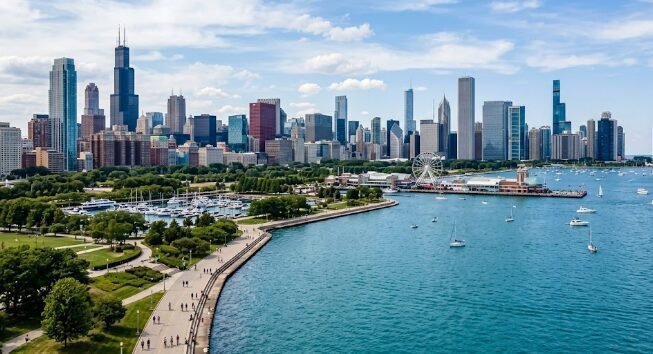
Chicago carries a specific kind of confidence that comes from genuinely earning its reputation — voted Best Big City in the U.S. for a historic ninth consecutive year, with deep-dish pizza, world-class architecture, and a lakefront skyline that still manages to surprise first-time visitors despite a thousand photos seen beforehand. 2026 adds extra weight to a Chicago visit specifically: the city is celebrating both America’s 250th anniversary and the 100th anniversary of Route 66, for which Chicago serves as the official starting point.
This guide covers Chicago as it stands in 2026 — major new openings, the city’s signature neighborhoods and attractions, and how to build a trip that captures what actually makes this city distinct rather than just hitting the same five photo spots everyone else does. If you’re starting a Route 66 road trip from Chicago specifically, our complete Route 66 road trip guide covers the full route and this year’s centennial celebrations in detail.
Table of Contents
What’s New in Chicago for 2026
The Obama Presidential Center opens to the public in Jackson Park on the city’s South Side by early summer 2026, marking a genuinely significant addition to Chicago’s cultural landscape. Former President Obama lived on the South Side for two decades, making the location a natural choice, and the center is expected to draw substantial visitor interest in its opening months.
Bally’s Chicago, a major new riverfront casino and entertainment complex, opens in fall 2026 in the city’s River District, featuring gaming, a 500-room hotel, a theater venue, restaurants, and a public park — a significant new addition to downtown Chicago’s entertainment options.
The Route 66 Centennial runs throughout 2026, with Chicago hosting special events and activations marking the highway’s 100th anniversary as its official starting point. Combined with the America 250 celebration also running through the year, 2026 brings an unusually full calendar of historical programming to the city.
The Hand & The Eye, opening spring 2026, transforms the historic McCormick Mansion downtown into what’s billed as the largest magic venue in the world, with guests wandering through multiple floors of immersive performances and artifacts.
Bally’s aside, Chicago also hosts the 2026 WNBA All-Star Game at the United Center, plus continued growth in the city’s already strong festival calendar — Chicago Blues Fest, Lollapalooza, and the James Beard Awards weekend all return with their usual scale.
Getting to Chicago and Getting Around
Two major airports serve Chicago: O’Hare International, the larger of the two with extensive international and domestic routes, and Midway International, generally smaller and sometimes offering more competitive fares for domestic travel. The Blue Line connects O’Hare directly to downtown, while the Orange Line provides a direct route from Midway — both genuinely practical alternatives to a taxi or rideshare given Chicago traffic.
The CTA (Chicago Transit Authority) operates the city’s “L” train system alongside an extensive bus network, with multi-day passes offering meaningfully better value than individual fares for visitors planning several days of exploration. The official CTA website has current route maps and fare information.
Walking covers significant ground in Chicago’s downtown core (the Loop) and along the lakefront, with the city’s largely flat, grid-based street layout making navigation considerably more intuitive than many other major U.S. cities.
Where to Stay in Chicago
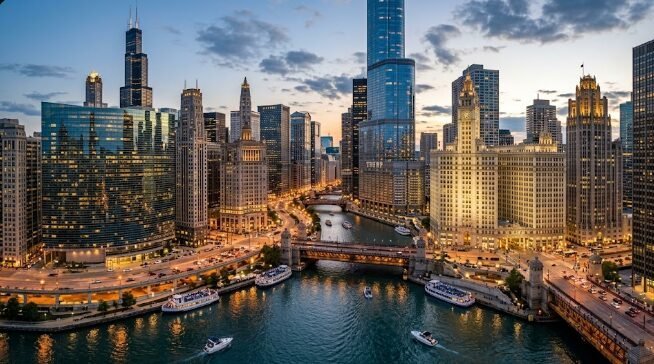
The Loop, Chicago’s downtown core, puts you within walking distance of major attractions like Millennium Park and the Art Institute, at the cost of being the most tourist-dense, highest-rate area.
River North, just north of the Loop, offers a strong mix of dining, nightlife, and architecture-focused attractions, including many of the river cruise departure points, while remaining comfortably walkable to downtown.
Lincoln Park, a more residential neighborhood north of downtown, provides a quieter base with strong dining and the Lincoln Park Zoo nearby, suited to travelers wanting a break from downtown’s density.
Wicker Park and Bucktown, on the city’s near-Northwest Side, deliver a genuinely different, more local Chicago experience — strong independent retail, music venues, and dining, generally at lower rates than downtown hotels, with straightforward CTA access back to the Loop.
Top Things to Do in Chicago
Millennium Park and Cloud Gate
Millennium Park anchors downtown Chicago’s cultural offerings, with Cloud Gate — universally known as “The Bean” for its reflective, kidney-shaped form — serving as the park’s most photographed feature and a genuine must-see for first-time visitors, regardless of how many times you’ve already seen it in photos.
The Art Institute of Chicago
One of the most significant art museums in the country, housing an extensive collection spanning historical and contemporary work. Given the museum’s genuine scale, picking 2-3 specific collections or wings in advance produces a far better visit than attempting to see everything in a single pass.
Willis Tower and the Skydeck
The Skydeck’s glass-floored ledge extending out from the 103rd floor remains one of Chicago’s most distinctive observation experiences, offering views across four states on clear days alongside 360 CHICAGO at the John Hancock Center as a strong alternative vantage point.
The Chicago Architecture Boat Tour
Widely considered one of the best ways to understand Chicago’s architectural significance, this river cruise narrates the history and design of the city’s skyline from water level, a genuinely different perspective than ground-level sightseeing and consistently recommended by both locals and frequent visitors.
Navy Pier
A genuinely family-friendly lakefront destination combining a Ferris wheel, the Chicago Children’s Museum, and regular free programming including the Live on the Lake! outdoor concert series (weekends, late May through early September 2026) and weekly fireworks shows on Wednesday and Saturday nights from Memorial Day through Labor Day.
The Field Museum and Museum Campus
The Field Museum, alongside the adjacent Shedd Aquarium and Adler Planetarium, forms Chicago’s Museum Campus — a strong full-day option for families or anyone wanting to combine natural history, marine life, and astronomy in a single, walkable area along the lakefront.
Chicago’s Food Scene
Chicago’s food identity extends well beyond deep-dish pizza, though that’s certainly worth experiencing at least once during any visit. Chicago-style hot dogs — never with ketchup, by strong local convention — represent another essential, inexpensive food experience available throughout the city. Chicago Restaurant Week, typically running late January through early February, offers a strong opportunity to sample higher-end dining at reduced prices if your trip timing aligns with it.
Beyond these signature foods, Chicago’s neighborhood dining scenes — particularly Pilsen for Mexican food, Chinatown for genuinely excellent and often underrated Chinese cuisine, and the West Loop for the city’s contemporary fine-dining concentration — reward visitors willing to venture beyond downtown for meals.
Sample Itinerary: 4 Days in Chicago
Day 1: Millennium Park and Cloud Gate, Art Institute of Chicago, evening Chicago Architecture boat tour.
Day 2: Willis Tower Skydeck, Museum Campus (Field Museum, Shedd Aquarium), lakefront walk.
Day 3: Navy Pier, neighborhood exploration in Wicker Park or Pilsen, evening in River North for dining.
Day 4: Obama Presidential Center (given its 2026 opening), Lincoln Park and the zoo, final dinner downtown.
For Route 66 travelers, Chicago naturally serves as your starting point — see our Route 66 road trip guide for how to extend a Chicago visit directly into the full cross-country drive, particularly relevant given 2026’s centennial celebrations in the city itself.
When to Visit Chicago
Spring (April-May) brings comfortable temperatures and Chicago’s parks coming back to life after winter, generally with lighter crowds than summer’s peak season.
Summer (June-August) is Chicago’s most popular tourist season by a wide margin, driven by the city’s extensive festival calendar, warm lakefront weather, and the longest daylight hours of the year — also the most crowded and highest-rate season for lodging.
Fall (September-October) offers a strong secondary window, with comfortable temperatures, thinning crowds, and the city’s architecture and skyline arguably looking their best against fall light.
Winter (November-March) brings Chicago’s notoriously cold, windy conditions, but also the lowest crowds and rates of the year, plus a genuinely festive holiday season downtown if your visit timing allows for it.
Chicago’s Architecture and History
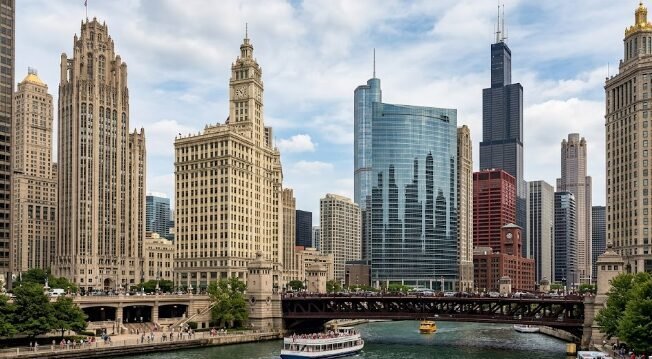
Chicago holds a genuinely foundational place in American architectural history, largely a result of the Great Chicago Fire of 1871, which destroyed much of the city and created an unusual opportunity for rapid, innovative rebuilding. The world’s first modern skyscraper, the Home Insurance Building, rose in Chicago in 1885, establishing the city as a genuine birthplace of the skyscraper as a building type — a legacy that explains why the Chicago Architecture boat tour, mentioned above, remains such a consistently recommended activity rather than a generic tourist offering.
The city’s grid-based street layout, established in the 19th century, makes navigation considerably more intuitive than older East Coast cities with more organic, historically layered street patterns. Chicago’s “L” train system, with elevated tracks running directly through downtown, adds a distinctive visual and auditory character to the Loop that’s become as much a part of the city’s identity as its skyline itself.
Sports in Chicago
Chicago supports a genuinely deep sports culture across multiple major league teams, making game attendance a strong addition to any visit timed appropriately. The Chicago Cubs, playing at the historic Wrigley Field — the second-oldest ballpark in the country — open their 2026 home season on March 26, with the ballpark itself functioning as a genuine attraction regardless of whether you’re a baseball fan, given its century-plus history and distinctive ivy-covered outfield walls.
The Chicago White Sox play on the South Side at Guaranteed Rate Field, offering a notably different, less tourist-heavy game day atmosphere than Wrigley. Beyond baseball, Chicago hosts NFL, NBA, NHL, and WNBA franchises, with 2026 specifically bringing the WNBA All-Star Game to the United Center — a strong draw for visitors timing a trip around major sporting events.
Budgeting for a Chicago Trip
Lodging in Chicago runs moderate by major U.S. city standards, with downtown Loop hotels typically commanding $200-350 per night during peak season, while neighborhood options in areas like Wicker Park or Lincoln Park often offer meaningfully better value, generally $130-220 per night.
Major attractions add up if visited individually — a Chicago CityPASS bundling several top attractions like the Skydeck, Shedd Aquarium, and the Field Museum typically saves 40-50% compared to individual admission, worth strong consideration if you’re planning to hit multiple paid attractions.
Food costs vary enormously by choice, from inexpensive Chicago-style hot dogs and pizza by the slice to higher-end West Loop dining, with a realistic daily food budget for a visitor mixing casual and one nicer meal running $60-120 per person.
A realistic total budget for a 4-day Chicago trip for two people, mid-range lodging, a CityPASS bundle, and moderate dining, typically lands in the $1,800-2,800 range before flights.
Music and Nightlife in Chicago
Chicago holds a genuine claim as the birthplace of modern blues and a significant chapter in jazz history, with venues like Kingston Mines and Blue Chicago consistently recommended by both locals and touring blues enthusiasts for authentic live performances. The annual Chicago Blues Fest, running since 1984 at Millennium Park, remains the world’s largest free blues festival and a strong reason to time a summer visit around its dates specifically.
Beyond blues, Chicago’s broader live music scene spans everything from intimate neighborhood venues to major festivals like Lollapalooza, drawing top touring acts throughout the summer months. The West Loop and Wicker Park neighborhoods in particular have developed strong concentrations of bars, clubs, and live venues distinct from downtown’s more tourist-oriented nightlife.
For families visiting Chicago specifically, the city offers a genuinely strong mix of kid-friendly attractions alongside its adult-oriented nightlife and dining scenes — Navy Pier, the Museum Campus, and Lincoln Park Zoo (free admission year-round) all work well for younger visitors, a pattern worth considering alongside our broader guide to the best national parks for families if you’re planning a longer Midwest trip combining city and nature destinations.
Common Mistakes to Avoid in Chicago
Underestimating how cold and windy Chicago gets, even outside peak winter. Lake Michigan’s proximity creates genuinely sharp wind conditions that catch visitors from milder climates off guard, even in spring and fall.
Skipping the architecture boat tour because it sounds like a tourist trap. This is consistently one of the most recommended Chicago activities by both visitors and locals alike, and dismissing it as overly touristy means missing one of the city’s genuinely best orientation experiences.
Not booking popular restaurants or Chicago Restaurant Week reservations in advance. Given the city’s strong food reputation, top restaurants — especially during the discounted Restaurant Week period — book out meaningfully ahead of peak dates.
Treating Chicago as just a downtown destination. Neighborhoods like Pilsen, Wicker Park, and Chinatown offer genuinely different experiences from the Loop’s tourist-dense core, and skipping them produces an incomplete picture of the city.
Frequently Asked Questions
How many days do you need in Chicago? Three to four days covers the major downtown attractions, a neighborhood or two beyond downtown, and reasonable time for the food scene without excessive rushing.
Is Chicago a walkable city? Yes, particularly downtown and along the lakefront, though the CTA train and bus system becomes useful for reaching neighborhoods further from the core, especially given Chicago’s notoriously cold winters limiting comfortable walking distances seasonally.
What’s the best time to visit Chicago for the Route 66 centennial? Events run throughout 2026, so timing depends more on your broader trip goals than any single centennial event date — check the official Choose Chicago events calendar for specific dates if a particular Route 66 centennial event is a priority for your visit.
Is Chicago expensive to visit? Moderate by major U.S. city standards — generally less expensive than New York City or San Francisco for lodging and dining, though downtown hotel rates during peak summer and major events can still run high.
Can I see the Obama Presidential Center in 2026? Yes, the center opens to the public by early summer 2026, located in Jackson Park on the South Side — check current visitor information closer to your travel dates given this is a newly opening attraction with details still being finalized as the opening approaches.
Final Thoughts
Chicago’s 2026 calendar — the Obama Presidential Center’s opening, Route 66’s centennial celebrations, and America’s 250th anniversary programming — gives this particular year more reason than usual to actually visit rather than just adding the city to a someday list. The underlying appeal hasn’t changed: genuinely significant architecture, a lakefront that anchors the entire city’s identity, and a food scene that extends well past the deep-dish reputation most visitors arrive expecting.
Whatever draws you to Chicago this year, pair downtown’s major attractions with at least one neighborhood exploration beyond the Loop, and you’ll leave with a far more complete picture of the city than a rushed, photo-spot-only itinerary ever provides.