

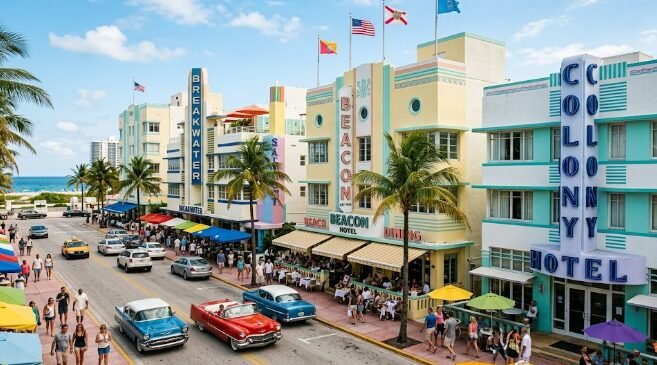
Miami in 2026 is having one of its busiest years in recent memory — the FIFA World Cup brings seven matches to Hard Rock Stadium, the Formula 1 Miami Grand Prix returns for another high-energy weekend, and a wave of hotel renovations and new openings across South Beach and Wynwood are reshaping where visitors stay and play. Add in the city’s reliable year-round sunshine, genuine Cuban cultural roots, and a nightlife reputation that needs no introduction, and Miami earns its nickname as the Magic City honestly.
This guide covers Miami as it stands in 2026 — major events affecting your trip timing, where to actually stay among this year’s wave of hotel updates, and how to build an itinerary beyond just the beach. If you’re combining Miami with other Florida or East Coast stops, our New York City guide covers another major 2026 World Cup host city worth comparing notes with.
Table of Contents
| Detail | Information |
|---|---|
| Best Time to Visit | December–April (dry season, milder heat) |
| Avoid If Possible | June–November (hurricane season, peak humidity) |
| Nearest Airport | Miami International (MIA) |
| 2026 Major Events | FIFA World Cup (June 15–July 18), F1 Miami GP (May 3) |
| Currency Note | USD; many areas also accept and post prices reflecting strong tourism from Latin America |
Major 2026 Events Affecting Your Miami Trip
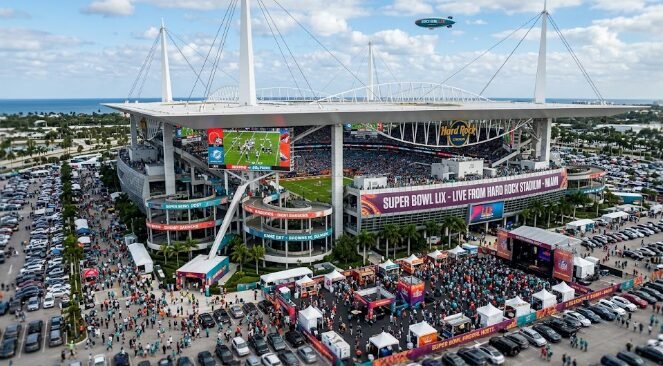
FIFA World Cup: Miami hosts seven matches at Hard Rock Stadium in Miami Gardens between June 15 and July 18, 2026. Expect significantly higher hotel prices, packed restaurants, and an international atmosphere throughout this window — even without match tickets, fan festivals and citywide events make this period genuinely exciting to experience.
Formula 1 Miami Grand Prix: Returns May 3, 2026, bringing another high-demand weekend with premium hotel pricing and a notably different, more exclusive crowd than the World Cup’s broader appeal.
🏟️ Check Current Hard Rock Stadium Event Schedule →
If your trip doesn’t need to align with either event, deliberately avoiding these windows can mean meaningfully lower costs and thinner crowds for the same core Miami experience.
What’s New in Miami for 2026
The Delano Miami Beach reopens after a significant renovation, with bookings accepted starting March 8, 2026 — one of the most anticipated hotel returns of the year for South Beach specifically.
Miami Freedom Park, a 131-acre development including Inter Miami CF’s new stadium, opens its first phase in 2026, eventually adding over 1 million square feet of dining, retail, and entertainment space alongside the 58-acre Jorge Mas Canosa Park — the city’s largest new public green space in generations.
Midline, a new 1,200-person live music venue in Wynwood, joins the neighborhood’s expanding entertainment scene, while Arlo Wynwood adds its own two-story indoor music venue.
Several major hotel renovations completed or are completing in 2026, including the Fontainebleau’s guest room and suite refresh, the Ritz-Carlton Key Biscayne’s $100 million spa transformation, and Acqualina Resort’s 20th-anniversary upgrades.
Where to Stay: Neighborhood Comparison
| Neighborhood | Vibe | Best For | Distance to Beach |
|---|---|---|---|
| South Beach | Art Deco, nightlife, classic Miami | First-timers wanting iconic experience | Direct beach access |
| Brickell | Modern, financial district, upscale | Business travelers, skyline views | 10-15 min |
| Wynwood | Arts district, murals, trendy dining | Younger travelers, art/food focus | 15-20 min |
| Coral Gables | Quiet, residential, Mediterranean architecture | Families wanting calmer pace | 20-25 min |
| Key Biscayne | Relaxed, island feel, resort-heavy | Couples, luxury resort stays | On-island beaches |
🏨 Compare Miami Hotels & Resorts →
A Few Specific 2026 Picks
UNFRAMED, Autograph Collection — newly opened in Miami Beach, steps from SoundScape Park and The Fillmore, with a Riviera-inspired rooftop restaurant.
Brickell Arch, Luxury Collection — a reimagined 201-room property overlooking Biscayne Bay with a rooftop sky lounge.
El Jardín Inn (Little Havana) — a boutique option following a $4 million renovation, suite-style with kitchenettes, suited to travelers wanting a neighborhood-immersed stay over a beachfront tower.
Top Things to Do in Miami
The Art Deco Historic District
Home to more than 800 preserved buildings from the 1920s-1940s, making it the largest concentration of Art Deco architecture in the world. Ocean Drive remains the most iconic stretch, walkable for free, with the option to add a 90-minute guided tour through the Miami Design Preservation League for historical context and, often, a few genuinely entertaining mob-history stories.
Wynwood Walls and the Arts District
An outdoor museum showcasing more than 50 large-scale murals by internationally recognized street artists, alongside the world’s only Museum of Graffiti. Beyond viewing, several operators offer spray-painting workshops for visitors wanting a hands-on add-on.
Little Havana
Miami’s Cuban cultural heart, where Calle Ocho’s restaurants — Versailles among the most historically significant — serve classic Cuban dishes like croquetas alongside strong coffee culture and regular live music.
Biscayne Bay and the Everglades

Boat tours, snorkeling, and deep-sea fishing access the Florida reef just off Miami Beach’s barrier islands, while Everglades airboat tours — typically combining wildlife viewing with an alligator show — offer a genuinely different side of South Florida within driving distance of the city itself.
🚤 Book an Everglades Airboat Tour →
Free and Budget-Friendly Miami
| Activity | Cost | Notes |
|---|---|---|
| Art Deco District walk | Free | Self-guided along Ocean Drive |
| Pérez Art Museum Miami (PAMM) | Free | Second Saturday of each month |
| Institute of Contemporary Art Miami | Always free | Design District location |
| Lummus Park beach | Free | South Beach, palm-fringed sand |
| Citi Bike rentals | ~$3.50/30 min | South Pointe to Bal Harbour path |
Miami’s Food and Nightlife Scene
Miami’s dining identity blends genuine Cuban tradition with an increasingly recognized fine-dining scene — several Miami restaurants now hold Michelin recognition, spanning everything from New American-Cuban fusion to authentic Mexican concepts. The nightlife scene ranges from South Beach’s high-energy clubs like E11even, Miami’s well-known 24/7 venue, to a genuinely strong, lower-key jazz scene scattered across hotel lounges and no-frills downtown bars — proof, as locals like to point out, that Miami offers more than just reggaeton and EDM.
Sample Itinerary: 4 Days in Miami
Day 1: Art Deco District walking tour, South Beach, evening on Ocean Drive.
Day 2: Wynwood Walls and the Arts District, Little Havana for dinner and live music.
Day 3: Everglades airboat tour (half-day), afternoon at Key Biscayne or Coral Gables.
Day 4: Biscayne Bay boat tour or snorkeling, final shopping and dining in Brickell or Design District.
When to Visit Miami
December–April (dry season): The strongest window for most visitors — lower humidity, minimal rain, and escape from hurricane season risk, though this also means peak pricing and crowds, especially around major holidays.
May–June: A genuine sweet spot for value-conscious travelers, after winter’s peak but before summer’s worst humidity and hurricane season fully sets in — though 2026 specifically sees the F1 Grand Prix (May) and World Cup (June onward) pushing prices up regardless.
June–November (hurricane season): Generally the least recommended window given storm risk and oppressive humidity, though it also brings the lowest prices outside the World Cup window — worth weighing carefully against 2026’s specific event calendar.
Miami’s Best Beaches Compared
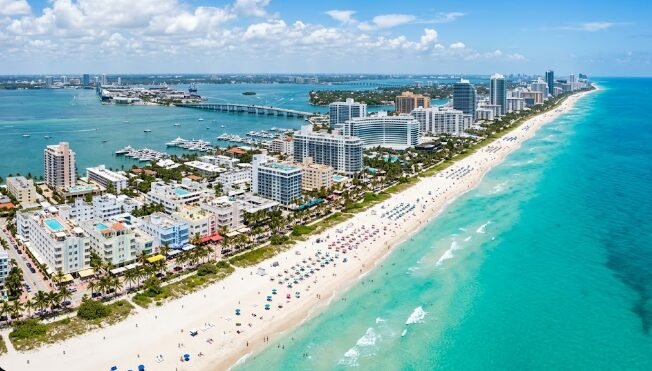
| Beach | Vibe | Best For |
|---|---|---|
| South Beach | Lively, social, see-and-be-seen | First-timers, nightlife proximity |
| Key Biscayne | Quieter, family-friendly | Families, calmer swimming |
| Haulover Beach | Includes a clothing-optional section | Adults seeking variety, less crowded |
| Crandon Park Beach | Spacious, calm waters, shaded picnic areas | Families with young kids |
Photography Tips for Miami
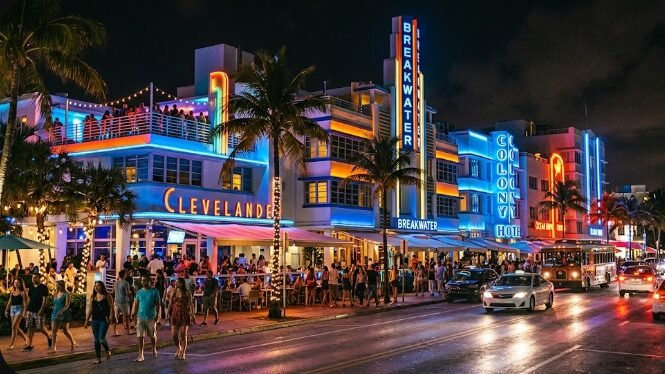
Ocean Drive’s neon Art Deco hotels photograph best at dusk, when the pastel building facades and neon signage both register clearly against a still-blue sky — full darkness tends to overexpose the neon and lose the building details.
Wynwood Walls rewards a wide-angle lens, given the scale of the murals and the relatively tight alleyways between buildings where many of the best pieces are located.
Golden hour at Key Biscayne or Crandon Park delivers calmer, warmer-toned beach shots than South Beach’s busier daytime crowds typically allow.
A polarizing filter helps significantly with Biscayne Bay boat tour photography, cutting water glare and improving color saturation in shots of the skyline from the water.
What a Miami Trip Costs
| Expense Category | Typical Cost Range |
|---|---|
| Mid-range hotel (per night, non-event dates) | $180-350 |
| Mid-range hotel during F1/World Cup windows | $400-800+ |
| Everglades airboat tour | $50-90 per person |
| Biscayne Bay boat tour | $60-150 per person |
| Art Deco walking tour | $25-35 per person |
| Moderate dinner for two | $80-150 |
A realistic budget for a 4-day Miami trip for two people outside major event dates, with mid-range lodging and a mix of casual and nicer dining, typically lands in the $1,800-2,800 range before flights — expect this to roughly double or more during the May F1 weekend or the June-July World Cup window.
A Bit of Miami History
Miami’s modern development traces back to the late 19th century, with Henry Flagler’s railroad extension reaching the city in 1896, transforming what had been a small settlement into a genuine boomtown within decades. The city’s distinctive Art Deco architecture, now its most recognizable visual signature, was built primarily during the 1920s-1940s boom, with many of these buildings facing demolition threats in the 1970s before a dedicated preservation movement secured their protection — the same preserved district that now draws millions of visitors annually for exactly the architecture that nearly disappeared.
Miami’s Cuban cultural identity, centered in Little Havana, grew substantially following waves of immigration after Cuba’s 1959 revolution, fundamentally shaping the city’s food, music, and language in ways still deeply visible today. This layered history — railroad boomtown, Art Deco resort city, and major Latin American cultural hub — explains why Miami offers such a genuinely different character than other major Florida or Southeastern U.S. destinations.
If you’re weighing Miami against other major event-driven U.S. destinations for 2026, our Las Vegas guide covers another city experiencing significant new openings and entertainment growth this year, offering a useful comparison point for travelers deciding between a beach-and-culture trip versus an entertainment-and-nightlife-focused one.
Common Mistakes to Avoid in Miami
Not factoring 2026’s major events into trip timing. Both the F1 Grand Prix and World Cup windows bring significantly higher costs — if your trip doesn’t need to align with either, avoiding these dates saves real money.
Treating Miami as just South Beach. Wynwood, Little Havana, and Coral Gables all offer genuinely different experiences, and limiting a trip to the beach and Ocean Drive misses much of what makes the city distinct.
Underestimating summer humidity and hurricane season risk. Travelers from cooler or drier climates consistently underestimate how intense Miami’s June-through-November conditions actually feel.
Skipping travel insurance during hurricane season. Given Miami’s genuine storm risk in summer and fall, this is one destination where trip insurance offers real, practical value rather than just upselling.
Frequently Asked Questions
Is Miami safe for tourists in 2026? Generally yes — crime statistics in Miami-Dade County have declined in recent years, with most incidents concentrated outside primary tourist areas. Standard big-city precautions apply, same as any major U.S. destination.
How many days do you need in Miami? Three to four days covers the major neighborhoods and a half-day Everglades excursion without excessive rushing.
What’s the best time to visit Miami to avoid crowds and high prices? Outside the December–April peak season and 2026’s specific May (F1) and June-July (World Cup) windows, late spring or early summer (excluding those event dates) offers a reasonable balance of price and weather.
Do I need a car in Miami? Helpful but not essential for South Beach specifically, where walking and Citi Bike cover most needs. A car or rideshare becomes more useful for reaching Wynwood, Little Havana, the Everglades, or other neighborhoods spread across the broader metro area.
Is Miami good for families? Yes, particularly Coral Gables and Key Biscayne for a calmer pace, alongside family-friendly options like Everglades tours and the Phillip and Patricia Frost Museum of Science.
Final Thoughts
Miami’s 2026 calendar — F1’s May weekend and the World Cup’s summer-long presence — gives this particular year extra reason to time a visit carefully, whether you want to be part of the action or deliberately avoid the resulting crowds and costs. The underlying appeal remains constant: genuine Art Deco architecture, a Cuban cultural heart that goes well beyond a tourist veneer, and a nightlife and dining scene that consistently ranks among the most distinctive in the country.
Pick a neighborhood base that matches your trip’s pace, build in at least one excursion beyond the beach, and Miami delivers a genuinely layered city experience well beyond its sun-and-sand reputation.