

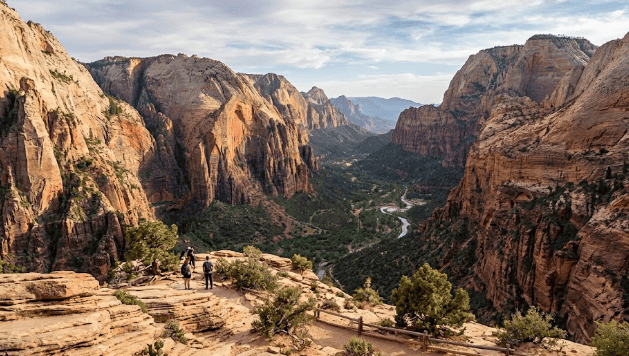
Zion National Park doesn’t ease you into it. You drive through a mile-long tunnel blasted through solid sandstone in 1930, and when you come out the other side, you’re suddenly surrounded by towering red and cream cliffs rising 2,000 feet straight up from the canyon floor. It’s one of the most dramatic entrances of any national park in the country, and it sets the tone for everything that follows.
Zion National Park sits in southwestern Utah, and despite covering a relatively modest 229 square miles — small compared to giants like Yellowstone — it packs in some of the most photographed and most physically demanding trails in the entire National Park System, including Angels Landing and The Narrows, both of which now require advance planning that didn’t exist a decade ago. This guide covers exactly what you need to know to plan a 2026 visit to Zion National Park, from entrance fees and the shuttle system to permits, safety, and which trails actually match your fitness level.
If you’re building a broader Southwest itinerary, Zion National Park pairs naturally with our Grand Canyon National Park guide — the Zion-Mount Carmel Highway directly connects the two parks — and travelers driving the Mother Road can find detour notes in our Route 66 road trip guide.
Table of Contents
Zion National Park Entrance Fees and Passes for 2026
A standard Zion National Park vehicle pass costs $35 and is valid for seven consecutive days. Motorcycles pay $30, and visitors entering on foot or by bicycle pay $20 per person. Children 15 and under enter free regardless of entry method.
As with most major Western parks, Zion National Park introduced a $100 nonresident surcharge for non-U.S. residents aged 16 and older, effective January 1, 2026, charged in addition to the standard entrance fee. International visitors planning multiple park visits this year should weigh the $250 Non-Resident Annual Pass, which covers the surcharge across all participating parks for twelve months.
For U.S. residents, the math is straightforward: if you’re visiting more than two fee-charging national parks in 2026, the $80 America the Beautiful Annual Pass pays for itself, the same calculation that applies at Yellowstone and Grand Canyon.
One detail specific to Zion National Park that catches visitors off guard: entrance fees and trail permits are entirely separate costs. Paying your vehicle entrance fee gets you into the park — it does not include the required permits for Angels Landing or backcountry sections of The Narrows, both covered in detail below.
A practical tip that applies specifically here: buy your entrance pass digitally through Recreation.gov before arriving if possible. This lets you skip the cash line at the gate entirely — worth knowing since wait times at the South Entrance can stretch significantly during peak season mornings.
Understanding the Zion Canyon Shuttle System
This is the single most important logistical detail for visiting Zion National Park, and it surprises a lot of first-time visitors who assume they’ll just drive to each trailhead themselves.
During the main season — March 7 through November 28 in 2026, plus a holiday window from December 26 through January 2 — the Zion Canyon Scenic Drive is closed to private vehicles. The only way to access most of the canyon’s major trailheads, including the Narrows and Angels Landing trailheads, is via the free, frequent shuttle system.
The Zion Canyon shuttle line runs nine stops along the scenic drive, with a full round trip taking roughly 90 minutes if you rode straight through without stopping (you won’t — most visitors hop on and off at multiple stops throughout the day). Buses run every 5-10 minutes during peak hours. A separate, equally free Springdale town shuttle connects the gateway town to the park’s pedestrian entrance, running nine stops along Zion Park Boulevard.
No ticket, permit, or reservation is required to ride either shuttle — you simply need a valid park entrance pass to be in the park in the first place. The first Zion Canyon shuttle of the day typically departs the visitor center around 7 a.m. during peak season, with last departures varying by month — generally between 5 and 7 p.m. depending on the time of year.
Parking fills early, year-round. If the in-park lots are full by the time you arrive — a real possibility even on weekday mornings during peak season — you’ll need to park in Springdale and ride the town shuttle to the pedestrian entrance instead.
Permits: Angels Landing and The Narrows
Two of Zion National Park’s most iconic hikes now require advance permits, a change that surprises returning visitors who hiked these trails freely in years past.
Angels Landing requires a permit obtained through a lottery system on Recreation.gov, costing a small non-refundable application fee (roughly $9 as of 2026) regardless of whether you’re selected. There are two lottery windows: a seasonal advance lottery and a day-before lottery for last-minute planners. Given the trail’s popularity, advance lottery applications are strongly recommended over relying on the day-before option, which has significantly worse odds during peak season.
The Narrows, Zion National Park’s famous slot-canyon wade through the Virgin River, doesn’t require a permit for the standard “bottom-up” day hike from the Temple of Sinawava — this remains open access with just your park entrance fee. However, a backcountry permit is required if you’re doing the full top-down Narrows hike, which involves an overnight or very long single-day trek through the canyon’s upper section. River flow conditions are checked daily by rangers and can close The Narrows entirely during high water or flash flood risk periods, so checking current conditions the morning of your hike is essential, not optional.
When to Visit Zion National Park: A Season-by-Season Look
Spring (April-May) Generally considered one of the two best windows for visiting Zion National Park. Daytime temperatures sit in a comfortable range, wildflowers bloom across the canyon floor, and the Virgin River typically runs at moderate, hikeable levels for The Narrows — though early spring snowmelt can occasionally push water levels too high for safe wading, so checking conditions matters even in this favorable season.
Summer (June-August) Peak crowds and peak heat define this season. Canyon floor temperatures regularly exceed 100°F, and exposed trails like Angels Landing become genuinely dangerous during midday hours. Afternoon monsoon thunderstorms are common from July through early September, bringing real flash flood risk to slot canyons including The Narrows — rangers will close the trail without hesitation when this risk is elevated, so build flexibility into any summer Narrows plans. A new large-vehicle restriction on the Zion-Mount Carmel Highway, taking effect June 7, 2026, also specifically affects summer travelers connecting from the Grand Canyon side — oversized RVs and trailers will be rerouted rather than escorted through the tunnel as in previous years.
Fall (September-October) The second prime window, with crowds thinning from summer peaks and temperatures becoming far more manageable for both canyon-floor and exposed-ridge hiking. October specifically tends to offer the best balance of comfortable conditions and lower visitor numbers for the entire year.
Winter (November-March) The quietest season, and increasingly popular among travelers specifically seeking it out for that reason. The Zion Canyon shuttle doesn’t run during the core winter window (roughly late November through early March, outside the holiday service window), meaning private vehicles can drive the scenic road themselves during this period — a genuinely different experience from the rest of the year. Snow is possible, particularly at higher elevations within the park, and some trails may require additional caution or gear.
Top Things to See and Do in Zion National Park
Angels Landing
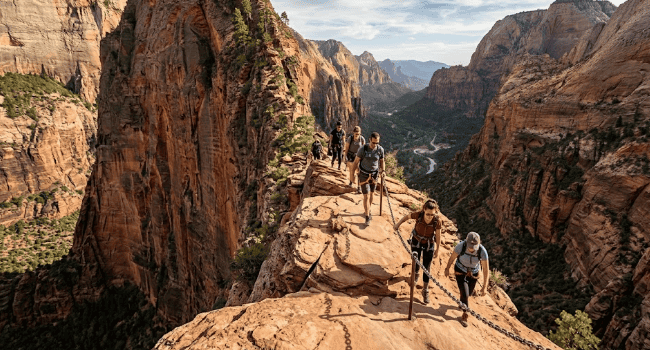
The trail that needs no introduction among hikers. A strenuous 5.4-mile round trip gaining roughly 1,488 feet, finishing along a narrow sandstone ridge with chain handholds and significant exposure on both sides. This is not a trail for anyone with a fear of heights, and the permit requirement reflects both its popularity and the National Park Service’s ongoing effort to manage congestion on a trail section that simply cannot safely accommodate unlimited foot traffic at once.
The Narrows
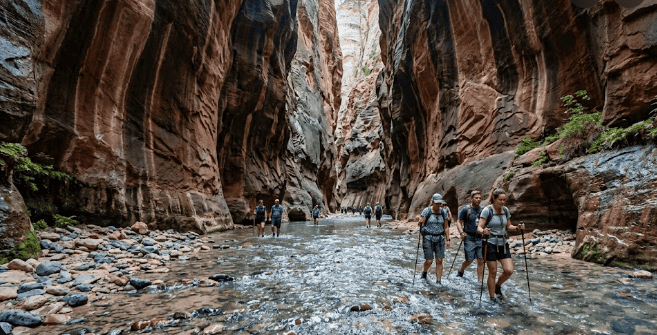
A genuinely unique hiking experience — much of the trail involves wading directly through the Virgin River between soaring slot-canyon walls, sometimes just a few dozen feet apart at their narrowest points. The standard bottom-up day hike from the Temple of Sinawava shuttle stop is accessible to most reasonably fit hikers without a permit, though water shoes or specific canyoneering footwear (rentable in Springdale) make a meaningful difference in comfort and safety compared to standard hiking boots.
Emerald Pools Trail
A more moderate option offering waterfalls and pools accessible via a series of connected trails ranging from easy (Lower Pool) to moderately strenuous (Upper Pool), making this a strong choice for families or hikers wanting a genuine Zion National Park experience without Angels Landing’s exposure or The Narrows’ water hazards.
Kolob Canyons
A separate, less-visited section of Zion National Park accessed via its own entrance off Interstate 15, roughly 40 minutes from the main Zion Canyon area. This section sees a fraction of the main canyon’s visitor traffic, making it worth a half-day detour for travelers seeking the park’s dramatic scenery with genuine solitude.
Canyon Overlook Trail
A relatively short, moderate trail near the east entrance offering one of the best payoff-to-effort ratios in the entire park — roughly one mile round trip leading to a sweeping overlook of lower Zion Canyon, without the permit requirement or exposure level of Angels Landing.
Sample Itineraries for Zion National Park
The 1-Day Visit
Take the early shuttle to the Temple of Sinawava for a partial Narrows hike (even a short wade into the canyon delivers the core experience), shuttle back to a midday stop for the Emerald Pools Trail, and finish with the Canyon Overlook Trail near sunset if your schedule and the shuttle timing align.
The 2-3 Day Deep Dive
Day one for The Narrows, day two reserved for Angels Landing (assuming you’ve secured a permit through the lottery, which should be your first planning step, ideally before finalizing other trip dates), and a third day split between Emerald Pools, Kolob Canyons, and any trails you want to revisit at different light conditions for photography.
Combining With Grand Canyon and Bryce Canyon
Given Zion National Park’s location along the Zion-Mount Carmel Highway, it forms a natural anchor point for a broader southern Utah and northern Arizona loop, commonly paired with Bryce Canyon National Park (roughly 1.5-2 hours away) and the Grand Canyon’s North Rim or South Rim depending on season and timing.
Where to Stay Near Zion National Park
Springdale sits directly outside the park’s south entrance and offers the most convenient lodging option by a wide margin, with direct shuttle access into Zion National Park itself, eliminating any need to drive or find in-park parking.
Zion Lodge, the only in-park lodging option, sits directly along the Scenic Drive and offers the obvious advantage of being inside the canyon itself — book significantly in advance for peak season, as this is one of the most in-demand lodging options of any national park in the system.
St. George, Utah, roughly 45 minutes from the park, offers considerably more lodging volume and lower average rates than Springdale, connected via the SunTran Zion shuttle route for travelers without a rental car, running Monday through Saturday with no Sunday service.
Camping: Watchman and South Campgrounds sit within walking distance of the visitor center and shuttle system, both bookable through Recreation.gov, with campground fees having risen meaningfully in recent years — budget accordingly rather than assuming historical pricing still applies. Watchman Campground operates year-round and accepts reservations up to six months in advance for peak season dates, while South Campground typically operates seasonally and fills quickly given its prime location directly adjacent to the main pedestrian entrance. A third option, Lava Point Campground, sits in a more remote, higher-elevation section of the park with no reservation system — first-come, first-served only, and considerably quieter given its distance from the main canyon area. For visitors without their own camping gear, several outfitters in Springdale offer rental packages covering everything from tents to sleeping bags, a worthwhile option for travelers flying in rather than driving with their own equipment.
What to Pack for Zion National Park
Water shoes or sturdy sandals with good grip if The Narrows is on your itinerary — standard hiking boots get genuinely uncomfortable and slippery on wet sandstone, and several outfitters in Springdale rent purpose-built canyoneering shoes and optional walking sticks specifically for this hike.
A trekking pole or hiking stick for Angels Landing, even though much of the final exposed section relies on the chain rather than poles — the approach trail’s switchbacks benefit significantly from added stability.
Layers, regardless of season. Zion National Park’s canyon floor and exposed ridgelines can have meaningfully different temperatures, and wind exposure on sections like Angels Landing’s final ridge adds a real chill factor even on warm days.
Sun protection for canyon-floor hikes. Despite the canyon walls providing periodic shade, significant stretches of trail, including much of The Narrows, offer minimal cover during midday hours.
Photography Tips for Zion National Park
Midday light works better here than at most parks. Unlike many landscape destinations where golden hour dominates, Zion National Park’s deep canyon walls mean direct overhead sun actually illuminates the canyon floor and lower rock faces more evenly than the long shadows of early morning or late evening, which can leave much of the canyon in darkness depending on the season and exact location.
The Narrows offers dramatically different photography depending on water level and season. Spring’s higher water flow creates more dramatic, churning river shots, while late summer and fall’s typically lower, calmer water allows for cleaner reflection shots and easier camera stability for longer exposures.
Angels Landing’s summit delivers one of the most rewarded views in the entire National Park System, but given the trail’s exposure and permit requirements, photographers should plan for a full morning commitment rather than treating it as a quick stop — both for safety reasons and because the best light typically comes in the first couple of hours after sunrise, before the canyon floor’s full heat and crowds build up.
A polarizing filter helps significantly with the park’s signature red-and-cream sandstone color contrast, cutting glare and intensifying the rock formations’ natural color saturation, particularly during midday shooting.
What a Zion National Park Trip Costs
Entrance fees run $35 per vehicle for a standard week-long pass — a minor cost regardless of trip length.
Permits add a separate, modest cost: roughly $9 for the Angels Landing lottery application (non-refundable regardless of selection), with backcountry Narrows permits priced separately if you’re doing the top-down route.
Lodging varies by location choice. Springdale’s prime location near the park entrance commands a premium, typically running $150-300+ per night during peak season for a standard hotel room, while St. George offers considerably more budget-friendly options in the $80-150 range, offset by the added 45-minute drive or shuttle connection.
Gear rental for activities like Narrows canyoneering shoes and walking sticks typically runs $20-30 per person per day through Springdale outfitters — a worthwhile expense given how much it improves both comfort and safety on slippery, wet sandstone terrain.
A realistic budget for a 2-3 day Zion National Park trip for two people, with mid-range Springdale lodging, moderate dining, and one day of gear rental, typically lands in the $700-1,100 range, not including flights to a regional airport like Las Vegas or Salt Lake City.
A Bit of Geology and History
Zion National Park’s signature red and cream sandstone cliffs are primarily Navajo Sandstone, formed from ancient sand dunes roughly 200 million years ago during the early Jurassic period, later cemented into solid rock and subsequently carved by the Virgin River into the canyon visitors see today. The park’s color variation — from deep red to nearly white — largely reflects mineral content, particularly iron oxide concentration, within different layers of the same sandstone formation.
The area holds deep significance to several Indigenous peoples, including the Southern Paiute, who have inhabited the region for centuries and maintain cultural connections to the canyon today. The park’s name itself comes from a Hebrew word meaning “sanctuary” or “place of refuge,” given to the canyon by Mormon pioneers who settled the area in the 1860s. Zion National Park was established as Mukuntuweap National Monument in 1909, later renamed and upgraded to full national park status in 1919 — the same year as the Grand Canyon, making both among the older designated parks in the modern system.
Getting to Zion National Park
By Car: Zion National Park’s south entrance, near Springdale, is the primary access point for most visitors, reached via Highway 9. The park’s east entrance connects via the historic Zion-Mount Carmel Highway and tunnel, providing the most direct route from the Grand Canyon’s North Rim or from Bryce Canyon National Park.
By Air: Las Vegas’s Harry Reid International Airport, roughly 2.5-3 hours from the park, is the most common gateway for visitors flying in, offering significantly more flight options and typically lower fares than the closer but smaller Salt Lake City or St. George regional airports.
Within the Park: As covered above, the free shuttle system handles most internal transportation during the main season, meaning a car is primarily useful for reaching the park itself and for accessing the separate Kolob Canyons section, rather than for navigating Zion Canyon’s main attractions directly.
Choosing the Right Trail for Your Fitness Level
One of the most common planning mistakes at Zion National Park is choosing a trail based purely on its fame rather than an honest assessment of fitness level and comfort with exposure. Here’s a clearer breakdown.
If you’re hiking with young children or have mobility concerns: The Pa’rus Trail is fully paved, flat, and the only trail in the park open to both bicycles and pets on leash, running along the Virgin River near the visitor center. The Lower Emerald Pool Trail is similarly accessible, with a relatively gentle, well-maintained path.
If you want a moderate challenge without extreme exposure: The Upper Emerald Pool Trail adds meaningful elevation gain and a rockier surface compared to the lower pool, while the Canyon Overlook Trail near the east entrance delivers one of the best view-to-effort ratios in the park without any permit requirement or significant exposure.
If you’re comfortable with water and want a genuinely unique experience: The Narrows’ standard bottom-up route, while requiring real fitness and comfort wading through moving water over uneven riverbed terrain, doesn’t require technical climbing skill or permits for the standard day-hike distance, making it accessible to a wider range of hikers than its dramatic reputation might suggest.
If you’re an experienced hiker comfortable with serious exposure and have secured a permit: Angels Landing remains the park’s signature extreme hike. Be honest with yourself about fear of heights before committing — the final half-mile along the chained ridge has resulted in fatalities over the years, and turning back partway is a completely legitimate choice that many hikers make once they assess the exposure firsthand.
A practical approach for first-time visitors with two or more days: attempt a moderate trail first (Emerald Pools or Canyon Overlook) to gauge your comfort with Zion National Park’s terrain and heat before committing to either Angels Landing or a full Narrows hike later in the trip.
Wildlife in Zion National Park
Zion National Park’s varied terrain — from desert canyon floor to higher-elevation forest sections — supports a genuinely diverse range of wildlife, though much of it stays out of sight during the heat of midday. Mule deer are commonly spotted throughout the canyon, particularly in early morning and evening near the Pa’rus Trail and campground areas. California condors, reintroduced to the region as part of a broader conservation effort, are occasionally visible soaring above the canyon’s higher cliff faces — a genuinely special sighting given how rare these birds remain nationally. Desert bighorn sheep inhabit the park’s steeper terrain, most often spotted along the Zion-Mount Carmel Highway’s eastern section. Visitors should never approach or feed any wildlife, both for safety and because human food genuinely harms animals that become habituated to it, a problem rangers actively work to manage throughout the park.
If wildlife viewing is a major priority for your Western national parks trip, our Yellowstone National Park guide covers significantly higher wildlife density, particularly in Lamar and Hayden Valleys, as Zion National Park’s canyon terrain and heat mean animal sightings here tend to be more occasional than the open-valley wildlife viewing further north.
Best Photo Viewpoints in Zion National Park
Canyon Junction Bridge offers one of the most accessible classic shots in Zion National Park — the Virgin River framed by canyon walls, reachable without any significant hiking, just steps from a shuttle stop.
Court of the Patriarchs viewpoint provides a relatively easy, short walk to a sweeping view of three of the park’s most recognizable sandstone peaks, named West Temple, Mount Moroni, and Mount Abraham — a strong option for visitors wanting a dramatic shot without trail commitment.
The Watchman, visible from near the visitor center and especially striking at sunset when the formation catches warm light against a darkening sky, is one of the most photographed single formations in the entire park and requires no hiking at all to capture well.
Angels Landing’s summit, for those with permits and the fitness to complete the hike, delivers what many photographers consider the single best overall view in Zion National Park — a 360-degree panorama of the canyon floor far below.
Common Mistakes to Avoid at Zion National Park
Assuming you can drive the Scenic Drive yourself during peak season. This is the most common point of confusion for first-time visitors — between March and November, private vehicles simply cannot access most of Zion Canyon’s major trailheads without using the shuttle.
Not applying for the Angels Landing permit early enough. Given the lottery structure, waiting until arrival to figure out permit logistics for this specific trail often means missing it entirely. Apply through the advance seasonal lottery as soon as your travel dates are confirmed.
Underestimating Narrows water conditions. Flash flood risk is real and taken seriously by park rangers, who will close the trail without hesitation during elevated risk periods, particularly during summer monsoon season. Check the day’s official conditions before starting, not the night before.
Forgetting that entrance fees and trail permits are separate costs and separate systems. Budgeting only for the $35 vehicle entrance fee while assuming it covers Angels Landing access is a common and avoidable planning mistake.
Frequently Asked Questions
Do I need a permit to enter Zion National Park? No — standard park entry only requires the $35 vehicle entrance fee (or equivalent pass). Permits are separate and only required for specific trails: Angels Landing always requires one, and The Narrows requires one only for the top-down overnight route, not the standard bottom-up day hike.
Is Zion National Park good for families with young kids? Many sections work well for families — the Emerald Pools Trail, the Pa’rus Trail (paved and stroller-friendly), and a partial wade into The Narrows near the Temple of Sinawava are all genuinely accessible. Angels Landing’s exposed final section is not appropriate for young children given the real fall risk.
How long does it take to see Zion National Park? A focused one-day visit covers a meaningful sample of the park’s highlights, but two to three days allows for both major permit-required hikes (assuming you secure an Angels Landing permit) plus the more moderate trails without rushing.
Can I drive my own car through Zion Canyon? Only outside the shuttle season (roughly late November through early March) or during specific exceptions like certain lodge guest privileges. During the main March-through-November season, the Scenic Drive is closed to private vehicles in favor of the free shuttle system.
What’s the deal with the tunnel restriction starting in 2026? Beginning June 7, 2026, the Zion-Mount Carmel Highway will enforce size and weight limits, rerouting oversized RVs and trailers rather than offering the previous paid escort option through the historic 1.1-mile tunnel. If you’re driving a larger vehicle and planning to connect between Zion National Park and the Grand Canyon via this route after that date, check current size restrictions before finalizing your route.
Are pets allowed in Zion National Park? Pets on leash are permitted only on the Pa’rus Trail and in the campgrounds and parking areas — they’re not allowed on any other trail in the park, including all of the major hikes covered above. This is more restrictive than many national parks, so plan accordingly if traveling with a dog.
Is there cell service inside Zion National Park? Service is inconsistent through much of the canyon, particularly along trails and within the deeper sections of The Narrows. Springdale and the visitor center area generally have reliable coverage, but don’t count on connectivity once you’re deep into a canyon hike — download any maps or trail information you need in advance.
Can I visit Zion National Park as a day trip from Las Vegas? Yes, though it makes for a long day — roughly 2.5-3 hours each way, leaving a genuinely tight window for hiking once travel time is factored in. A single overnight in Springdale meaningfully improves the experience if your schedule allows even one extra day.
Final Thoughts
Zion National Park rewards visitors who plan ahead more than almost any other park in this guide series, simply because two of its signature experiences — Angels Landing and the full Narrows route — now require navigating permit systems and conditions checks that didn’t exist a decade ago. Get the Angels Landing lottery application in early, check Narrows conditions the morning of your hike, and lean on the shuttle system rather than fighting it.
Do that groundwork, and Zion National Park delivers some of the most genuinely dramatic, photogenic terrain anywhere in the American Southwest — a canyon that manages to feel both monumental in scale and intimate in its narrow slot canyons, often within the same single day of hiking. Few parks in the country offer that particular combination, and it’s exactly why Zion National Park has become one of the most visited and most talked-about parks in the entire system despite its relatively compact size.