

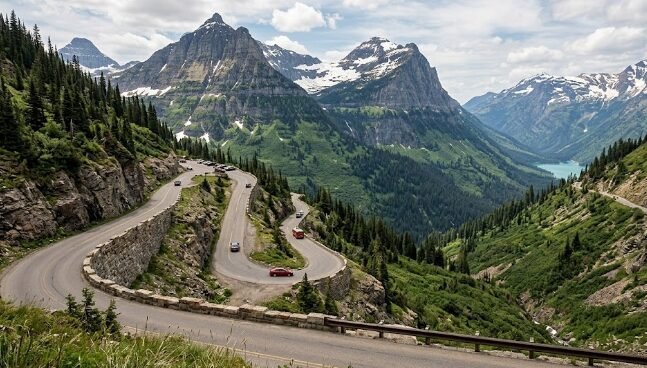
Glacier National Park joins Yosemite this year in dropping its vehicle reservation system — after several seasons of requiring advance timed-entry permits just to drive the famous Going-to-the-Sun Road, 2026 marks a genuine return to spontaneous access. It’s welcome news for road-trippers who’ve missed the ability to simply show up, but it comes with a real trade-off worth understanding before you plan your trip.
Glacier National Park sits in northern Montana along the Canadian border, home to dramatic glacially-carved peaks, more than 700 lakes, and the engineering marvel that is Going-to-the-Sun Road itself — a 52-mile route that ranks among the most spectacular mountain drives in the entire National Park System. This guide covers exactly what’s changed for 2026, current fees and access rules, and how to build a trip around the park’s genuinely short summer season. If you’re planning a broader Montana or Western national parks itinerary, our Yellowstone National Park guide covers Montana’s other major park, and our Yosemite National Park guide details a similar 2026 reservation-system change happening simultaneously in California.
Table of Contents
What Changed at Glacier National Park for 2026
This is the single most important update for trip planning this year. After running a timed-entry vehicle reservation system for the Going-to-the-Sun Road and several other high-traffic areas in recent seasons, Glacier National Park is suspending vehicle reservations entirely for 2026 — covering Going-to-the-Sun Road, the North Fork, Many Glacier, and Two Medicine.
In place of advance reservations, the park is managing congestion through temporary closures at the gate when specific areas reach capacity, rather than smoothing visitor arrivals throughout the day via pre-booked time slots. Park officials have specifically noted this approach also avoids the pre-dawn traffic surges that became common under the old reservation system, which created safety concerns for wildlife crossing the road in darkness as visitors rushed to beat reservation windows.
A new wrinkle for 2026: beginning July 1, weather permitting, parking at Logan Pass — the highest point on Going-to-the-Sun Road and one of the park’s most popular stops — will be limited to three hours. Glacier National Park is also piloting a ticketed, first-come-first-served express shuttle to Logan Pass specifically for visitors planning longer alpine hikes who need more time than the new parking limit allows. Shuttle tickets release in two batches: 60 days in advance starting May 2, 2026, and next-day tickets released each evening at 7 p.m. Mountain Time.
What this means practically: you can now drive Going-to-the-Sun Road without booking ahead, but you should expect real possibility of temporary closures during peak summer hours if you’re not planning around early arrival, and Logan Pass specifically requires either fitting your visit within three hours or using the new ticketed shuttle for longer hikes.
Glacier National Park Entrance Fees for 2026
A standard Glacier National Park vehicle pass costs $35, valid for seven consecutive days. This standard fee structure remains unchanged for U.S. residents in 2026.
As with several other major national parks, Glacier National Park now charges a $100 nonresident surcharge for international visitors aged 16 and older, effective January 1, 2026, on top of the standard entrance fee. Fee-free days, which U.S. residents can still take advantage of throughout the year, no longer apply to international visitors under this new policy — nonresidents pay the standard entrance fee plus surcharge regardless of fee-free date.
The America the Beautiful Annual Pass remains $80 for U.S. residents, while a separate Non-Resident Annual Pass runs $250 for international visitors planning multiple park visits, covering the surcharge across participating parks for twelve months.
Important distinction: your entrance pass gets you into Glacier National Park, but it does not include the new Logan Pass shuttle ticket if your hiking plans exceed the three-hour parking window — that’s a separate booking through Recreation.gov.
When to Visit Glacier National Park
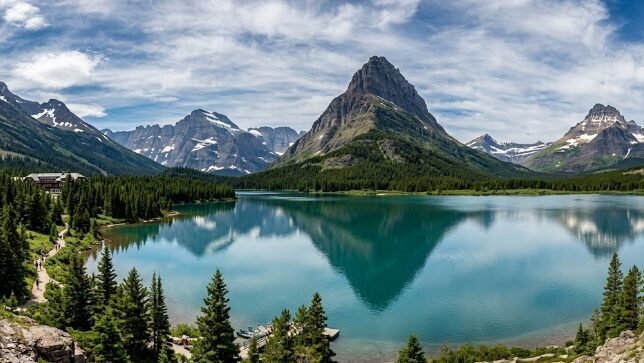
Glacier National Park has one of the shortest true peak seasons of any major U.S. national park, driven almost entirely by snow. Going-to-the-Sun Road typically doesn’t fully open to vehicles until mid-June to early July, depending on snowpack — crews must clear roughly 40 avalanche paths each spring, and the timeline shifts meaningfully based on winter conditions. This narrow window is worth understanding before booking any fixed travel dates months in advance.
Spring (April-June): Before the full road opens, this period offers a genuinely unique alternative — cyclists and hikers are often permitted on sections of Going-to-the-Sun Road before vehicle traffic begins, providing a quiet, car-free way to experience the route that disappears once the road fully opens.
Summer (July-August): The park’s true peak season and effectively the only window when the entire Going-to-the-Sun Road, Many Glacier, and the park’s other high-elevation areas are reliably accessible. This is also when 2026’s new congestion management policies matter most, given peak crowds combined with the dropped reservation system.
Fall (September-early October): A strong secondary window once summer crowds thin, though sections of Going-to-the-Sun Road can close with little warning if early snow arrives, making this a genuinely weather-dependent season requiring real flexibility.
Winter (October-May): Going-to-the-Sun Road closes to vehicles for the season, typically by mid-October, not reopening until the following summer’s snow-clearing operations complete. Limited winter access remains available near park entrances for snowshoeing and cross-country skiing, but this isn’t a season for experiencing the park’s signature scenic drive.
Navigating Glacier National Park Without Reservations in 2026
Arrive early, genuinely early. Given the new closure-based congestion management replacing reservations, early morning arrival (before 7-8 a.m.) offers the best odds of avoiding temporary gate closures during peak summer days, particularly for popular areas like Logan Pass and Many Glacier.
Plan Logan Pass visits around the new three-hour parking limit. If your hiking plans (Hidden Lake Overlook, Highline Trail, or other Logan Pass-area trails) require more time, book the new ticketed express shuttle through Recreation.gov rather than risking a parking citation or being unable to complete a longer hike within the window.
Check real-time conditions before and during your visit. The official NPS Glacier conditions page provides current road status, closures, and congestion updates — checking this the morning of your visit is genuinely useful given how dynamic 2026’s closure-based system can be compared to the predictability of the old reservation format.
Consider biking sections of Going-to-the-Sun Road during shoulder season. As mentioned above, the spring hiker-and-biker window before full vehicle opening offers a meaningfully different, less congested way to experience the route.
Top Things to See and Do at Glacier National Park
Going-to-the-Sun Road
The park’s signature drive, climbing from Lake McDonald through forested valleys to Logan Pass at 6,646 feet before descending toward St. Mary Lake on the park’s east side. The full 52-mile drive offers some of the most dramatic mountain scenery accessible by car anywhere in the United States, with numerous pullouts and overlooks along the way.
Many Glacier
Often considered the park’s most scenic developed area, Many Glacier offers strong hiking access to glacier-fed lakes and consistently good wildlife viewing odds, including grizzly bears, moose, and mountain goats. Given limited parking in this area, especially during ongoing infrastructure work in recent seasons, early arrival or use of available shuttle options improves your odds of a smooth visit.
Hidden Lake Overlook Trail
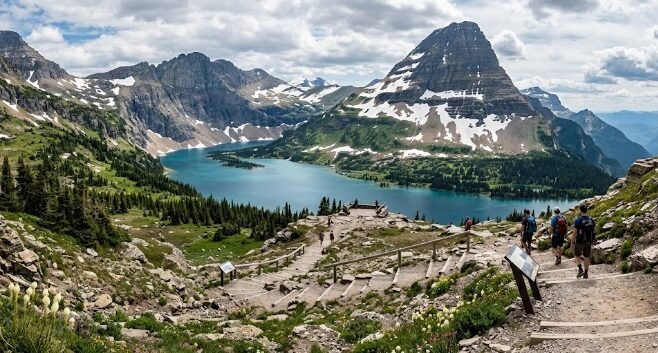
A relatively short, moderate hike departing directly from Logan Pass, delivering a dramatic alpine lake view without requiring a full-day commitment — a strong option for visitors specifically working within the new three-hour Logan Pass parking window.
Highline Trail
One of the most celebrated hikes in the entire National Park System, following a narrow ledge trail along the Continental Divide with sweeping views for much of its length. Given its length and the exposure involved in sections, this hike genuinely benefits from the new Logan Pass shuttle ticket option for hikers who need more than three hours to complete it comfortably.
Two Medicine
A quieter, less-visited area on the park’s southeast side, offering strong hiking and boat tour options with noticeably thinner crowds than Going-to-the-Sun Road’s more famous stops, making it a strong alternative on days when the main corridor faces temporary closures under 2026’s new congestion management approach.
Sample Itineraries for Glacier National Park
The 1-Day Going-to-the-Sun Road Drive
Given 2026’s congestion management changes, an early start matters enormously. Depart before 7 a.m. for the full Going-to-the-Sun Road drive, stop at Logan Pass for the Hidden Lake Overlook Trail (within the new three-hour parking window), and continue to St. Mary Lake on the park’s east side before returning.
The 3-Day Deep Dive
Day one for Going-to-the-Sun Road as above, day two dedicated to Many Glacier’s hiking and wildlife viewing (arriving early given limited parking), and day three for either Two Medicine’s quieter trails or a return to Logan Pass using the new shuttle ticket for a longer hike like the Highline Trail.
Combining With Yellowstone
Glacier National Park sits roughly 8-9 hours by car from Yellowstone National Park, making a combined Montana trip a substantial but rewarding undertaking for travelers with two weeks or more — see our Yellowstone National Park guide for planning the southern half of such a trip.
Where to Stay Near Glacier National Park
West Glacier and Apgar, near the park’s west entrance, offer the most lodging density and direct access to Lake McDonald and the start of Going-to-the-Sun Road.
St. Mary, on the park’s east side, provides a strong base for visitors prioritizing Many Glacier and the eastern half of the scenic drive, generally with less lodging volume than the west side.
In-park lodges, including the historic Many Glacier Hotel and Lake McDonald Lodge, offer the convenience of staying directly within the park, booking out significantly in advance for the short summer season given limited capacity relative to demand.
Camping within Glacier National Park spans multiple campgrounds, with peak-season sites filling quickly through Recreation.gov given the park’s compressed prime season — booking the moment your travel dates are confirmed is genuinely advisable.
What to Pack for Glacier National Park
Bear spray, available for purchase or rental near park entrances, is strongly recommended for any hiking beyond short, paved walks, given the park’s substantial grizzly bear population.
Layers for genuine alpine weather, since Logan Pass and other high-elevation areas can see dramatic temperature swings and even summer snow showers, regardless of warm conditions at lower elevations the same day.
A full tank of gas before entering remote sections, as fuel options within the park itself are limited compared to surrounding gateway towns.
Binoculars, given the park’s strong wildlife viewing reputation, particularly around Many Glacier and other higher-elevation meadow areas.
Best Hikes at Glacier National Park by Difficulty
Easy: The Trail of the Cedars, an accessible boardwalk loop near Avalanche Creek, offers old-growth forest scenery without significant elevation gain, suitable for nearly any fitness level. Note that in 2026, this area is not accessible via the new Logan Pass express shuttle, so plan your own transportation if combining it with other stops.
Moderate: Hidden Lake Overlook, covered above, delivers a strong payoff-to-effort ratio departing directly from Logan Pass. Avalanche Lake, a slightly longer round trip through cedar forest to an alpine lake framed by waterfalls, offers a similar moderate-difficulty option without Logan Pass’s elevation or crowds.
Strenuous: The Highline Trail, also covered above, ranks among the most celebrated hikes in the National Park System, following the Continental Divide with sustained exposure and genuinely dramatic views for much of its roughly 11-mile length if hiked to Granite Park Chalet and back via an alternate route. Grinnell Glacier Trail, departing from Many Glacier, offers one of the most direct ways to see an actual glacier up close, though the hike involves significant elevation gain and a long enough distance that an early start is essential.
A general note worth repeating from the park’s own guidance: weather and conditions can change quickly at Glacier National Park’s elevation, and hikers should always be prepared to turn back if conditions deteriorate or push beyond their fitness and experience level, regardless of how close they are to a planned destination.
A Bit of Geology and History
Glacier National Park’s dramatic peaks and valleys were shaped by glacial activity over the past two million years, with the park’s namesake glaciers themselves now dramatically reduced from their historical extent — a visible, ongoing illustration of climate change that the National Park Service actively documents and interprets throughout the park’s visitor centers and exhibits.
The area holds deep significance to the Blackfeet Nation and other Indigenous peoples who have inhabited this region for thousands of years, with the Blackfeet Indian Reservation bordering the park’s eastern edge today. Glacier National Park was established in 1910, and the construction of Going-to-the-Sun Road, completed in 1932, remains a genuine engineering achievement — the road was specifically designed to follow the natural contours of the landscape rather than cutting more aggressively through the mountains, a design philosophy that prioritized scenic integration over construction speed, not unlike the design approach behind the Blue Ridge Parkway on the opposite side of the country.
What a Glacier National Park Trip Costs
Entrance fees run $35 per vehicle for a standard week-long pass, a minor cost regardless of trip length.
Lodging varies by location and timing, with in-park historic lodges like Many Glacier Hotel commanding premium rates during the short peak season, often exceeding $300-400 per night, while gateway towns like West Glacier and Whitefish offer a wider range, generally $150-300 depending on property and exact dates.
The new Logan Pass shuttle ticket, where applicable, adds a modest cost on top of standard entrance fees — check current pricing on Recreation.gov when booking, since this is a new system for 2026 with pricing details still being established as the season progresses.
A realistic budget for a 3-day Glacier National Park trip for two people, mixing gateway-town lodging with moderate dining, typically lands in the $900-1,400 range, not including flights to a regional airport like Glacier Park International near Kalispell.
Wildlife Safety at Glacier National Park
Glacier National Park holds one of the most significant grizzly bear populations in the contiguous United States, making bear awareness a genuinely important part of trip preparation rather than an optional precaution. The official NPS bear safety guidance covers specific protocols, but the core principles worth knowing before any hike: carry bear spray and know how to use it, make noise on trails (especially near blind corners or dense vegetation), hike in groups where possible, and store all food properly at campsites using provided bear-resistant containers or designated storage areas.
Beyond bears, mountain goats and bighorn sheep are common enough at higher elevations, particularly around Logan Pass, that visitors should maintain respectful distances and never approach or feed any wildlife, both for personal safety and to avoid habituating animals to human contact — a pattern that creates lasting problems for both wildlife and future visitors.
Common Mistakes to Avoid at Glacier National Park
Assuming the dropped reservation system means no planning is needed. As covered throughout this guide, 2026’s closure-based congestion management can still mean unexpected delays or temporary gate closures during peak hours — early arrival remains essential despite the more flexible booking format.
Underestimating the short peak season. Going-to-the-Sun Road’s typical mid-June to early July opening, combined with an October closure, leaves a genuinely compressed window for experiencing the park’s full scenic drive — booking lodging or planning a trip around assumed dates without checking current road status risks arriving before the road has fully opened.
Skipping bear spray on hikes beyond short paved trails. Given the park’s substantial grizzly population, this is one of the few “common mistakes” sections in this guide series where the stakes are genuinely about safety rather than just trip quality.
Not planning around the new Logan Pass parking limit. Visitors attempting longer hikes like the Highline Trail without booking the new shuttle ticket risk either an incomplete hike or a parking citation once the three-hour limit takes effect July 1, 2026.
Frequently Asked Questions
Do I need a reservation to drive Going-to-the-Sun Road in 2026? No — Glacier National Park has suspended vehicle reservations for the entire 2026 season across Going-to-the-Sun Road, the North Fork, Many Glacier, and Two Medicine. You still need a standard entrance pass, and a separate shuttle ticket if you plan to use the new Logan Pass express shuttle for extended hikes.
When does Going-to-the-Sun Road open in 2026? Typically between mid-June and early July, though the exact date depends entirely on snowpack and spring weather conditions affecting avalanche-path clearing. Check the official NPS road status page closer to your travel dates rather than relying on a fixed date from past seasons.
What’s the new Logan Pass parking limit? Starting July 1, 2026 (weather permitting), private vehicle parking at Logan Pass is limited to three hours. Visitors planning longer hikes, such as the Highline Trail, should book the new ticketed express shuttle rather than risk an incomplete hike within the parking window.
Is Glacier National Park good for wildlife viewing? Yes, genuinely strong — grizzly and black bears, moose, mountain goats, and bighorn sheep are all regularly spotted, particularly in the Many Glacier area and at higher elevations during early morning and evening hours.
How does Glacier compare to Yellowstone for a first national park trip? Both offer dramatic scenery, but Glacier National Park’s compressed summer season and more mountainous, hiking-focused terrain make it a meaningfully different experience than Yellowstone’s geothermal features and broader road network — many travelers consider them complementary rather than substitutes for each other within the same Montana trip.
Final Thoughts
Glacier National Park’s return to reservation-free access for 2026 brings back genuine spontaneity to one of America’s most spectacular mountain drives, but the new Logan Pass parking limit and closure-based congestion management mean the planning burden hasn’t disappeared so much as shifted. Arrive early, especially for Logan Pass and Many Glacier, and seriously consider the new shuttle ticket option if your hiking ambitions exceed the three-hour parking window.
Do that groundwork, and Glacier National Park delivers some of the most genuinely dramatic alpine scenery in the entire National Park System — glacially carved peaks, turquoise lakes, and a 52-mile drive that consistently ranks among the most spectacular in the country, reservation system changes notwithstanding.