

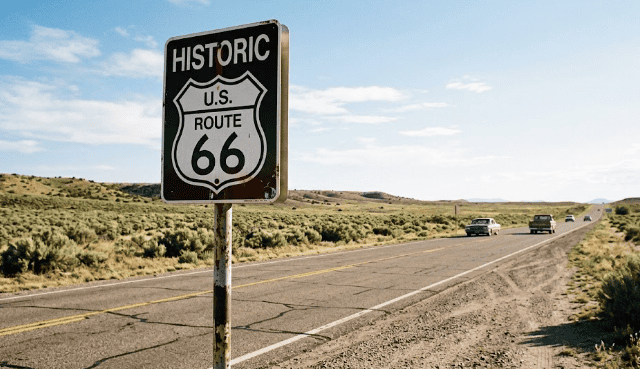
Somewhere around hour six of driving through the Texas Panhandle, with nothing but flat horizon and the occasional grain elevator breaking up the view, you start to understand what Route 66 actually is. It isn’t really a highway anymore — large sections of the original road don’t even officially exist as Route 66 on modern maps. It’s more like a thread connecting two and a half thousand miles of small-town America, roadside weirdness, and a particular kind of nostalgia that doesn’t really exist anywhere else in the country.
2026 makes this an especially good year to drive it. Route 66 was officially designated on November 11, 1926, which puts this year squarely at its 100th anniversary — a centennial that’s bringing extra events, renewed restoration funding for historic landmarks, and noticeably more attention to the route than usual. The National Historic Route 66 Federation tracks centennial events and preservation efforts happening throughout the year if you want to time your trip around a specific festival. If you’ve been putting off this trip, this is the year a lot of seasoned road-trippers are circling on the calendar.
This guide walks through the full route from Chicago to Santa Monica, realistic timing, what to actually prioritize, and the kind of planning details that make the difference between a smooth two-week adventure and an exhausting blur of highway and gas stations. For a broader look at planning any cross-country drive, our USA road trip planning guide covers the basics that apply beyond just Route 66.
Table of Contents
Route 66 runs from Chicago, Illinois, to Santa Monica, California, crossing eight states along the way: Illinois, Missouri, Kansas, Oklahoma, Texas, New Mexico, Arizona, and California. The full distance comes in around 2,448 miles, though your actual mileage will vary depending on which historic alignments and detours you choose to follow, since the road has shifted and been rerouted multiple times since 1926.
Why 2026 Is the Year to Do This
The centennial isn’t just a marketing angle — it’s genuinely changing what’s available along the route this year. Restoration projects on historic motels, gas stations, and landmarks have been fast-tracked ahead of the anniversary, several towns along the route are hosting centennial festivals and events throughout the year, and major hospitality brands have partnered with travel platforms to build out more detailed Route 66 planning resources than existed even a couple of years ago.
The practical downside: increased interest means increased demand. Iconic motels — the kind with the neon signs and the retro charm that are half the reason people drive this route in the first place — are booking out further in advance than usual this year. If a specific historic motel is on your must-stay list, book it as early as your dates allow rather than assuming you can decide as you go.
How Long Do You Actually Need?
This is the single most common planning question, and the honest answer is: it depends entirely on how you want to experience the road.
10 Days (Minimum Realistic Timeline) Doable if you’re committed to driving efficiently, sticking mostly to the interstate where it parallels old Route 66, and treating roadside stops as quick photo opportunities rather than lingering visits. This pace means longer days behind the wheel and less time to wander, but it’s a legitimate option if a longer trip simply isn’t possible with your schedule.
14 Days (The Sweet Spot) Most experienced Route 66 travelers land here. Two weeks gives you enough breathing room to actually walk around the towns you’re passing through, eat at the diners instead of just photographing them, and add in a side trip or two — the Grand Canyon detour from Arizona being the most popular by far — without feeling like you’re racing a clock the whole time.
3 Weeks or Longer If your schedule allows it, three weeks transforms the trip from “driving Route 66” into genuinely exploring it. You get time for detours to places like Santa Fe, Sedona, or the Grand Canyon without sacrificing time on the main route itself, plus enough flexibility to linger an extra day somewhere that unexpectedly grabs you — which, on this drive, happens more often than you’d expect.
A note on pacing philosophy: this isn’t a trip built for “military precision,” as one road trip guide memorably put it. Route 66 rewards travelers who build in slack rather than those treating it as a checklist to complete as fast as possible.
The Route, State by State
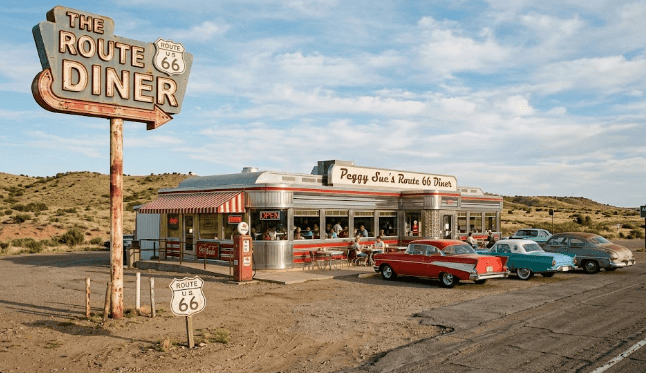
Illinois: Chicago to the State Line
Your starting point is the official Route 66 sign at Adams Street and Michigan Avenue in downtown Chicago — a popular, slightly chaotic photo spot given it sits in the middle of a major city, but a fitting place to start nonetheless.
Heading south, Pontiac is worth a real stop, not just a drive-through. The Route 66 Hall of Fame and Museum here is one of the better roadside museums on the entire route, and the town itself has leaned hard into its Route 66 identity with murals and well-preserved historic buildings.
Springfield, Illinois, deserves at least a half day. Beyond its obvious Route 66 credentials, it’s home to the Cozy Dog Drive In, which has been serving up corn dogs (or “Cozy Dogs,” as they call their version) since 1949 and is generally credited as one of the places that popularized the corn dog in America. If you’re interested in architecture rather than just road food, the Dana-Thomas House — one of Frank Lloyd Wright’s best-preserved early homes — is also in Springfield and worth the detour even if you don’t consider yourself an architecture person.
Missouri: St. Louis to Joplin
St. Louis brings you past the Gateway Arch, and while it’s not technically a Route 66 landmark, it’s directly on the route and impossible to skip without feeling like you missed something. From there, the road winds through the Ozarks, with small towns like Cuba (known locally as the “Route 66 Mural City”) offering some of the most photogenic small-town stops on the entire drive.
Kansas: A Brief but Worthwhile Stretch
Route 66 only clips the southeast corner of Kansas for about thirteen miles, making this the shortest state segment on the entire route. Don’t let the brevity fool you into skipping it entirely — the small town of Galena has restored several historic buildings, including one that reportedly inspired a tow truck character in an animated film, and it’s a quick, worthwhile stop if you’re already passing through.
Oklahoma: The Longest Stretch
Oklahoma holds the longest single-state segment of Route 66, and it’s packed with classic Americana. Tulsa offers the Golden Driller statue and a genuinely walkable downtown with strong Route 66 heritage sites. Further along, the Blue Whale of Catoosa — a roadside attraction built in the 1970s as a swimming hole landmark — has become one of the most photographed quirky stops on the whole route, and it’s exactly the kind of unapologetically weird Americana that makes this drive what it is.
Texas: The Panhandle Stretch
This is where the landscape starts to open up dramatically. Amarillo is your major stop, home to the Cadillac Ranch — ten vintage Cadillacs half-buried nose-down in a field, covered in decades of visitor graffiti and spray paint. It’s free, it’s bizarre, and it’s become one of the most iconic photo stops on the entire route. Bring your own spray paint can if you want to add to the collection; it’s part of the tradition.
New Mexico: Desert Landscapes and Native Heritage
Tucumcari and Albuquerque anchor this stretch, with the road passing through landscapes that shift dramatically from the Texas plains into genuine high desert terrain. New Mexico’s stretch of Route 66 also passes near several Native American reservations and pueblos, and travelers interested in this history should plan extra time for respectful, well-researched visits rather than rushing through.
Arizona: The Grand Canyon Detour and Classic Desert Towns
Arizona is where most travelers add their major detour, since the Grand Canyon sits within reasonable driving distance of the main route near Williams and Flagstaff. Even a one-day round trip detour is worth the time if you’ve never seen it.
Holbrook is home to the Wigwam Motel, where guests sleep in individual concrete teepee-shaped units — one of the most recognizable lodging novelties on the entire route, and a strong contender for your one “iconic motel” booking if you’re only making one. Further west, Kingman offers a well-preserved historic downtown and serves as a good staging point before the route heads into California through some genuinely remote desert stretches.
California: The Final Stretch to Santa Monica
The last leg takes you through the Mojave Desert, including the small, almost ghost-town feel of Amboy, before climbing through the mountains and dropping into the Los Angeles basin. The official end of Route 66 is marked with a sign at the Santa Monica Pier, and arriving there — particularly if you’ve timed it for sunset over the Pacific — makes for a genuinely emotional finish line after two-plus weeks on the road.
Sample Itinerary: 14 Days, Chicago to Santa Monica
This breakdown assumes a comfortable pace with real stops, not just drive-throughs.
Days 1-2: Chicago to Springfield, Illinois — explore Chicago’s starting point, drive through Pontiac, settle in for a full stop in Springfield.
Days 3-4: Springfield to St. Louis to Joplin, Missouri — Gateway Arch, Ozark towns, overnight in Joplin.
Day 5: Joplin through Kansas into Oklahoma, overnight in Tulsa.
Days 6-7: Tulsa to Oklahoma City to Amarillo, Texas — Blue Whale of Catoosa, Cadillac Ranch.
Days 8-9: Amarillo to Tucumcari to Albuquerque, New Mexico — desert landscapes, pueblo history if time allows.
Days 10-11: Albuquerque to Holbrook to Flagstaff, Arizona — Wigwam Motel overnight, Grand Canyon day trip.
Days 12-13: Flagstaff to Kingman to the California desert towns — Amboy, Mojave stretch.
Day 14: Final push into Los Angeles, finishing at the Santa Monica Pier sign.
If you’ve got extra days, the most valuable additions are typically a second night in Santa Fe (just off-route but a worthwhile detour from Albuquerque) or extra time around the Grand Canyon rather than rushing the desert stretches.
What to Pack and Plan For
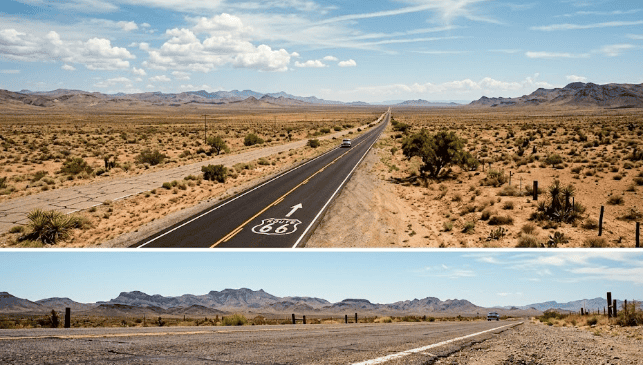
Fuel planning matters more than you’d think. Stretches of Arizona, New Mexico, and California pass through genuinely remote desert with long gaps between gas stations. Don’t let your tank drop below a quarter full in these sections, and don’t assume every small-town gas station marked on a map is still operational — some historic stations along the route are preserved as museums rather than functioning fuel stops.
A dedicated Route 66 map or app beats standard navigation. Because much of the original route no longer exists as a continuous, officially marked highway, generic GPS navigation will often default you onto the interstate, bypassing the historic alignments entirely. Apps and printed guides built specifically for Route 66 travelers mark the actual historic segments.
Pack for genuine climate variation. This route crosses everything from Midwest humidity to high-desert temperature swings to coastal California mild weather. Layers are essential, and if you’re traveling in late spring or early fall, be prepared for sections where nighttime desert temperatures drop sharply even after a hot day.
Spring and fall are the sweet spot for weather. Route 66 crosses some seriously varied terrain — Midwest plains, high-altitude stretches near the Continental Divide, and low desert basins — and weather can be genuinely unpredictable, including occasional snow, dust storms, or flash flooding depending on season and location. Late spring (March through early June) generally offers the best balance of manageable temperatures and full daylight hours, with September and October as a strong secondary option once summer desert heat has eased.
Book iconic motels early, especially this year. Centennial-year demand is real. If a specific historic property — the Wigwam Motel, or any of the classic neon-sign motels scattered along the route — is on your must-do list, book it as soon as your travel dates are confirmed.
Budgeting for the Trip
Costs vary widely depending on your style of travel, but a few categories are worth planning around specifically:
Lodging ranges from budget chain motels (relatively affordable, widely available) to the iconic historic motels (often pricier than you’d expect given their modest size, purely due to demand and novelty value) to camping or RV options for travelers wanting to cut costs significantly. A realistic mixed-lodging budget for two people runs anywhere from $80 to $200+ per night depending on choices.
Fuel depends heavily on your vehicle’s efficiency — a fuel-efficient sedan will cost meaningfully less over 2,400+ miles than an RV or larger SUV, which is worth factoring into your vehicle choice if budget is a primary concern.
Food can range from cheap diner meals (genuinely one of the highlights of the trip, and not expensive) to pricier sit-down dinners in bigger cities along the route. Planning a few picnic-style lunches between diner stops, rather than three restaurant meals daily, helps keep costs reasonable without sacrificing the food experience that’s central to this trip. For more ways to cut costs on the road, see our budget USA travel tips.
Photography Tips for Route 66
This route is one of the most photogenic drives in the country, but a few tips make a real difference.
Golden hour transforms the desert stops. Cadillac Ranch, the Blue Whale of Catoosa, and most of the Arizona and New Mexico landscape shots look dramatically better in the hour after sunrise or before sunset than they do at midday, when harsh overhead light flattens color and detail. If you only have time to photograph one major stop at golden hour, prioritize a desert landscape shot over a town stop — the lighting difference matters more for open scenery than for building facades.
Neon signs need blue hour, not full darkness. The classic motel and diner neon signs that define so much of Route 66’s visual identity photograph best in the brief window after sunset when the sky still holds some blue color but the neon is fully lit — full darkness tends to blow out the neon and lose all background detail.
Bring a wide-angle lens if you have one. Many of the iconic stops — Cadillac Ranch especially — benefit from a wide field of view that captures scale and context, something a standard phone camera lens often struggles with at close range.
Respect private property and “no trespassing” signs, even for photogenic abandoned buildings. Route 66 has plenty of genuinely abandoned, photogenic structures, but many sit on private land, and trespassing for a photo isn’t worth the legal risk or the disrespect to property owners along the route.
Where to Stay: Lodging Types Along the Route
Historic, Iconic Motels The Wigwam Motel in Holbrook, Arizona, and similar neon-sign classics scattered along the route are part of the Route 66 experience itself, not just a place to sleep. Expect smaller, simpler rooms than a modern chain hotel, but the novelty and history more than make up for it for most travelers. Book these as early as possible, especially during this centennial year.
Mid-Range Chain Hotels Reliable, predictable, and available in nearly every town of meaningful size along the route. These make sense for nights when you’d rather guarantee consistent quality than chase novelty, particularly after a long driving day.
Budget Motels Plenty of independently-run budget motels dot the smaller towns along Route 66, often at noticeably lower rates than chain alternatives. Quality varies more than with chains, so checking recent reviews before booking is worth the extra few minutes.
Camping and RV Parks For travelers wanting to cut lodging costs significantly or who are already road-tripping in an RV, campgrounds and RV parks are available at regular intervals along the route, particularly in the more rural stretches through Oklahoma, Texas, New Mexico, and Arizona.
RV vs. Car: Which Makes More Sense?
This question comes up constantly, and the honest answer depends on your travel style.
A standard car or fuel-efficient sedan makes sense if you’re prioritizing lower fuel costs, easier parking in town centers, and more flexibility for spontaneous detours. It’s also simply more affordable for most travelers, both in upfront rental cost (if applicable) and fuel consumption over 2,400+ miles.
An RV makes sense if lodging flexibility matters more to you than fuel efficiency, if you’re traveling with a larger group or family, or if you specifically want the option to stop and sleep wherever you end up at the end of a long driving day rather than planning lodging in advance. The trade-off is real, though: RVs cost significantly more in fuel, are harder to park and maneuver through some of the smaller historic town centers, and the rental cost itself (if you don’t own one) adds substantially to the trip budget.
Most first-time Route 66 travelers do better with a standard car — the route’s charm is heavily concentrated in small towns and historic districts that are simply easier to explore on foot after parking a normal-sized vehicle.
Trying to drive the “exact” original route mile-for-mile. Much of Route 66 no longer exists as a single continuous road — it’s been rerouted, replaced by interstate sections, or simply abandoned in places over the decades. Chasing perfect historical accuracy often means missing better stops in favor of obscure, sometimes impassable original alignments. Most experienced travelers focus on hitting the best-preserved stretches and iconic stops rather than treating the original 1926 route as a strict rulebook.
Underestimating the Texas and New Mexico stretches. These sections feel deceptively long because the landscape changes slowly, and it’s easy to underestimate both drive time and the importance of fuel planning through more remote segments.
Skipping the small towns in favor of just the big “Instagram” stops. Cadillac Ranch and the Blue Whale of Catoosa are genuinely worth seeing, but some of the most memorable moments on this drive happen in towns with no famous landmark at all — just a well-preserved Main Street, a diner that’s been family-run for sixty years, and the particular quiet of small-town America that the interstate system mostly bypassed.
Not booking centennial-year accommodations early enough. This is specific to 2026 — increased anniversary attention means historic motels and centennial event lodging are booking out faster than in a typical year.
What to Pack: The Full Checklist
Beyond general road trip essentials, a few Route 66-specific items make a real difference:
A physical paper map as backup. Cell service genuinely drops out across stretches of rural Oklahoma, Texas, New Mexico, and the California desert. A printed Route 66 map, even alongside a phone app, means you’re never fully stuck if you lose signal at a confusing junction.
Cash for small-town stops. Many of the smallest, most charming diners and roadside attractions along the route are cash-only or have unreliable card readers. Keep a reasonable amount of small bills on hand, especially through the more rural Oklahoma and Texas stretches.
A cooler with drinks and snacks. Gas stations between towns can be sparse, especially in the desert sections, and having cold water and snacks on hand means you’re not dependent on finding a store at exactly the right moment.
Sun protection, even in a car. Long days of desert driving mean significant UV exposure through the windshield and windows. Sunscreen, sunglasses, and a hat for outdoor stops are easy to forget and genuinely useful.
A portable phone charger or power bank. Given how photo-heavy this trip tends to be, running out of phone battery at Cadillac Ranch or during a perfect neon-sign sunset is a real and avoidable disappointment.
Comfortable, broken-in shoes. While this is primarily a driving trip, most of the best moments happen on foot — wandering small-town Main Streets, walking around Cadillac Ranch, exploring historic districts. Don’t pack shoes you haven’t already worn enough to know they’re comfortable for hours of walking.
The Food: Why Route 66 Is a Road Trip for Eaters
If there’s one thing that defines this drive beyond the landmarks and neon signs, it’s the food — specifically, the particular American diner culture that Route 66 essentially helped create and popularize.
Cozy Dog Drive In in Springfield, Illinois is the trip’s most historically significant food stop, serving its version of the corn dog since 1949 in a building that still feels like a genuine time capsule rather than a tourist recreation. It’s inexpensive, unpretentious, and exactly the kind of stop that explains why people make this drive in the first place.
Beyond the famous stops, the real food culture of Route 66 lives in the family-run diners scattered through small towns across all eight states — places with handwritten daily specials, decades of regular customers, and pie cases that are worth a detour on their own. Part of the experience of this trip is simply being willing to stop at a place that doesn’t have a single online review, purely because it looked right from the road.
A practical approach that balances cost and experience: treat one meal a day as your “destination” diner stop — somewhere specific you researched or that catches your eye — and keep the other meals simpler, whether that’s a quick gas station stop or a picnic lunch from a grocery run. This keeps the trip’s food budget reasonable without sacrificing the diner experiences that make Route 66 worth driving in the first place.
Best Side Detours Worth the Extra Miles
Route 66 purists sometimes resist detours, but a few are popular enough among experienced travelers that they’re worth breaking from the main route for.
Grand Canyon (from Williams or Flagstaff, Arizona) — Already mentioned above, but worth restating: this is the most commonly added detour on the entire route, and for good reason. If you’ve never been, our full Grand Canyon National Park guide covers entrance fees, best viewpoints, and timing. Even a single extra day round trip is widely considered close to essential by travelers who’ve done the drive multiple times.
Santa Fe, New Mexico (from Albuquerque) — A roughly hour-long detour north that adds a genuinely distinct cultural experience: adobe architecture, a strong arts and gallery scene, and some of the best New Mexican food in the state. Worth an overnight if your schedule allows it.
Sedona, Arizona (from Flagstaff) — Red rock scenery that’s strikingly different from the desert stretches elsewhere on the route, plus a well-developed hiking and outdoor scene if you want to break up driving days with some time on foot.
Meramec Caverns (Missouri) — A classic, kitschy roadside attraction that’s been advertised on barn roofs along Route 66 for decades. It’s touristy in the most old-fashioned, charming sense of the word, and exactly the kind of stop that fits the spirit of this drive.
None of these are necessary to “complete” Route 66 in any meaningful sense, but each adds something the main route alone doesn’t offer, and if your timeline has any flexibility, they’re worth strong consideration.
Best Time of Year to Go: A Season-by-Season Look
Spring (March – May) Generally considered the best overall window. Temperatures across most of the route sit in a comfortable range, desert sections haven’t hit peak summer heat yet, and daylight hours are increasing, giving you more usable driving and exploring time per day. The main risk is occasional spring storms in the Midwest stretch, including the possibility of severe weather in Oklahoma and Texas during their spring storm season — worth monitoring forecasts if you’re traveling in April or May specifically.
Summer (June – August) The most popular season simply because it aligns with school holidays and standard vacation time, but it comes with real trade-offs. Desert stretches in Arizona, New Mexico, and the California Mojave can see genuinely dangerous heat, sometimes well over 100°F during the day. If you’re traveling in summer, plan desert driving for early morning or evening hours where possible, and never underestimate water needs if you’re stopping for any outdoor exploration.
Fall (September – October) A strong secondary choice to spring, with the added bonus of desert heat easing off significantly by mid-September. Crowds at major attractions also thin out somewhat compared to peak summer, and the lighting for photography tends to be excellent throughout the route.
Winter (November – February) The least popular season for good reason — sections of the route near the Continental Divide and higher elevations in New Mexico and Arizona can see snow and genuinely hazardous driving conditions. That said, winter does offer the thinnest crowds of the year and a different, starker beauty to the desert sections. This season suits experienced winter drivers more than first-time Route 66 travelers.
Common Mistakes to Avoid
Trying to drive the “exact” original route mile-for-mile. Much of Route 66 no longer exists as a single continuous road — it’s been rerouted, replaced by interstate sections, or simply abandoned in places over the decades. Chasing perfect historical accuracy often means missing better stops in favor of obscure, sometimes impassable original alignments. Most experienced travelers focus on hitting the best-preserved stretches and iconic stops rather than treating the original 1926 route as a strict rulebook.
Underestimating the Texas and New Mexico stretches. These sections feel deceptively long because the landscape changes slowly, and it’s easy to underestimate both drive time and the importance of fuel planning through more remote segments.
Skipping the small towns in favor of just the big “Instagram” stops. Cadillac Ranch and the Blue Whale of Catoosa are genuinely worth seeing, but some of the most memorable moments on this drive happen in towns with no famous landmark at all — just a well-preserved Main Street, a diner that’s been family-run for sixty years, and the particular quiet of small-town America that the interstate system mostly bypassed.
Not booking centennial-year accommodations early enough. This is specific to 2026 — increased anniversary attention means historic motels and centennial event lodging are booking out faster than in a typical year.
Packing too much into single driving days. It’s tempting to plan an ambitious daily mileage target, but Route 66’s appeal is largely in the stops themselves. A day with 200 miles and four meaningful stops is usually more memorable than a day with 400 miles and two rushed photo ops.
Frequently Asked Questions
Is Route 66 still a real, drivable highway? Not as a single continuous official U.S. highway — it was decommissioned in 1985. However, the vast majority of the route remains drivable today as a combination of state highways, local roads, and frontage roads that closely follow or directly use the original alignment. Dedicated Route 66 maps and apps help travelers stay on the historic path rather than defaulting to the interstate.
Can you drive Route 66 in a regular car, or do you need a special vehicle? A standard car or fuel-efficient sedan handles the entire route without issue. The road is paved and well-maintained throughout, including the desert stretches. A 4WD or high-clearance vehicle isn’t necessary unless you’re specifically planning to explore unpaved historic side-segments off the main route.
What’s the best direction to drive — Chicago to Santa Monica, or the reverse? Both directions are popular, and the choice mostly comes down to personal preference and flight logistics. Driving west, ending at the Santa Monica Pier at sunset, has a strong symbolic appeal for a lot of travelers and is the more traditionally documented direction in most guides and films.
How much does a Route 66 road trip cost overall? For a two-week trip for two people with a mix of budget and mid-range lodging, moderate dining, and a fuel-efficient vehicle, total costs typically land somewhere between $2,500 and $4,500, not including flights to Chicago or from Los Angeles. RV travel or longer trip durations shift this considerably in either direction. Splitting costs across two or more travelers, sharing fuel and lodging expenses, brings the per-person cost down meaningfully compared to a solo trip covering the same ground.
Do I need to detour to the Grand Canyon, or is it too far out of the way? The Grand Canyon sits close enough to the Arizona stretch of Route 66 — particularly near Williams and Flagstaff — that most travelers consider it close to mandatory rather than a major detour. Even a single-day round trip from the main route is widely considered one of the best additions to the whole itinerary.
Final Thoughts
Route 66 isn’t really about the destination — Santa Monica is a fine beach town, but it’s not why anyone drives 2,448 miles to get there. It’s about the accumulation of small, specific moments: a perfect milkshake at a diner that’s been open since the Truman administration, a half-buried Cadillac covered in forty years of spray paint, the particular quality of light over the New Mexico desert at sunset.
2026’s centennial gives this trip an extra layer of meaning, but honestly, the road has always delivered that same blend of nostalgia and genuine American weirdness regardless of the year. What’s changed is mostly the attention — more restoration funding flowing into historic landmarks, more festivals timed around the anniversary, and a noticeably busier booking calendar for the most iconic stops along the way.
Plan reasonably, book your iconic stops early this year especially, and leave enough slack in your schedule to follow a hand-painted sign down a side road you weren’t planning on taking. That’s usually where the best stories come from — and on a drive built almost entirely out of small, accumulated moments rather than one single headline attraction, those unplanned detours often end up being exactly what you remember most once you’re back home looking at the photos.